
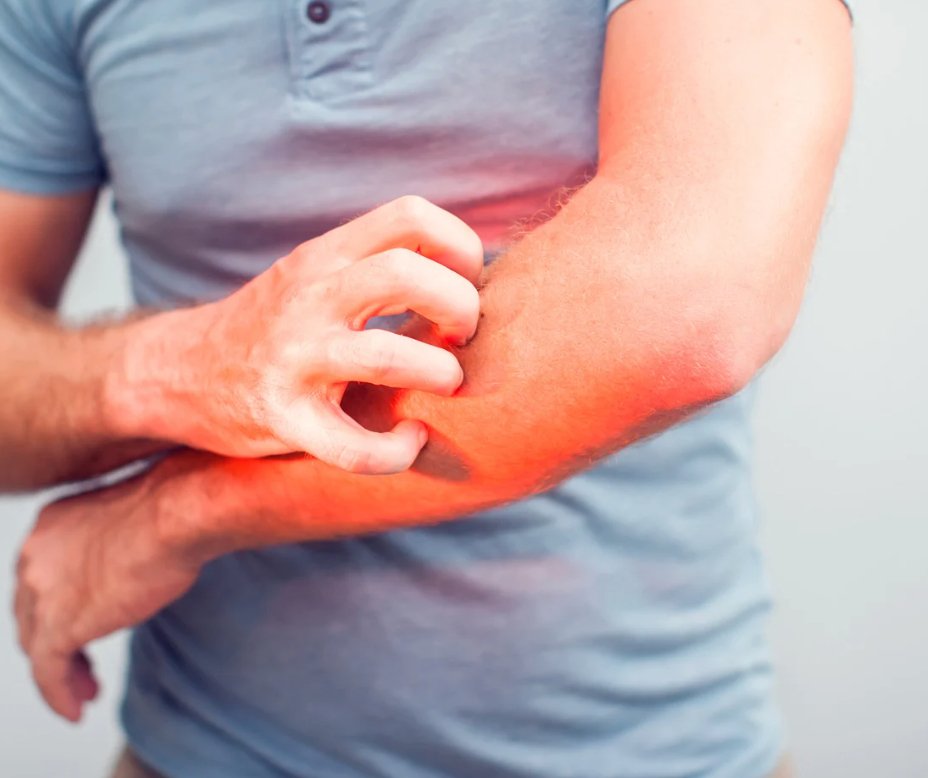
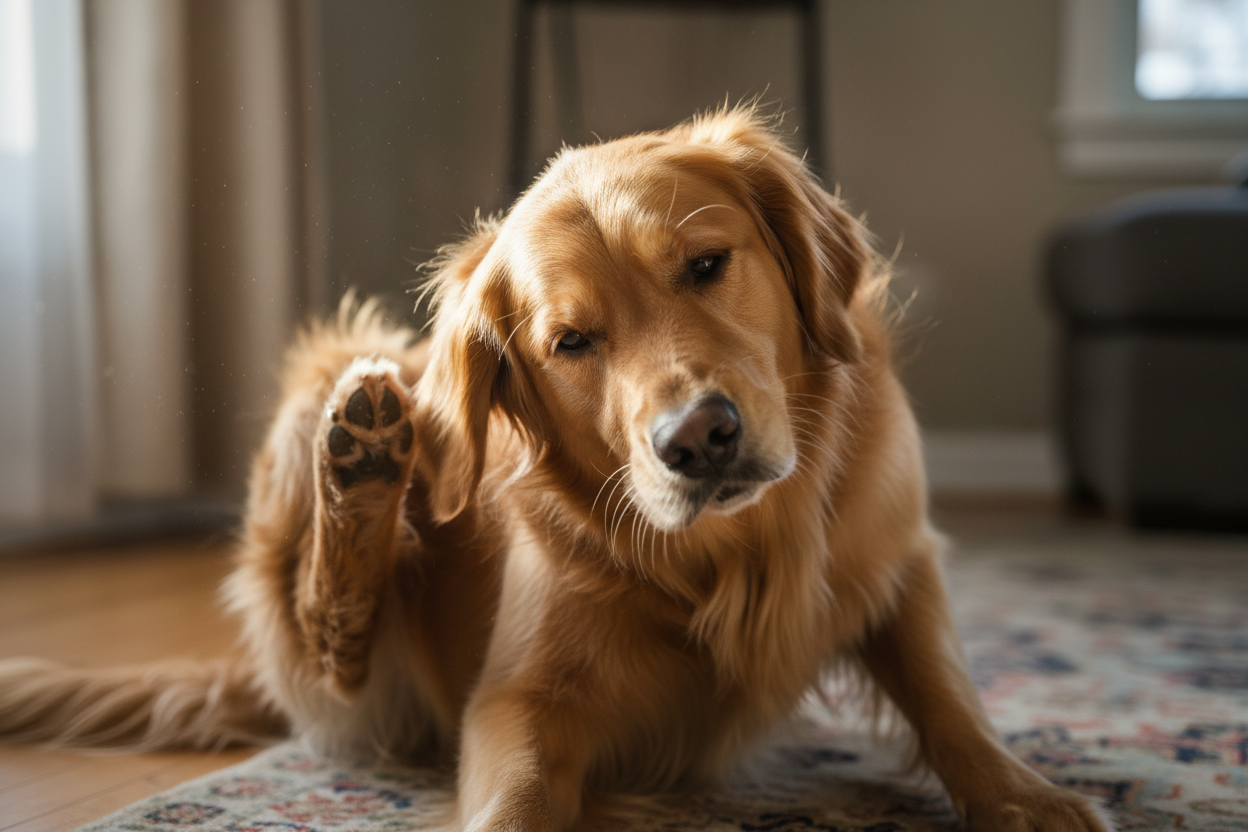
Why is my dog itching? Dogs itch for many reasons: fleas, environmental allergies, food sensitivities, skin barrier damage from harsh grooming products, and secondary yeast or bacterial infections. Identifying the root cause is the only way to stop it for good, because treating the symptom alone will not break the cycle.
This guide covers the most common causes of dog itching in the UK, what you can do at home, which products genuinely help, and when to see a vet.
In this article: What causes dog itching | The scratch-itch cycle | Home treatment | When to see a vet | FAQs
What is actually causing my dog to itch?
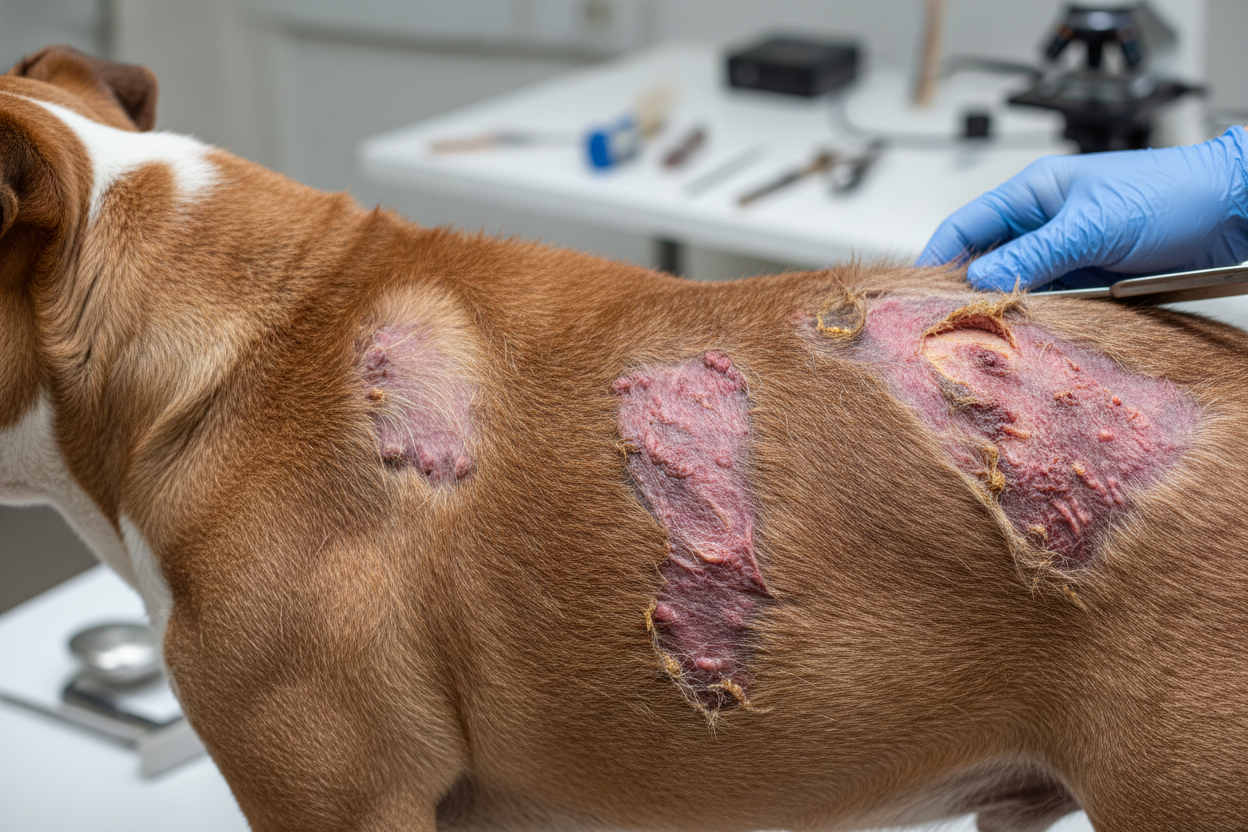
The medical term for itching is pruritus. In dogs it is triggered when irritants activate specialised nerve fibres, releasing mediators including histamines, proteolytic enzymes and leukotrienes that send itch signals to the brain. Unlike humans, dogs do not have a reliable cut-off point at which they stop scratching, so they will scratch until they damage the skin, then lick the wound to soothe the pain. The open, moist skin then becomes a breeding ground for bacterial and yeast infections, which compound the original problem. You are now managing the cause, a secondary infection, and often pain as well.
This is why identifying the root cause matters so much. Below are the most common culprits.
The most common causes of dog itching
Fleas and parasites
Fleas are always the first thing to rule out. Flea saliva is a potent allergen and a single bite can trigger intense itching in a sensitised dog. Even if you cannot see fleas, that does not mean they are absent. Check for flea dirt (tiny black specks in the coat) and treat both the dog and the home environment with a vet-approved product. If your dog is still itching after flea treatment, read our guide: My dog is still itching after flea treatment.
For a full breakdown of flea treatment options, see our A-Z guide to flea treatment for dogs and cats.
House dust mites
One of the most underestimated causes of dog itching in the UK, particularly in centrally heated homes. Dermatophagoides pteronyssinus (house dust mite) sheds microscopic particles that trigger allergic reactions in sensitive dogs, typically causing itching around the face, paws, ears and base of the tail. Washing your dog's bedding at 60 degrees regularly and vacuuming frequently can make a significant difference.
Environmental allergies and atopic dermatitis
Canine atopic dermatitis (CAD) is a chronic, genetically predisposed inflammatory skin condition driven by an overactive immune response to environmental allergens including pollen, grass, mould and dust mites. In dogs, unlike humans, this typically shows up as skin symptoms rather than sneezing. CAD involves a dysfunctional skin barrier and immune dysfunction driven by cytokines including IL-31, IL-4 and IL-13.
It is worth knowing that antihistamines such as Piriton (chlorphenamine) are largely ineffective for CAD, because histamine is not the primary driver of itch in this condition. For a full explanation of why and what works instead, see our article: Can you give a dog Piriton?
Food allergies and intolerances
Chicken, beef and dairy are the most common food allergens in dogs. Food allergy typically causes year-round itching (unlike seasonal pollen allergy), often with gastrointestinal symptoms alongside. Diagnosis requires a strict dietary elimination trial of 8 to 12 weeks under veterinary supervision. Read more in our detailed post on dog food allergies.
Skin barrier damage from grooming products
A dog's skin is only 3 to 5 cell layers thick, compared to 10 to 15 in humans. This makes it far more permeable to irritants and far more vulnerable to damage from harsh ingredients. Shampoos containing SLS (Sodium Lauryl Sulphate), parabens or synthetic fragrances strip the skin's natural oils, disrupt the skin's pH (which in dogs should sit around 7.0, not the 5.5 of human skin) and compromise the skin's protective acid mantle.
Many dog owners are unknowingly making their dog's skin worse with every bath. Our articles on parabens in pet shampoos and does the choice of shampoo matter explain this in full.
Contact dermatitis and household irritants
Cleaning products, laundry detergents, garden pesticides and synthetic fabrics can all trigger contact dermatitis, causing itching, redness and skin inflammation at the point of contact. Switching to fragrance-free, pet-safe household products is a simple step that is frequently overlooked.
Secondary bacterial and yeast infections
Once the scratch cycle breaks the skin barrier, Malassezia (yeast) and Staphylococcus (bacteria) commonly colonise the damaged skin, causing intense itching, a distinctive musty or cheesy odour, and greasy or crusty patches. These are the two most common secondary infections in itchy dogs, and they require different treatments — antifungal for yeast, antibacterial for Staphylococcus. This is one reason over-the-counter treatments often fail: they target one but not the other. Your vet can identify which is present with a skin scraping or cytology swab.
For more on less obvious causes of itching including hormonal conditions, autoimmune disease and neoplasia, see our article: Dog itch: what else could it be?
What can I do at home for my itchy dog?
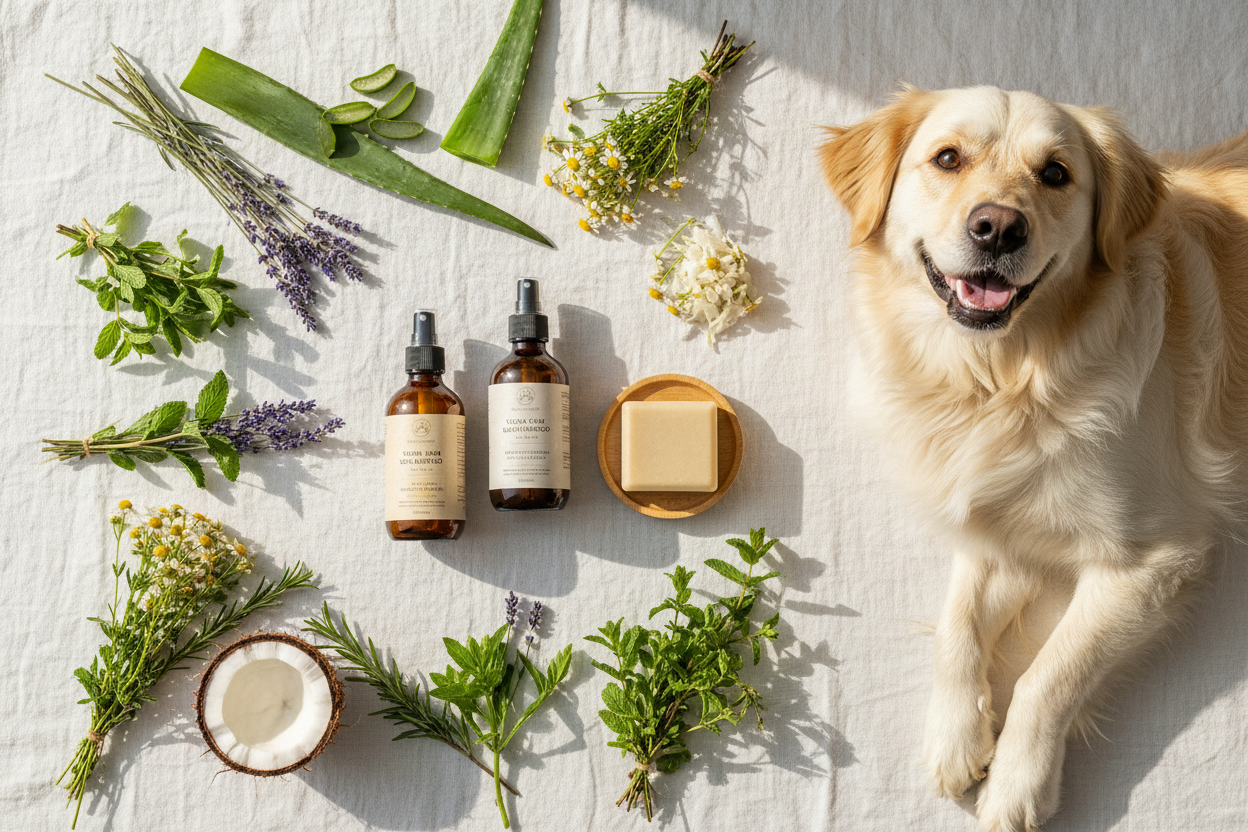
For mild to moderate skin irritation, supporting the skin barrier is the most clinically sound first step. Topical products containing omega fatty acids and botanical anti-inflammatories help restore the barrier function and interrupt the itch-scratch cycle without the side effects of systemic medication.
The FurBabies™ Botanicals DermaRenew Patchy Coat Dog Repair Serum is formulated for this purpose, combining Calendula officinalis (with demonstrated anti-inflammatory and wound-healing properties in peer-reviewed veterinary research), Lavandula angustifolia (antimicrobial and calming), and Chamomilla recutita (shown in clinical studies to rival topical steroids in relieving pruritus when used topically in dogs). Apply directly to affected areas after bathing and allow to absorb.
For bathing, use a shampoo that is pH-balanced for canine skin (around 7.0), free from SLS and parabens, and formulated with gentle plant-derived surfactants. The FurBabies™ Botanicals Rinse-Off Shampoo is built around these principles with additional botanical actives that soothe while they clean. For tips on bathing a dog with sensitive skin, see our grooming guide for pets with sensitive skin.
Not sure where to start? Download our free Dog Smell & Itch Checklist a vet pharmacist tool that helps you work through the most likely causes systematically before spending money on the wrong treatment.
If your dog needs a more complete approach: shampoo, serum, and skin barrier support together the Complete Skin & Coat Bundle combines all three steps at a saving.
When to see your vet
See your vet promptly if your dog has open sores or wounds from scratching, itching has persisted for more than two weeks despite home treatment, there is unusual odour or discharge from affected skin, your dog is showing behavioural changes such as restlessness, loss of appetite or disturbed sleep, or you suspect a food allergy and need dietary guidance.
Your vet may recommend skin scrapings, allergy testing or prescription treatment. For moderate to severe atopic dermatitis, the two most commonly prescribed options are Apoquel (oclacitinib) and Cytopoint (lokivetmab). We have detailed, balanced guides on both: Everything about Apoquel for dogs and Is Cytopoint right for my dog?
For persistent ear itching specifically, see our guide: Best remedy for itchy dog ears.
Frequently asked questions
Why is my dog itching but has no fleas? Fleas are just one of many causes of dog itching. Environmental allergies, house dust mites, food sensitivities, skin barrier damage from grooming products, secondary yeast or bacterial infections, and hormonal conditions such as hypothyroidism can all cause intense, persistent itching with no flea involvement.
What can I give my dog for itching? For mild itching, topical skin barrier support using a botanical serum such as the FurBabies™ Botanicals DermaRenew Serum is a safe and evidence-based first step. Piriton (chlorphenamine) has limited effectiveness for most types of dog itch. For moderate to severe or persistent itching, your vet may prescribe Apoquel or Cytopoint.
Can the wrong shampoo cause my dog to itch? Yes. Shampoos containing SLS, SLES, parabens or synthetic fragrance strip the skin's natural oils, disrupt pH balance and can directly trigger or worsen itching, particularly in dogs already prone to sensitivity. Switching to a gentle, pH-balanced, botanical shampoo is one of the most impactful changes you can make.
Is my dog itching because of their food? Possibly, particularly if the itching is year-round and not seasonal, and especially if there are also digestive symptoms. Chicken, beef and dairy are the most common triggers. A vet-supervised elimination diet of 8 to 12 weeks is the only reliable way to confirm or rule out a food allergy.
Why does my dog itch more at night? Itching often intensifies at night because there are fewer distractions and the dog is resting on bedding where house dust mite levels are highest. Washing bedding at 60 degrees and using a hypoallergenic cover can help reduce overnight exposure.
Can I use baby shampoo on my itchy dog? No. Baby shampoo is formulated for human skin pH (5.5), not canine skin pH (around 7.0). Regular use disrupts the acid mantle and can worsen itching over time. See our guide: Baby shampoo for dogs.
Related articles
- Scratching the Surface: Understanding the causes of dog itch
- Dog itch: what else could it be?
- My dog is still itching after flea treatment
- Can you give a dog Piriton?
- Is Cytopoint right for my dog?
- Everything about Apoquel for dogs
- Financial impact of dog and cat skin allergies
- Best remedy for itchy dog ears
Reviewed by a Clinical Pharmacist. This article is for informational purposes only and does not constitute veterinary advice. Always consult your vet if symptoms persist or worsen.
Share:
Piriton vs Apoquel vs Cytopoint for Dogs: Which Is Right for Yours? UK Guide
Dog itch - what else could it be?