
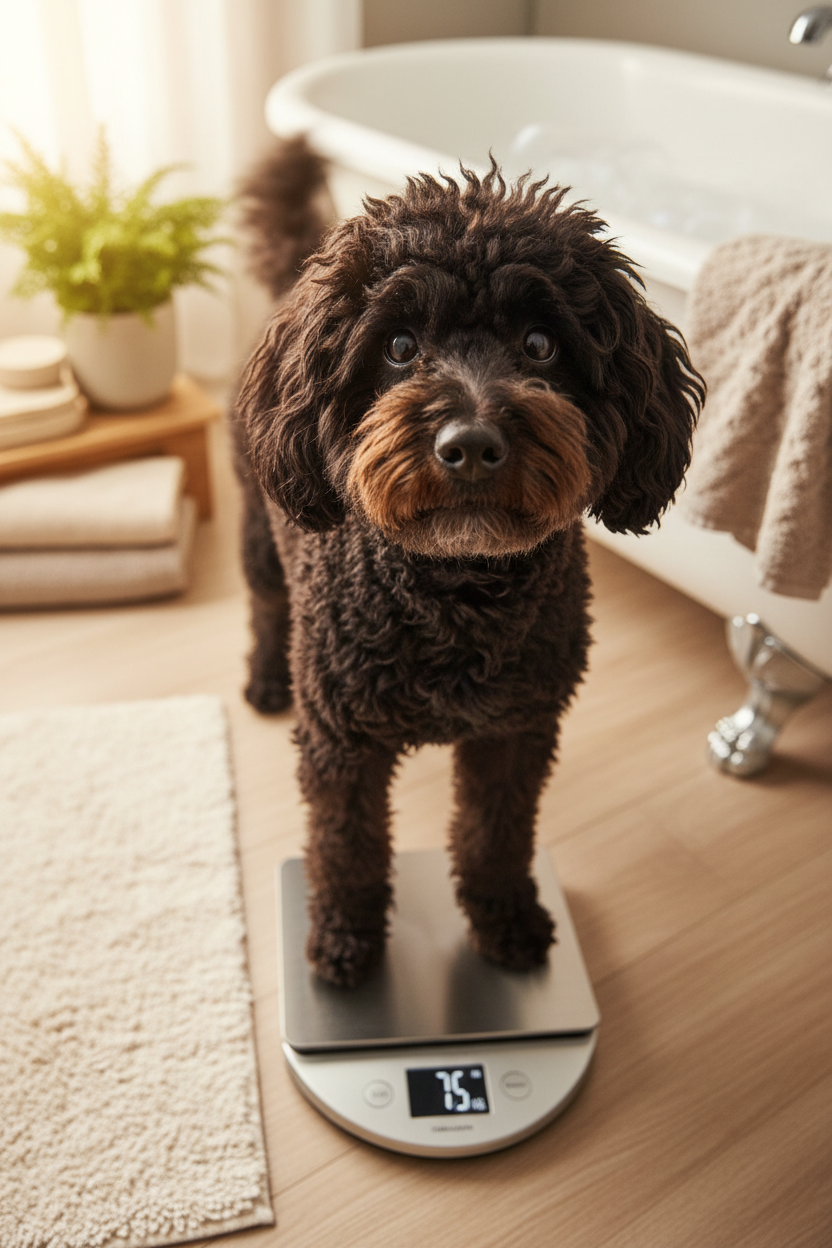
Is My Dog Too Fat? Dog Body Condition Score (BCS) Calculator
Key facts (clinically verified): An estimated 51–65% of UK dogs are overweight or obese, according to PDSA Animal Wellbeing (PAW) Report data. Excess body weight in dogs is associated with reduced life expectancy of up to 2.5 years, increased risk of diabetes mellitus, orthopaedic disease, cardiorespiratory compromise, and certain cancers. The Body Condition Score (BCS) is the validated tool recommended by the World Small Animal Veterinary Association (WSAVA) to assess body fat in dogs — and you can do it at home in under two minutes.
Weight-conscious people are familiar with BMI (Body Mass Index) as a way to assess healthy weight in humans. For dogs, the equivalent is the Body Condition Score (BCS) a clinically validated, structured assessment used by veterinarians worldwide. Unlike BMI, BCS accounts for the enormous variation in canine body shapes and sizes, from a Yorkshire Terrier to a Great Dane, making it far more meaningful than weight alone.
The 5-point BCS scale (also expressed as a 9-point scale by some veterinary bodies) was validated by Laflamme (1997) and is endorsed by the WSAVA Global Nutrition Committee. A score of 3/5 (or 4–5/9) represents ideal body condition. Each point above or below ideal on the 5-point scale represents approximately 10–15% deviation from ideal body weight.
🐾 How to assess your dog's BCS at home — 3 checks
- Rib check: Stand behind your dog and place both thumbs on either side of the backbone. Spread both hands across the rib cage. In an ideal dog (score 3), ribs are easily felt with gentle pressure but not visible. If you need to press firmly to feel the ribs, this suggests excess fat covering.
- Waist check: Look at your dog from directly above. An ideal dog shows a visible waist — a gentle inward curve behind the ribs (like an hourglass). No visible waist or a straight/barrel shape suggests overweight.
- Tummy tuck (abdominal tuck) check: Look at your dog from the side. The abdomen should curve upwards from the chest towards the hind legs. A flat or pendulous abdomen (drooping downwards) suggests excess abdominal fat.
The 5-Point BCS Scale Explained
| Score | Category | What you see and feel | Action |
|---|---|---|---|
| 1 / 5 | Emaciated | Ribs, spine, hip bones visible from a distance. No palpable fat. Obvious muscle wasting. | Seek veterinary advice urgently. |
| 2 / 5 | Very Thin | Ribs easily visible or felt with minimal fat. Waist prominent. Minimal muscle mass. | Veterinary assessment recommended. |
| 3 / 5 | Ideal ✓ | Ribs easily felt, not visible. Clear waist from above. Abdominal tuck visible from the side. | Maintain current diet and exercise. |
| 4 / 5 | Overweight | Ribs palpable with firm pressure. Waist barely visible or absent. Minimal abdominal tuck. | Discuss calorie reduction with your vet. |
| 5 / 5 | Obese | Ribs not palpable under thick fat layer. No waist. Abdomen rounded or pendulous. Fat deposits on neck and limbs. | Veterinary weight management programme advised. |
🐶 Dog BCS Calculator
Score each area 1–5 based on what you see and feel. Use the guide above.
Why Obesity in Dogs Is a Clinical Issue, Not Just an Appearance One
According to a landmark 14-year lifetime study by Kealy et al. (2002) in the Journal of the American Veterinary Medical Association, dogs maintained at ideal BCS lived a median of 1.8 years longer than their overweight littermates and had significantly delayed onset of osteoarthritis. The clinically verified health risks of canine obesity include:
- Osteoarthritis and joint disease — excess weight accelerates cartilage degradation, particularly in large breeds
- Type 2 diabetes mellitus — adipose tissue increases insulin resistance in dogs
- Cardiorespiratory disease — fat deposits restrict thoracic expansion and increase cardiac workload
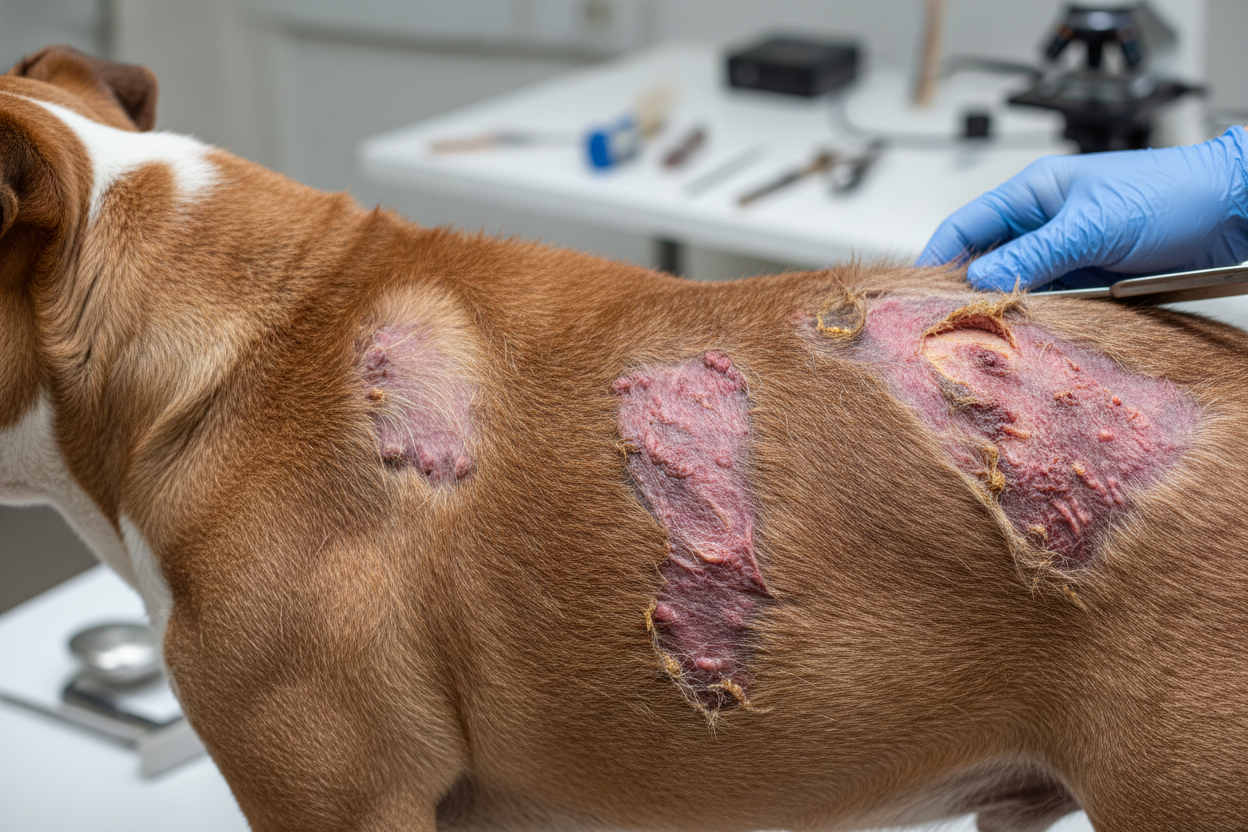
- Skin problems — overweight dogs are more prone to skin fold dermatitis, intertrigo, and poor coat condition due to reduced grooming ability and altered sebum production
- Anaesthetic risk — obese dogs have significantly higher complication rates under general anaesthesia
- Certain cancers — adipose tissue is endocrinologically active and associated with increased cancer risk in dogs
🔗 Related guides from our clinical pharmacist:
If your dog is overweight and has itchy or inflamed skin — a common comorbidity — see our Best Dog Shampoo for Itchy Skin UK 2026. For dogs with skin fold dermatitis associated with excess weight, our Dog Shampoo for Sensitive Skin guide covers gentle cleansing approaches. For an overview of the best UK-formulated dog shampoos see our Best Dog Shampoos UK 2026 round-up.
Frequently Asked Questions
What is a normal BCS for a dog?
A score of 3/5 on the Laflamme 5-point scale (equivalent to 4–5/9 on the 9-point WSAVA scale) is considered ideal. At this score, ribs are easily felt but not seen, a waist is visible from above, and an abdominal tuck is present from the side.
How accurate is BCS compared to weighing my dog?
BCS is considered more clinically meaningful than weight alone because it accounts for body frame, muscle mass, and fat distribution — factors that vary enormously between breeds. A Labrador at 30 kg may be ideal or obese depending on frame size; BCS captures this nuance where weight alone cannot.
Can I use the same BCS scale for puppies?
Yes, the same 5-point scale applies to puppies. However, growing dogs should be assessed more frequently (monthly) and dietary adjustments should always be made under veterinary supervision to avoid impacting normal development.
My dog scored 4 or 5 and how do I help them lose weight safely?
The safest approach is a structured veterinary weight management programme. In general, a 10–20% reduction in calorie intake combined with increased low-impact activity (swimming, leash walking) is recommended. Rapid caloric restriction is not safe — the target is 1–2% body weight loss per week at most. Many practices offer free weight clinics with veterinary nurses.
Does obesity affect my dog's skin and coat?
Yes. Overweight dogs frequently develop skin fold dermatitis in areas where excess fat creates warm, moist skin contact zones. They may also be unable to groom themselves effectively, leading to matting and coat deterioration. Sebum production can be altered, contributing to a dull coat and increased susceptibility to secondary skin infections.
- Laflamme DP. Development and validation of a body condition score system for dogs. Canine Practice 1997;22:10–15.
- Kealy RD et al. Effects of diet restriction on life span and age-related changes in dogs. JAVMA 2002;220(9):1315–1320. doi:10.2460/javma.2002.220.1315
- WSAVA Global Nutrition Committee. Body Condition Score Charts for Dogs. Available at: wsava.org/global-guidelines/global-nutrition-guidelines/
- PDSA. PAW Report 2023: Animal Wellbeing in the UK. pdsa.org.uk/paw-report
- German AJ. The growing problem of obesity in dogs and cats. Journal of Nutrition 2006;136(7 Suppl):1940S–1946S.
Disclaimer: This article and calculator are for educational purposes only and do not constitute veterinary advice. Always consult your vet before making changes to your dog's diet or exercise regime.


Share:
Best Natural Vegan Dog Shampoo UK 2026: What the Science Actually Says
Dog Collar vs Harness: The Neck Damage Most Owners Don't Know About