
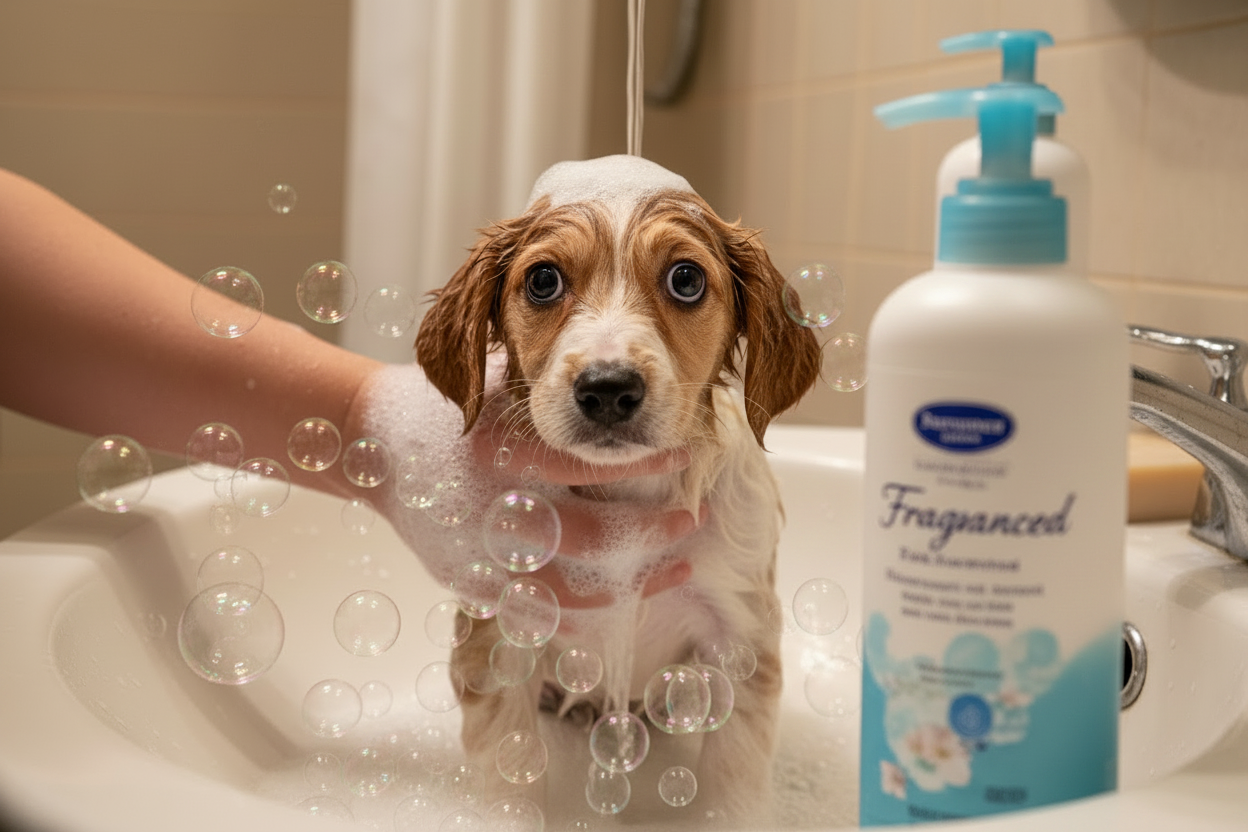
Can I use baby shampoo on my dog? No — baby shampoo is not recommended for regular use on dogs. Baby shampoo is formulated for human skin pH (5.5), while a dog's skin sits at a neutral pH of around 7.0. Regular use disrupts the skin's protective acid mantle, leaving dogs more vulnerable to infection, dryness, and itching over time.
This guide explains the pH problem in plain terms, what happens with repeated use, and what to use instead — including the safest options for UK dog owners.
It's one of the most common questions UK dog owners ask: "Can I just use baby shampoo on my dog? It's gentle, isn't it?" It's an understandable instinct — baby shampoos are marketed as mild, tear-free, and kind to sensitive skin. But "safe for a human baby" and "safe for your dog" are not the same thing, and the differences matter more than most people realise.
The pH problem
The most fundamental issue is pH. Human skin, including a baby's, sits at around pH 5.5, which is mildly acidic. Baby shampoos are formulated to match this. A dog's skin, however, has a pH closer to 7.0, which is neutral.
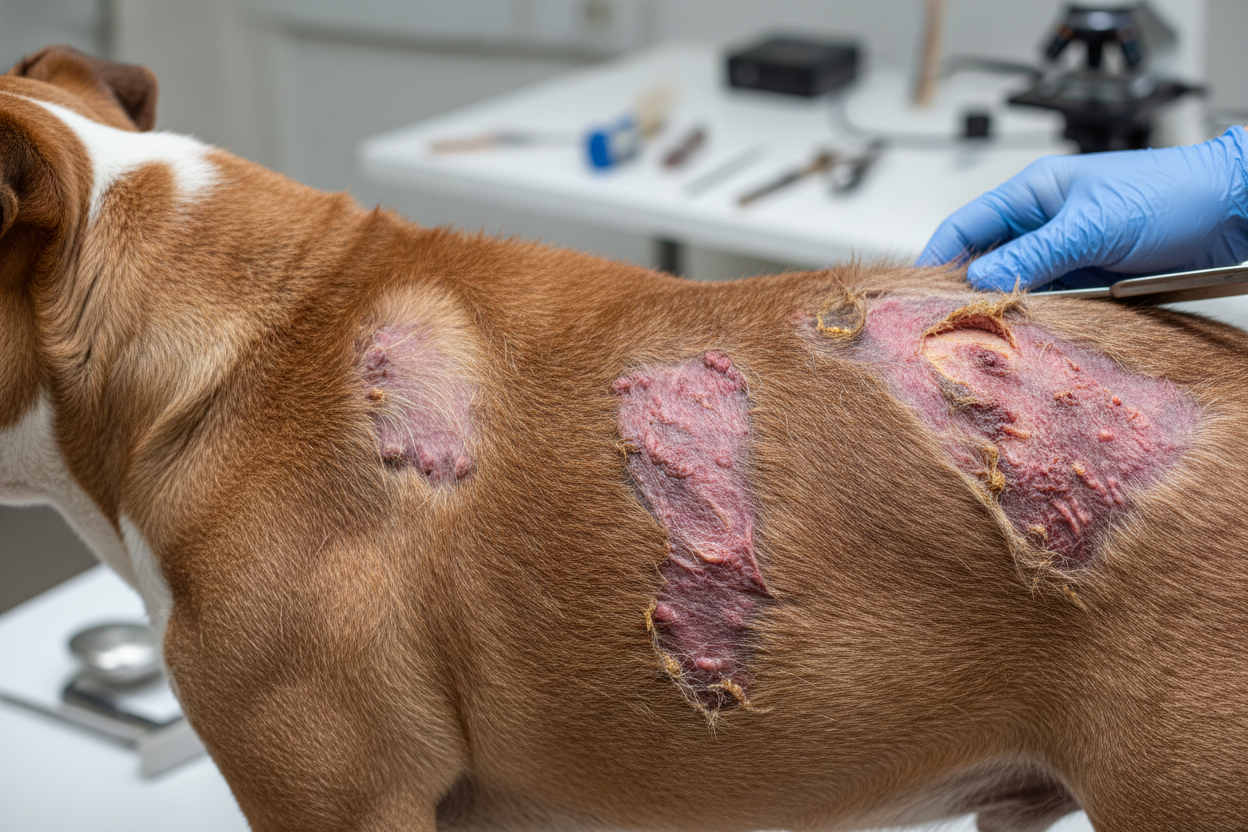
This might sound like a minor technical difference, but it has real consequences. The skin's natural pH supports what's called the acid mantle — a fine, slightly acidic film on the surface of the skin that acts as a barrier against bacteria, viruses, and environmental damage. When you wash a dog with a product formulated for human pH, you disrupt this barrier. Over time, and with repeated use, this leaves the skin more vulnerable to infection, irritation, and moisture loss.
This is the same reason human shampoos in general — not just baby shampoo — are unsuitable for dogs. The pH mismatch is built in.
Baby shampoo still contains surfactants
Many pet owners assume baby shampoo is surfactant-free, or at least free from harsh chemicals. In reality, most baby shampoos still contain sodium laureth sulphate (SLES) or similar surfactants — just at lower concentrations than adult shampoos.
Even in smaller amounts, SLES poses risks for dogs. It can strip the natural oils from the coat, cause transepidermal water loss (leaving skin dry and flaky), and contribute to the itch-scratch cycle in dogs already prone to skin sensitivity. Our full post on why SLS and SLES are worth avoiding in pet shampoos explains the chemistry in more detail.
If your dog is already scratching after baths, the shampoo — even a supposedly gentle one — may well be a contributing factor. See our guide on why dogs itch for a fuller picture of what might be going on.
Baby shampoo doesn't clean a dog's coat properly
Dog skin produces different types and quantities of sebum (natural oil) compared to human skin. Dog coats also pick up a very different mix of environmental debris — mud from UK fields and parks, pollen, grass oils, and the general grime of outdoor life. Baby shampoo simply isn't formulated to deal with this effectively.
The result is often a coat that looks clean on the surface but hasn't had the deeper oils and debris properly lifted. Over time this can contribute to odour, matting, and a dull coat appearance — the opposite of what you're aiming for.
When might baby shampoo be used in an emergency?
There are limited circumstances where a vet might suggest using a very diluted baby shampoo as a one-off — for example, if a dog has got into something that needs washing off urgently and no dog shampoo is available. In these situations, a single use is unlikely to cause lasting harm.
But this is very different from regular bathing. As a routine product, baby shampoo is a poor substitute for a properly formulated dog shampoo — and over months and years of use, the cumulative effect on skin pH, coat condition, and skin barrier integrity is real.
What about puppies — aren't they more like babies?
Puppies do have particularly delicate skin, and it's tempting to reach for the gentlest product in the house. But the pH difference still applies from birth — a puppy's skin is neutral just like an adult dog's. What's needed isn't human-baby-gentle, but puppy-specific: a shampoo formulated for the neutral pH of canine skin, free from harsh surfactants, and ideally free from fragrance too.
Our dedicated post on the best shampoo for puppies covers what to look for at each stage of a puppy's development.
So what should you use instead?
Look for a shampoo that is:
- Specifically formulated for dogs — not humans, not babies, not cats
- pH balanced for canine skin (around pH 6.5–7.5)
- Free from SLS and SLES
- Free from parabens and artificial fragrance — both are common irritants
- Made with gentle, plant-derived surfactants such as coco glucoside or decyl glucoside
The FurBabies™ Botanicals Rinse-Off Shampoo is formulated exactly to these standards — SLS-free, paraben-free, pH-balanced for canine skin, and made with gentle botanical actives including chamomile and calendula that actively soothe sensitive or irritated skin while cleaning.
For dogs with sensitive or reactive skin, applying the DermaRenew Dog Repair Serum after bathing helps restore the skin barrier and reduces the itching and dryness that can follow a wash. Used together, the shampoo and serum are available as the Complete Skin & Coat Bundle.
"For a full clinical breakdown of emergency use and ingredient safety, read our pharmacist's guide "Our post on whether the choice of shampoo really matters goes into the full detail of what separates a good pet shampoo from a harmful one. And if you're managing a dog with skin sensitivities, our grooming guide for pets with sensitive skin has practical tips for making bath time as low-stress and skin-friendly as possible.
A quick note on other human products to avoid
While we're on the subject, baby shampoo isn't the only human product that gets repurposed for dogs. A few others to be aware of:
- Human conditioner: pH mismatch, and often contains fragrances and silicones unsuitable for dogs
- Head & Shoulders / anti-dandruff shampoos: Active ingredients like zinc pyrithione are not formulated for canine skin
- Washing-up liquid: Sometimes suggested for greasy coats, but extremely harsh — SLS in high concentrations. Only ever appropriate as a very occasional emergency measure
- Human paracetamol, antihistamines, or flea treatments: Many human medicines that seem mild are dangerous for dogs. Our post on paracetamol and dogs covers one of the most commonly misused examples
Not sure which FurBabies™ Botanicals shampoo is right for your dog? Get in touch and we'll help you find the best fit for your pet's coat and skin type.
Share:
Does the choice of pet shampoo matter?
Why avoid Shampoos with SLS (Sodium Lauryl Sulphate) & SLES (Sodium Laureth Sulphate)