
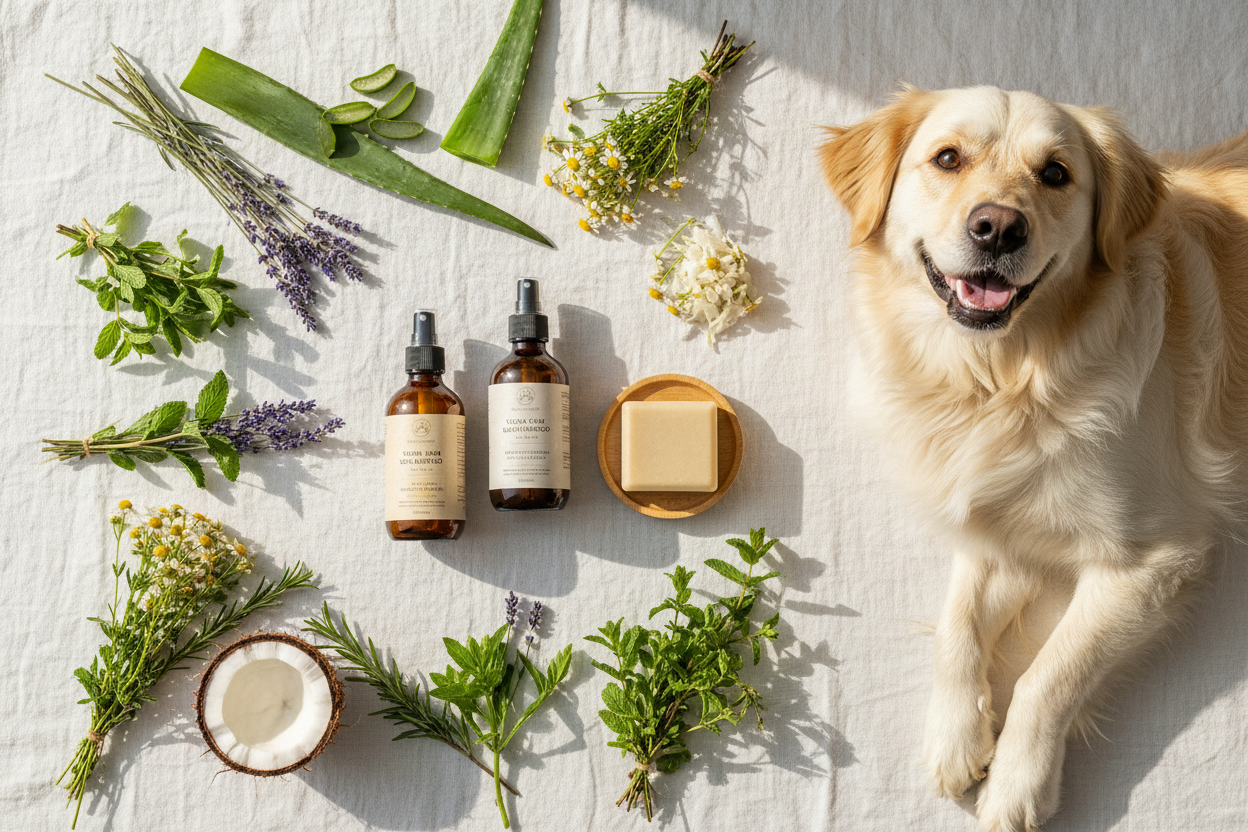
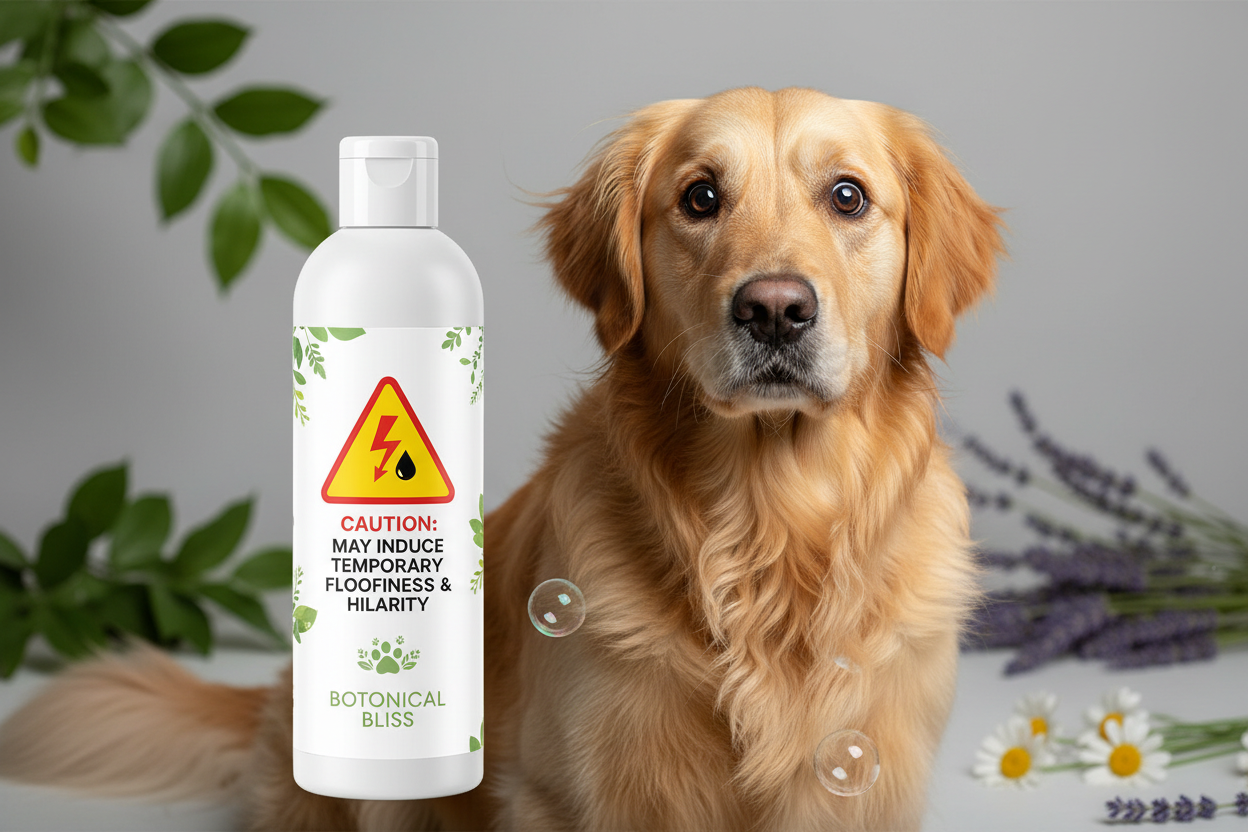
What is the best natural, vegan dog shampoo in the UK? The FurBabies™ Botanicals Rinse-Off Shampoo is a fully plant-derived, vegan, SLS-free shampoo formulated specifically for canine and feline skin pH backed by peer-reviewed research on every active botanical ingredient. Unlike most products marketed as "natural," every ingredient in the FurBabies™ Botanicals range is chosen for a specific, evidence-based reason, not for marketing appeal.
This guide explains the science behind why natural and vegan formulations genuinely perform better on sensitive pet skin, what "natural" on a label actually means (and doesn't), and why demand for ingredient-conscious pet grooming is accelerating in 2026.
Section 1: Why natural and vegan matters for your pet's skin (it's not just about ethics)
Most articles on vegan pet products lead with animal welfare. This one leads with skin biology because the science makes the strongest case.
Your dog's skin is fundamentally different from yours
A dog's skin is only 3–5 cell layers thick, compared to 10–15 in humans. This means ingredients applied topically absorb faster, penetrate deeper, and cause damage more readily. Canine skin pH also differs significantly from human skin — ranging from 5.5 to 7.2 across the body, and as high as 9.1 on the dorsolumbar region, compared to the human average of pH 5.5. This pH variation matters because cutaneous pH plays an integral role in skin barrier function and products formulated for human skin are calibrated to the wrong range entirely.
What SLS actually does to the skin barrier
Sodium Lauryl Sulphate (SLS) the foaming surfactant in most conventional pet shampoos has a well-documented destructive effect on the skin barrier. A study in the Journal of Veterinary Clinics demonstrated that even a 1.25% concentration of SLS caused measurable damage to the canine skin barrier. Separate research confirmed that cumulative exposure to 0.5% SLS significantly impairs skin barrier function, with skin dryness as a symptom of delayed onset — meaning the damage isn't immediately visible after bathing but accumulates over weeks of regular use.
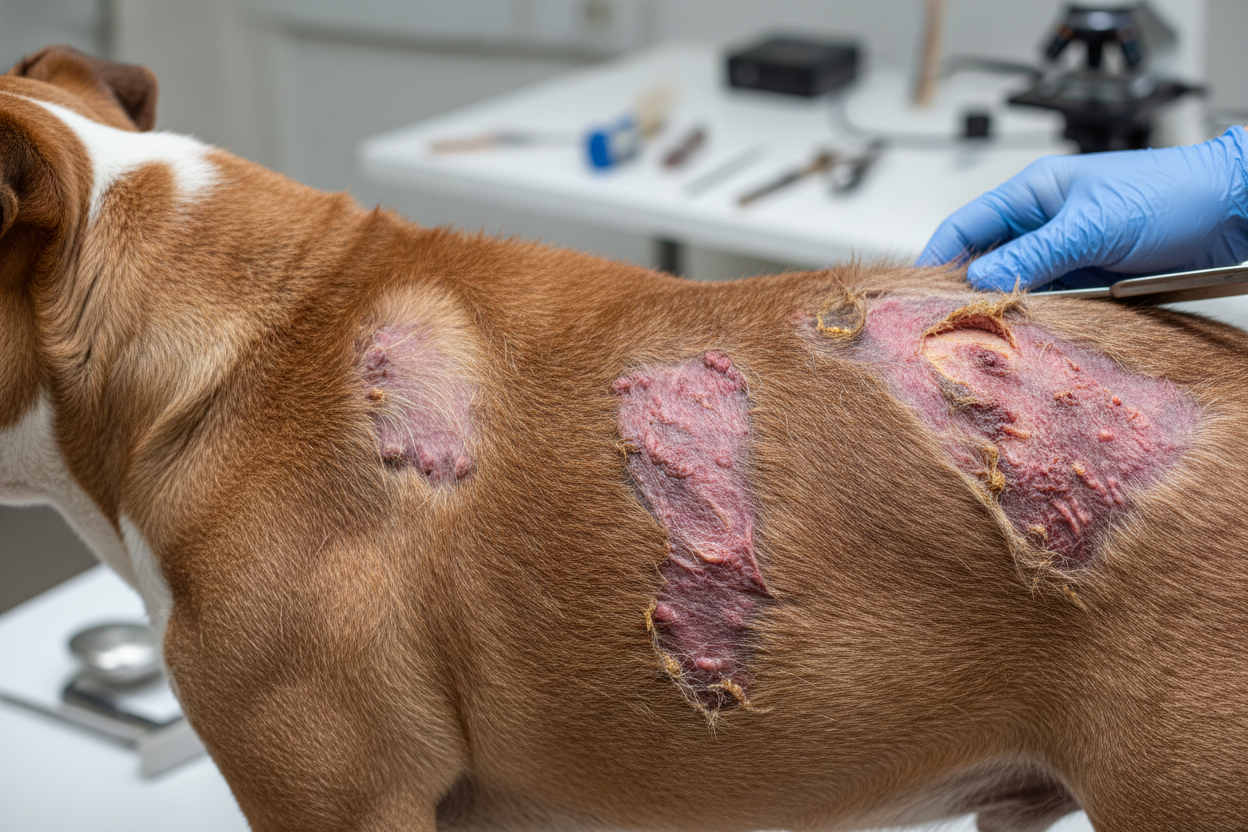
Critically, SLS has been shown to downregulate filaggrin expression within 6 hours of application. Filaggrin is the structural protein responsible for maintaining the skin's cornified cell envelope the outermost protective layer. Without adequate filaggrin, the skin barrier becomes permeable to allergens, bacteria, and yeast, creating the exact conditions that drive chronic itching, secondary infections, and atopic flare-ups. If your dog is itching after baths, the shampoo is likely a contributing cause. Our guide on why dogs itch covers this cycle in full.
Why plant-derived surfactants genuinely perform better
The alternative to SLS in natural and vegan formulations is glucoside-based surfactants derived from coconut oil and fruit sugars primarily coco glucoside and decyl glucoside. These are not just "less bad" than SLS: clinical studies show that glucoside surfactants cause significantly less skin irritation than sulphate-based surfactants and do not disrupt the skin barrier or cause transepidermal water loss. They clean effectively, rinse easily, and leave the coat's natural oils intact which is the biological baseline any shampoo should be trying to preserve, not strip.
The FurBabies™ Botanicals shampoos use coco glucoside as the primary surfactant, supplemented in the Rinse-Off Shampoo with SCI (Sodium Cocoyl Isethionate) which is a coconut-derived secondary surfactant with a significantly lower irritation profile than SLS, which provides richer lather without barrier disruption.
The paraben problem and new evidence specific to dogs
Parabens (methylparaben, ethylparaben, propylparaben) are synthetic preservatives used in the majority of conventional pet shampoos. They are classified as endocrine-disrupting compounds (EDCs) substances that interfere with hormonal signalling, with documented adverse effects on developmental, reproductive and neurological systems.
A 2022 study published in PubMed, the first of its kind, measured paraben accumulation directly in canine fur using liquid chromatography-tandem mass spectrometry. It found methylparaben concentrations of up to 1,023 ng/g dry weight in dogs' fur with statistically higher concentrations in males and in younger dogs under three years old. The presence of parabens in canine fur confirms that cosmetic and grooming products are a significant exposure route, separate from diet. The researchers concluded that paraben accumulation in dogs may play a role in veterinary toxicology an area that remains significantly under-researched.
Every FurBabies™ Botanicals product is formulated without parabens. Preservation is achieved through pentylene glycol a plant-derived multifunctional ingredient that acts simultaneously as a moisturiser, preservative booster, and antimicrobial. Read more: Parabens in pet shampoos — what the evidence says.
Section 2 : What "natural" actually means on a pet shampoo label (and what it doesn't)
"Natural" has no legal definition in UK cosmetics regulation, and no definition whatsoever in pet product regulation. Any brand can print "natural" on a pet shampoo label regardless of what's inside it. This is not a technicality — it is a widespread commercial reality that catches out well-intentioned pet owners every day.
What to look for instead
Rather than trusting the word "natural," check for these specific, verifiable claims:
- SLS-free and SLES-free — listed explicitly, not implied. Check the full ingredients list for sodium lauryl sulphate or sodium laureth sulphate
- Paraben-free — look for the absence of methylparaben, ethylparaben, propylparaben, and butylparaben in the INCI list
- pH balanced for pets — specifically for canine or feline skin (pH 6.5–7.5 for dogs), not for humans
- Named plant-derived surfactants — coco glucoside, decyl glucoside, sodium cocoyl isethionate. If the surfactant isn't named or the brand won't tell you what it is, that's a red flag
- Free from synthetic fragrance — listed as "parfum" or "fragrance" on the label. Synthetic fragrance is one of the most common triggers of contact dermatitis in dogs
- Full INCI ingredient disclosure — transparent brands publish their complete ingredient list, in order. Opaque brands don't
The FurBabies™ Botanicals range publishes the complete INCI list for every product. Our full ingredient breakdown — with the peer-reviewed evidence behind each ingredient is at: What is in FurBabies™ Botanicals products?
The "vegan" certification question
"Vegan" is more verifiable than "natural" — a product is either free from animal-derived ingredients and not tested on animals, or it isn't. However, a vegan product is not automatically gentle or effective. SLS is vegan. Synthetic parabens are vegan. The ethical claim and the skin-science claim are entirely separate, which is why leading with the evidence not just the label matters.
FurBabies™ Botanicals products are vegan because every ingredient chosen on the evidence happens to be plant-derived. The ethics follow the science, not the other way round.
Section 3: 2026 trends: why natural and vegan pet grooming is accelerating
The demand numbers
Organic and vegan pet grooming products saw a 58% surge in demand in the most recent global market analysis, with 62% of buyers stating a preference for eco-friendly packaging alongside cleaner formulations. The UK pet grooming market, valued at £850M in 2025, is projected to reach £1.47B by 2035 — with natural and ingredient-conscious products cited as the fastest-growing segment [cite:web:58].
In 2026, an estimated 62% of UK households own at least one of Britain's 36.5 million pets. The pet care market is valued at over £9B and growing at 5.4% annually [cite:web:63].
Who is driving this shift and why it matters for ingredient scrutiny
The demographic profile of vegan and natural-product consumers in the UK is highly specific: 26% of Gen Z currently follow a meat-free diet, compared to 10% of Baby Boomers. Women make up 63% of the UK vegan population. London has the highest concentration at 21% of residents. These groups are disproportionately the primary caregivers of pets and they apply the same ingredient scrutiny to their pet's grooming products that they apply to their own skincare. The humanisation of pets treating animals as full family members with equivalent welfare considerations is the structural driver behind this shift, and it shows no sign of reversing.
The transparency premium
A 2026 market analysis identified "transparency, premium wellness, and emotional benefit" as the three primary purchase drivers in the global pet industry, now valued at $273 billion. Pet owners are no longer satisfied with vague claims — they want to know exactly what is in the product, why it's there, and what the evidence says. This is the exact position FurBabies™ Botanicals occupies: not just claiming to be natural, but explaining the science behind every ingredient choice.
Section 4: The FurBabies™ Botanicals approach
The FurBabies™ Botanicals range was formulated by a clinical pharmacist specifically for canine and feline skin biology. Every ingredient is chosen because peer-reviewed evidence supports its use not because it photographs well or tests well in consumer focus groups.
The core products for coat and skin health:
- Rinse-Off Shampoo Conditioner SLS-free, paraben-free, pH-balanced for dogs and cats. Coco glucoside and SCI surfactants, Panthenol (Provitamin B5) conditioning, Lavandula angustifolia for antimicrobial support. Rinses quickly — shorter, less stressful bath time.
- No-Rinse Shampoo Conditioner for anxious pets, post-surgery recovery, elderly animals, and small pets including rabbits and hamsters. Same SLS-free, paraben-free formulation with rose geranium (Pelargonium rosae) — one of the few essential oils appropriate for cats at correctly diluted concentrations.
- DermaRenew Patchy Coat Dog Repair Serum applied directly to affected skin after bathing to restore the lipid barrier, reduce inflammation, and support recovery from secondary yeast and bacterial infection. Calendula officinalis, Lavandula angustifolia, Chamomilla recutita, Jojoba, and Avocado oil each with a specific, cited mechanism of action.
For dogs with persistent skin issues who need a complete system, the Complete Skin & Coat Bundle combines shampoo and serum in one purchase.
The full evidence base behind every ingredient in the range is at: What is in FurBabies™ Botanicals products?
Frequently asked questions
Is vegan dog shampoo as effective as regular dog shampoo? Yes and in most cases, for dogs with sensitive skin, more effective. Plant-derived glucoside surfactants clean effectively without stripping the skin's natural oils or disrupting pH balance. The assumption that more lather equals better cleaning is a marketing myth: SLS creates foam but damages the skin barrier. Coco glucoside cleans without the collateral damage.
What does "natural" mean on a pet shampoo label? Nothing legally enforceable. "Natural" has no regulated definition in UK pet product or cosmetics law. Any brand can use the term regardless of ingredients. Always check the full INCI list for SLS, SLES, parabens, and synthetic fragrance these are the specific ingredients to avoid, regardless of what the front of the label says.
Is cruelty-free the same as vegan for pet products? No. Cruelty-free means the product was not tested on animals. Vegan means it contains no animal-derived ingredients. A product can be vegan but tested on animals, or cruelty-free but contain beeswax or lanolin. The FurBabies™ Botanicals range is both.
Are plant-based surfactants genuinely gentler than SLS? Yes this is not marketing language, it is supported by clinical evidence. Studies demonstrate that coco glucoside has a significantly lower irritation potential than SLS, does not cause transepidermal water loss, and does not disrupt the skin barrier. SLS has been shown to downregulate filaggrin expression within 6 hours of application the protein responsible for maintaining the skin's outermost protective layer.
Are parabens in pet shampoos a real concern? A 2022 peer-reviewed study found parabens accumulating directly in canine fur at concentrations up to 1,023 ng/g with grooming products identified as a significant exposure route. Parabens are classified as endocrine-disrupting compounds with documented effects on hormonal, reproductive, and neurological development. Younger dogs under three years old showed statistically higher concentrations.
What is the best natural dog shampoo for sensitive skin UK? Look for a shampoo that is SLS-free, paraben-free, pH-balanced for canine skin (6.5–7.5), free from synthetic fragrance, and formulated with named plant-derived surfactants such as coco glucoside. The FurBabies™ Botanicals Rinse-Off Shampoo meets all of these criteria and is formulated with active botanicals including Calendula and Chamomilla with peer-reviewed evidence for soothing sensitive canine skin.
Is coconut oil safe for dogs' skin? Yes. Virgin coconut oil has a strong evidence base for topical use in dogs, with demonstrated antibacterial, antifungal, antiviral, and antioxidant properties. It is used as a base carrier across every product in the FurBabies™ Botanicals range. MCT (fractionated) coconut oil is also used in the serums for faster, non-greasy absorption.
Formulated by a Clinical Pharmacist. Every ingredient cited links to peer-reviewed research. This article is for informational purposes and does not constitute veterinary advice.
References
- Journal of Veterinary Clinics Effect of topical application of intercellular lipids on SLS-damaged canine skin barrier
- PubMed Skin barrier integrity after cumulative SLS exposure in atopic dermatitis (2014)
- PubMed Biomonitoring parabens in dogs using fur sample analysis (2022)
- PMC Evaluation of pH on in vitro growth of Malassezia pachydermatis — canine skin pH range confirmed
- CABI Digital Library Parabens as endocrine-disrupting compounds in pet food and urine
- Business Research Insights 58% surge in organic and vegan pet grooming demand
- UK Pet Food UK pet population 2026: 36.5 million pets in 62% of households
Share:
What is in FurBabies™ Botanicals Products?
Is my dog too fat?