
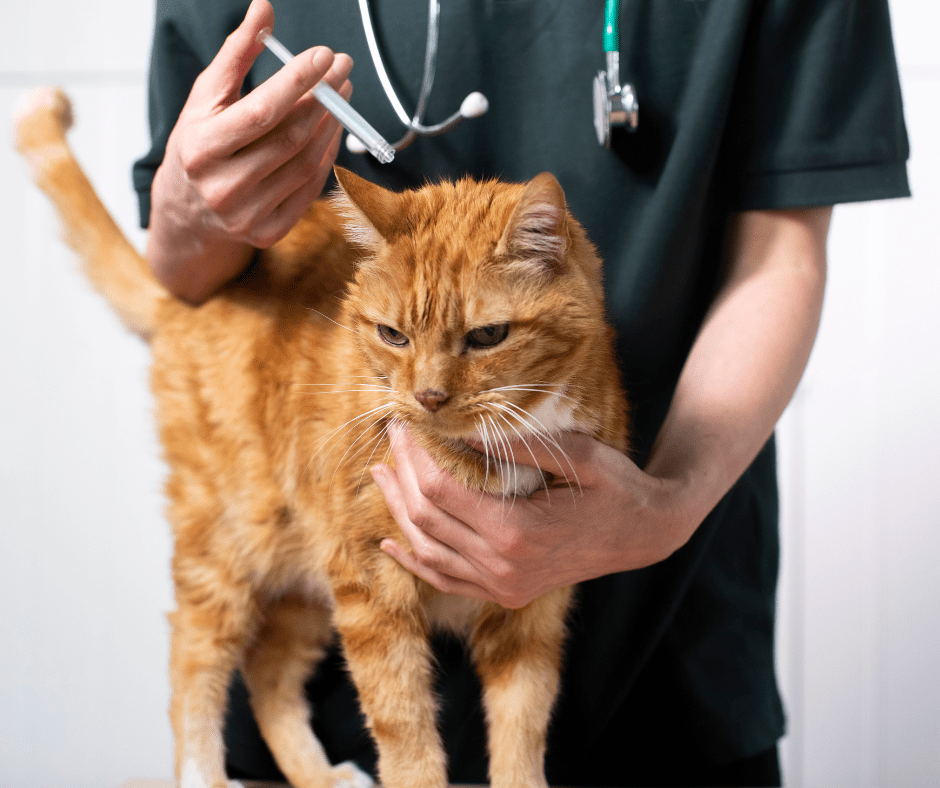
Vets in the UK have access to a range of prescription-only flea treatments that are not available over the counter. These are not simply stronger versions of the same products in many cases they represent entirely different pharmacological classes with different mechanisms of action, broader parasite coverage, or longer durations of effect that make them clinically superior in specific situations. This article explains exactly what vets prescribe, why they choose one product over another, what the prescription system means in practice, and when you genuinely need a prescription product rather than an OTC alternative. For a complete overview of every flea treatment format including OTC options, household sprays, and collars, see the A-Z Flea Treatment Guide for Dogs and Cats.
Jump to a Section
- How the UK prescription system works
- The isoxazoline class — NexGard, Bravecto, Simparica, Credelio
- Prescription spot-ons — Advocate, Stronghold, Revolution Plus, Broadline
- Prescription oral treatments — Comfortis
- Prescription flea treatment for cats specifically
- When do you actually need a prescription product?
- How vets choose between products
- Special considerations — seizures, liver disease, pregnancy
- Full prescription product comparison table
How the UK Veterinary Prescription System Works
In the UK, veterinary medicines are classified by the Veterinary Medicines Directorate (VMD) under a tiered legal framework. The most potent and clinically specialised flea treatments fall into the POM-V category Prescription Only Medicine, Veterinarian. A POM-V product can only be supplied by a veterinary surgeon, or by a pharmacist or suitably qualified person acting on a valid written veterinary prescription.
This has an important practical implication that many pet owners do not know: your vet is legally obliged to issue you with a written prescription on request, which you can then use to purchase the medication from any registered veterinary pharmacy — including online pharmacies, which are typically significantly cheaper than purchasing directly from a practice. You are not obliged to buy prescription flea treatment from your vet's practice. The written prescription must specify the product, dose, species, and animal, and it expires after a period specified by the vet (typically 3–6 months). Asking for a written prescription is entirely reasonable and will not affect your vet's willingness to see your pet.
There is no clinical reason why a prescription product is inherently more dangerous than an OTC product — the prescription classification reflects the need for professional clinical judgement in selecting the right product for the right animal, not a higher intrinsic toxicity risk. The OTC products available (Frontline, Advantage, Seresto) are effective for many animals. The prescription products offer additional clinical options when OTC treatment is insufficient, when broader parasite coverage is needed, or when resistance is suspected.
The Isoxazoline Class NexGard, Bravecto, Simparica, Credelio
The isoxazolines are the most significant pharmacological development in veterinary ectoparasitology of the past decade. They are oral treatments that block invertebrate GABA-gated and glutamate-gated chloride ion channels, causing uncontrolled neuronal excitation, paralysis, and death in fleas and ticks. The selectivity of this mechanism for invertebrate over mammalian GABA receptors is the basis of their safety in dogs at therapeutic doses — mammalian GABA receptors have a different subunit structure that the isoxazolines bind with far lower affinity.
All isoxazolines licensed in the UK for flea and tick control are currently licensed for dogs only in oral form (with the exception of fluralaner/Bravecto which also has a spot-on formulation licensed for cats). They are all POM-V, requiring a veterinary prescription.
The four isoxazolines available in the UK:
-
NexGard (afoxolaner) — Boehringer Ingelheim
Monthly oral chewable for dogs. Licensed from 8 weeks of age and 2kg bodyweight. Covers fleas and ticks (Ixodes ricinus, Dermacentor reticulatus, Rhipicephalus sanguineus). Onset of flea-killing activity: within 8 hours of dosing. Onset of tick-killing activity: within 48 hours. Highly palatable beef-flavoured chew — compliance is generally high. Must be given with or after food to maximise absorption and reduce GI side effects. -
Bravecto (fluralaner) — MSD Animal Health
12-week oral chewable for dogs (also available as a 12-week spot-on for dogs and cats — see cats section). Licensed from 8 weeks and 2kg. Covers fleas and ticks. The 12-week duration is a significant practical advantage for owners who struggle with monthly dosing compliance. Onset of flea-killing activity: within 2 hours — the fastest in class. Onset of tick-killing activity: within 12 hours. -
Simparica (sarolaner) — Zoetis
Monthly oral chewable for dogs. Licensed from 8 weeks and 1.25kg. Covers fleas, ticks, and — importantly — sarcoptic mange mites (Sarcoptes scabiei) and demodectic mange mites (Demodex canis). This additional mite coverage makes Simparica particularly useful in dogs presenting with both ectoparasite control and concurrent or suspected mange. Onset of flea-killing activity: within 3 hours. -
Credelio (lotilaner) — Elanco
Monthly oral chewable for dogs. Licensed from 8 weeks and 1.3kg. Covers fleas and ticks. Onset of flea-killing activity: within 4 hours. A smaller tablet size than some competitors, which can be an advantage in small or toy breeds that are difficult to tablet. Must be given with food — absorption is significantly reduced in a fasted state.
⚠️ Isoxazoline safety advisory: All four products carry a label requirement from the UK VMD and the European Medicines Agency regarding a potential risk of neurological adverse events — specifically tremors, ataxia, and seizures — in a small number of treated animals. The absolute risk is very low, and the products have been used in millions of animals with an excellent overall safety record. However, the risk is considered sufficient to warrant caution in dogs with a pre-existing history of seizures or neurological disease. If your dog has a seizure history, discuss this specifically with your vet before starting an isoxazoline product an alternative class may be more appropriate. This advisory does not mean isoxazolines should not be used in otherwise healthy dogs; the benefit-risk balance for the vast majority of animals is strongly in favour of treatment.
Prescription Spot-On Treatments
Advocate (Imidacloprid + Moxidectin) — Elanco
Advocate is one of the most versatile prescription spot-ons available in the UK for both dogs and cats. The combination of imidacloprid (a neonicotinoid that kills adult fleas on contact) and moxidectin (a macrocyclic lactone with endoparasiticide activity) provides coverage that extends well beyond flea control alone. Advocate is licensed for: fleas, Dirofilaria immitis (heartworm prevention), Angiostrongylus vasorum (lungworm), Thelazia callipaeda (eyeworm), roundworms, hookworms, whipworms (dogs), and ear mites. It does not cover ticks.
Advocate is the product of choice for dogs in lungworm-endemic areas of the UK — its moxidectin component provides clinically proven lungworm prevention, which is not provided by most other spot-on products. If your dog regularly eats slugs or snails, or lives in an area with high lungworm prevalence, your vet is likely to recommend Advocate specifically for this reason.
Stronghold (Selamectin) — Zoetis
Stronghold is a monthly spot-on for dogs and cats. Selamectin is a macrocyclic lactone that acts systemically — it is absorbed through the skin into the bloodstream, and fleas and other parasites receive a lethal dose when they feed. Licensed coverage includes: fleas, Dirofilaria immitis (heartworm prevention), roundworms (Toxocara canis/cati), ear mites (Otodectes cynotis), and sarcoptic mange mites in dogs. It does not cover ticks reliably.
Because Stronghold acts systemically rather than by contact, fleas must bite your pet to receive a lethal dose — this means it is less ideal as the sole treatment for FAD-affected animals where flea bite avoidance is clinically important. In FAD dogs and cats, a contact-acting product or an isoxazoline (which kills extremely rapidly after the bite) is generally preferable.
Revolution Plus (Selamectin + Sarolaner) — Zoetis
Revolution Plus is a monthly spot-on licensed for cats only in the UK. It combines selamectin (as in Stronghold) with sarolaner (an isoxazoline), providing significantly broader coverage than either component alone. Licensed coverage: fleas, ticks (Ixodes ricinus), ear mites, roundworms, hookworms, and heartworm prevention. The addition of sarolaner provides more rapid and comprehensive flea and tick killing activity than selamectin alone. Revolution Plus is the most comprehensive single-product parasite solution currently available for cats in the UK. Do not use on dogs.
Broadline (Fipronil + S-Methoprene + Eprinomectin + Praziquantel) — Boehringer Ingelheim
Broadline is a monthly spot-on licensed for cats only. Its four-component formulation provides the broadest spectrum of parasite coverage of any single cat product licensed in the UK: fleas (adults and eggs/larvae via S-methoprene IGR), ticks, roundworms, tapeworms, hookworms, and Aelurostrongylus abstrusus (lungworm in cats). For cats that require both ectoparasite and endoparasite (worm) control in a single monthly product, Broadline removes the need for a separate wormer. Do not use on dogs.
Prescription Oral Treatments — Comfortis
Comfortis (spinosad) is a monthly oral flea treatment licensed for both dogs and cats in the UK. Spinosad acts on nicotinic acetylcholine receptors in the flea's nervous system, causing paralysis and death. It is not an isoxazoline — its mechanism is distinct, which makes it a useful alternative for animals in which isoxazolines are contraindicated. Onset of action is rapid, with flea-killing activity within 30 minutes of dosing. Duration: 4 weeks.
Comfortis must be given with food — giving it to a fasted animal significantly reduces bioavailability and is associated with a higher incidence of vomiting. It should not be used concurrently with high-dose ivermectin (as used in some heartworm treatment protocols) due to a potential drug interaction causing neurological signs. At licensed flea prevention doses, standard ivermectin-containing products are not expected to interact.
Prescription Flea Treatment for Cats — A Specific Note
Cat owners face a more restricted product landscape than dog owners, primarily because of cats' unique metabolic vulnerability to certain insecticide classes — particularly permethrin and certain essential oils — which eliminates a large proportion of dog products from safe use in cats. The prescription products licensed specifically for cats in the UK are:
- Stronghold (selamectin) — fleas, roundworms, ear mites, heartworm prevention
- Revolution Plus (selamectin + sarolaner) — fleas, ticks, ear mites, roundworms, hookworms, heartworm prevention. Cats only.
- Broadline (fipronil + S-methoprene + eprinomectin + praziquantel) — fleas, ticks, roundworms, tapeworms, hookworms, lungworm. Cats only.
- Bravecto spot-on (fluralaner) — fleas and ticks. 12-week duration. Cats only formulation.
- Comfortis (spinosad) — fleas only. Monthly oral tablet. Dogs and cats.
The choice between these for an individual cat depends on what additional parasite coverage is required, whether the cat tolerates spot-on application, whether tick coverage is needed (outdoor cats), and whether concurrent worming is required. Your vet will consider all of these factors when making a recommendation.
When Do You Actually Need a Prescription Product?
OTC flea products (Frontline, Advantage, Seresto) are appropriate and effective for many animals. A prescription product is clinically justified when:
- OTC treatment is failing — if you have been using a fipronil or imidacloprid-based OTC product correctly and consistently and fleas are not being controlled, resistance may be a factor. Switching to an isoxazoline (different mechanism of action) is the appropriate clinical response.
- Broader parasite coverage is needed — if your dog needs lungworm prevention (Advocate), or your cat needs combined flea, tick, and worm control in a single product (Broadline, Revolution Plus), OTC products cannot provide this.
- Tick control is clinically important — OTC Frontline and Advantage have limited or no reliable tick activity. If your dog is in a tick-endemic area or regularly walked in long grass, woodland, or heathland, a prescription isoxazoline or Seresto collar provides more reliable tick protection.
- The animal has FAD — flea allergy dermatitis requires the most rapid and comprehensive flea kill possible to minimise allergen exposure. Isoxazolines (fastest kill rate) or contact-acting prescription spot-ons are generally preferred over systemic products in FAD patients.
- The pet has a complex parasite burden — a single prescription product covering fleas, ticks, lungworm, heartworm, and worms is clinically more appropriate than multiple separate OTC products.
- The animal is a kitten or puppy with specific age or weight constraints — some OTC products have higher minimum age or weight thresholds. Your vet can select the prescription product appropriate to the animal's exact weight and developmental stage.
How Vets Choose Between Prescription Products
The decision is driven by a combination of clinical and practical factors. In a typical consultation the vet will consider:
- Species — several prescription products are species-specific. Revolution Plus and Broadline are cats only. The oral isoxazolines are currently dogs only in oral form.
- Parasite profile — what does this animal actually need protection against? A dog that swims in ponds in the South East needs lungworm cover (Advocate). A dog in a Highland tick-endemic area needs reliable tick cover (isoxazoline or Seresto). A cat that goes outdoors needs tick cover (Revolution Plus or Bravecto spot-on).
- Previous treatment history — has an OTC product been tried and failed? This shifts the recommendation toward a different mechanism of action.
- Concurrent health conditions — seizure history, liver or kidney disease, pregnancy, concurrent medications (see below).
- Owner compliance — a 12-week product (Bravecto) is clinically equivalent to a monthly product over that period, but significantly better in practice for owners who struggle with monthly dosing. Compliance is a real clinical variable.
- Route preference — some owners or animals have strong preferences between spot-on and oral. An animal that grooms excessively (some cats), swims regularly, or lives with young children who may contact the application site may be better suited to an oral product. An animal that is difficult to tablet may be better suited to a spot-on.
Special Considerations: Seizures, Liver Disease, Pregnancy, Drug Interactions
Dogs with a History of Seizures or Neurological Disease
The isoxazoline class carries a VMD label requirement regarding a potential risk of neurological adverse events. In dogs with a pre-existing seizure disorder, the risk-benefit balance requires individual clinical assessment. Non-isoxazoline alternatives include: Advocate (imidacloprid + moxidectin), Stronghold (selamectin), Frontline Combo (fipronil + S-methoprene), and Seresto collar. Discuss this specifically with your vet before starting any isoxazoline product in a dog with a known seizure history.
Liver or Kidney Disease
Animals with significantly impaired hepatic or renal function may have reduced capacity to metabolise and eliminate flea treatment compounds. Oral isoxazolines are primarily eliminated hepatically in dogs with severe liver disease, topical products that avoid systemic hepatic first-pass metabolism (contact-acting spot-ons such as fipronil-based products) may be preferable. Discuss with your vet, who can assess the individual animal's organ function.
Pregnancy and Lactation
Not all flea treatments have been evaluated for safety in pregnant or lactating animals. Products with established safety data in pregnancy and lactation in the UK include Frontline (fipronil) and Stronghold (selamectin) always check the current SPC (Summary of Product Characteristics) on the VMD database for the specific product as licensed claims can change. Isoxazolines are generally not recommended in pregnant or lactating animals due to limited safety data. Always inform your vet if your animal is pregnant or nursing before prescribing any flea treatment.
Concurrent Medications
- Comfortis + high-dose ivermectin — potential interaction causing neurological signs. At licensed flea prevention ivermectin doses this interaction is not expected; only relevant in animals on intensive ivermectin heartworm treatment protocols.
- Concurrent ectoparasiticidal products — do not apply two flea products simultaneously (e.g., a spot-on and a collar) without specific veterinary advice. Concurrent use can result in exposure levels exceeding safety margins for some active ingredients.
- Corticosteroids — while not a direct drug interaction, animals on long-term corticosteroids have altered immune function and skin barrier integrity that may affect topical product distribution and absorption. Your vet may factor this into the choice of product or route.
Full Prescription Flea Treatment Comparison UK
Table 1: Prescription Flea Treatments for Dogs (UK)
| Product | Active Ingredient(s) | Class | Format | Minimum Age | Parasite Coverage | Duration | Approx. Price | Key Clinical Notes |
|---|---|---|---|---|---|---|---|---|
| NexGard | Afoxolaner | Isoxazoline | Oral chewable | 8 weeks / 2kg | Fleas, ticks | 4 weeks | £20–£30 (3-pack) | Give with food. VMD neurological advisory — discuss with vet if seizure history. |
| Simparica | Sarolaner | Isoxazoline | 8 weeks / 1.25kg | Fleas, ticks, sarcoptic and demodectic mange mites | 4 weeks | £25–£35 (3-pack) | Only isoxazoline with licensed mange indication. VMD neurological advisory. | |
| Bravecto (oral) | Fluralaner | Isoxazoline | Oral chewable | 8 weeks / 2kg | Fleas, ticks | 12 weeks | £40–£55 (single dose) | Fastest flea kill in class (2 hours). 12-week duration aids compliance. VMD neurological advisory. |
| Credelio | Lotilaner | Isoxazoline | Oral chewable | 8 weeks / 1.3kg | Fleas, ticks | 4 weeks | £20–£30 (3-pack) | Small tablet — useful in toy breeds. Must be given with food. VMD neurological advisory. |
| Advocate | Imidacloprid + Moxidectin | Neonicotinoid + Macrocyclic lactone | Spot-on | 7 weeks / 1kg | Fleas, lungworm, heartworm, roundworms, hookworms, whipworms, ear mites. No ticks. | 4 weeks | £25–£35 (3-pack) | Product of choice where lungworm prevention is required. Does not cover ticks. |
| Stronghold | Selamectin | Macrocyclic lactone | Spot-on | 6 weeks | Fleas, roundworms, ear mites, sarcoptic mange, heartworm prevention | 4 weeks | £20–£28 (3-pack) | Systemic action — fleas must bite to receive dose. Less ideal for FAD alone. |
| Comfortis | Spinosad | Spinosyn | Oral tablet | 14 weeks / 1.8kg (dogs) | Fleas only | 4 weeks | £18–£28 | Non-isoxazoline oral — useful where isoxazolines contraindicated. Give with food. Avoid with high-dose ivermectin. |
| Vectra 3D | Dinotefuran + Pyriproxyfen + Permethrin | Neonicotinoid + IGR + Pyrethroid | Spot-on | 7 weeks / 1.5kg | Fleas, ticks, mosquitoes, sandflies, biting flies | 4 weeks | £25–£35 (3-pack) | ⚠️ Dogs only — contains permethrin, acutely toxic to cats. Keep treated dogs away from cats until dry. |
Table 2: Prescription Flea Treatments for Cats (UK)
| Product | Active Ingredient(s) | Format | Minimum Age | Parasite Coverage | Duration | Approx. Price | Key Clinical Notes |
|---|---|---|---|---|---|---|---|
| Stronghold (cats) | Selamectin | Spot-on | 6 weeks | Fleas, roundworms, ear mites, heartworm prevention | 4 weeks | £20–£28 (3-pack) | Systemic — fleas must bite. Well established safety profile in cats. |
| Revolution Plus | Selamectin + Sarolaner | Spot-on | 8 weeks / 1.25kg | Fleas, ticks, ear mites, roundworms, hookworms, heartworm prevention | 4 weeks | £25–£35 (3-pack) | Most comprehensive single product for cats in UK. Cats only — do not use on dogs. |
| Broadline | Fipronil + S-Methoprene + Eprinomectin + Praziquantel | Spot-on | 7 weeks / 0.6kg | Fleas (adults + eggs/larvae), ticks, roundworms, tapeworms, hookworms, lungworm | 4 weeks | £25–£32 (3-pack) | Broadest worm coverage of any single cat product. Cats only — do not use on dogs. |
| Bravecto Spot-On (cats) | Fluralaner | Spot-on | 11 weeks / 1.2kg | Fleas, ticks | 12 weeks | £28–£38 | 12-week duration — aids compliance. Isoxazoline class. Cats only formulation. |
| Advocate (cats) | Imidacloprid + Moxidectin | Spot-on | 9 weeks / 1kg | Fleas, roundworms, hookworms, ear mites, heartworm prevention | 4 weeks | £22–£30 (3-pack) | No tick coverage. Useful where heartworm or lungworm prevention is needed in cats. |
| Comfortis (cats) | Spinosad | Oral tablet | 14 weeks / 1.4kg | Fleas only | 4 weeks | £18–£25 | Give with food. Non-isoxazoline oral — alternative where spot-on compliance is poor. |
For ADR reports on any of the products listed above, see the UK VMD Product Information Database and the European ADR Reports Database.
A Note on the "Strength" Rating System
The previous version of this article assigned subjective strength ratings (Weak / Medium / Strong) to flea products. This framing has been removed because it is clinically misleading. No flea product is simply "stronger" than another in an absolute sense — each is optimised for a specific mechanism of action, a specific parasite target, and a specific clinical use case. Frontline (rated "Weak" in the previous version) is entirely appropriate and effective for a healthy indoor cat with no tick risk and no resistance concerns. Bravecto (rated "Strong") is not appropriate for a cat, and is potentially unnecessary for a dog with no tick exposure whose OTC treatment is working well. The right product is the one matched to the animal's individual clinical needs — which is precisely why these products require veterinary prescription and professional clinical judgement.
References
- European Medicines Agency (2019). Revised product information for isoxazoline-containing veterinary medicinal products. EMA/CVMP/653776/2019.
- Beugnet, F., & Franc, M. (2012). Insecticide and acaricide molecules and/or combinations to prevent pet infestation by ectoparasites. Trends in Parasitology, 28(7), 267–279.
- Rust, M. K. (2005). Advances in the control of Ctenocephalides felis on cats and dogs. Trends in Parasitology, 21(5), 232–236.
- Stanneck, D., et al. (2012). The synergistic action of imidacloprid and flumethrin and their release kinetics from collars applied for ectoparasite control in dogs and cats. Parasites & Vectors, 5, 73.
- UK Veterinary Medicines Directorate. Product Information Database. vmd.defra.gov.uk
- Zoetis UK. Simparica Summary of Product Characteristics. VMD Database
- MSD Animal Health. Bravecto Summary of Product Characteristics. VMD Database
- Boehringer Ingelheim. NexGard Summary of Product Characteristics. VMD Database
Disclaimer: This article has been written by a UK-registered pharmacist for general informational and educational purposes only. It does not constitute veterinary advice and is not a substitute for professional veterinary consultation, diagnosis, or treatment. Always seek the guidance of a qualified veterinary surgeon regarding any questions you may have about your pet's health, medication, or medical condition. Never disregard professional veterinary advice or delay seeking it because of something you have read in any article. The information provided reflects peer-reviewed literature and UK veterinary guidance available at the time of writing and is subject to change. FurBabies™ Botanicals and its founder accept no liability for any loss, injury, or damage arising from reliance on the content of this article. This article is intended for a UK audience only. Licensing, dosing, and legal requirements for veterinary medicines differ between countries.






Share:
Pardale-V for Dogs: Dosing, Safety & When to Use It (Pharmacist's Guide)
Why Is My Dog Panting So Much? A Pharmacist's Complete Guide (UK 2026)