
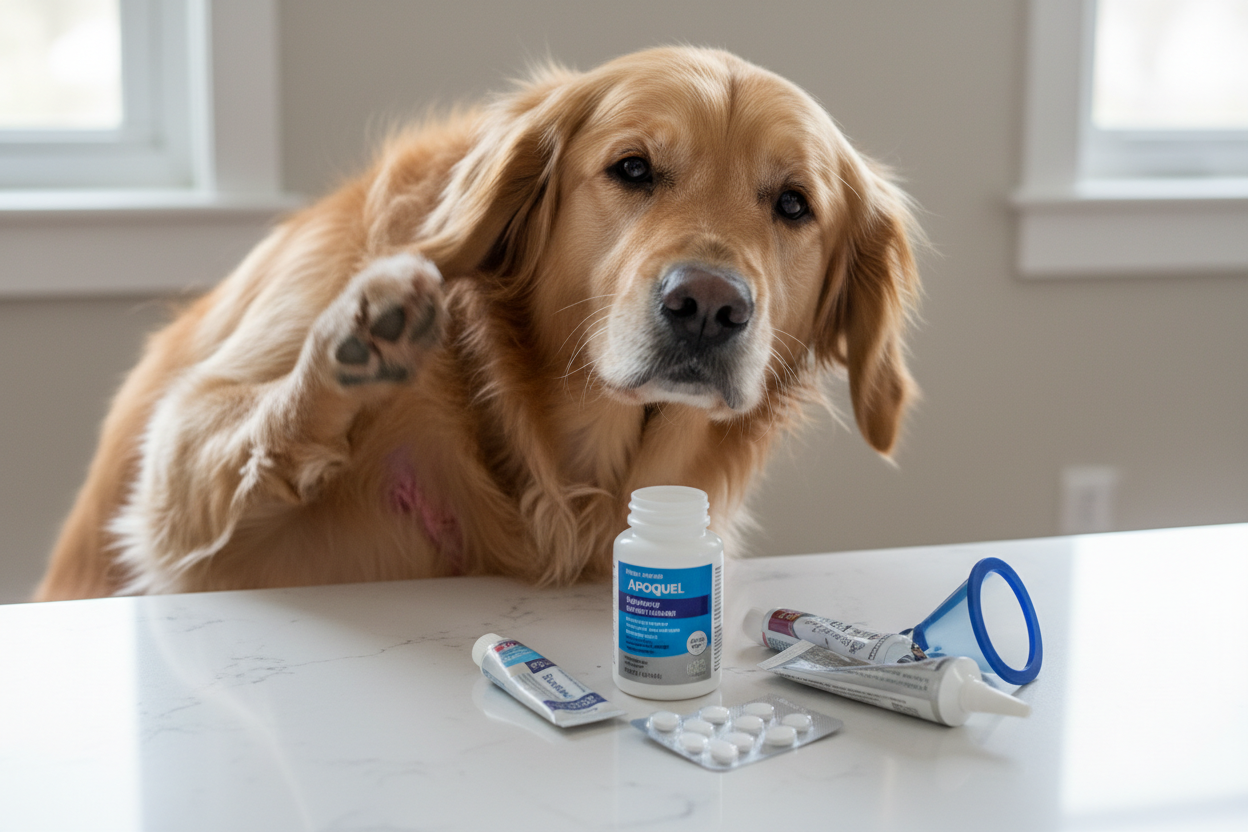
Piriton is most useful for short-term acute allergic reactions such as insect stings, hives, facial swelling, and mild vaccine reactions.
Apoquel and Cytopoint are primarily used to control chronic itching caused by canine atopic dermatitis a very different condition.
If your dog has been scratching for weeks or months, Piriton is unlikely to provide meaningful relief. Always seek veterinary assessment for chronic or recurring itching.
Your dog is scratching constantly. You've probably heard of Piriton, a familiar over-the-counter antihistamine that feels like a sensible starting point. You may also have heard your vet mention Apoquel or Cytopoint which are prescription medications that cost considerably more but are used for something quite different.
The first question isn't which of these three your dog needs. The first question is whether your dog is having an acute allergic reaction or suffering from chronic allergic skin disease. Those are very different problems, and the treatments are not interchangeable.
This guide explains the clinical distinction clearly, covers how each treatment works, what UK costs look like in 2026, and what the current evidence says including some important caveats you won't find in most online summaries.
The most important question to ask first
Is this an acute allergic reaction or is this chronic allergic skin disease?
Acute allergic reactions (bee stings, wasp stings, hives, facial swelling after vaccination) are short-term events primarily mediated by histamine. Antihistamines like Piriton can help here.
Chronic allergic skin disease/ canine atopic dermatitis involves a complex dysregulation of cytokines, particularly interleukin-31, and disruption of the skin barrier. Histamine plays a much smaller role. Antihistamines are largely ineffective for this condition. Apoquel and Cytopoint are designed specifically to address it.
That distinction determines whether Piriton is even relevant to the conversation.
Comparison at a glance
| Piriton (chlorphenamine) | Apoquel (oclacitinib) | Cytopoint (lokivetmab) | |
|---|---|---|---|
| Primary use | Acute allergic reactions | Chronic allergic skin disease (atopic dermatitis) | Chronic allergic skin disease (atopic dermatitis) |
| Works well for | Bee/wasp stings, hives, facial swelling, mild vaccine reactions | Ongoing itching caused by atopic dermatitis | Ongoing itching caused by atopic dermatitis |
| Works well for long-term itching? | Usually no | Yes | Yes |
| Treats the main itch pathway in canine atopic dermatitis? | No | Yes | Yes |
| Type | First-generation antihistamine | JAK inhibitor (oral tablet) | Monoclonal antibody (injection) |
| Prescription needed? | Yes. It is a human medicine used off-label in dogs | Yes — POM-V veterinary prescription | Yes — POM-V veterinary prescription |
| How quickly does it work? | 1–2 hours | Within 4 hours; full effect 24 hours | Within 24 hours |
| Duration | 8–12 hours per dose | 24 hours (daily tablet) | 4–8 weeks per injection |
| UK cost (approx.) | £3–£6 for 30 tablets | £40–£80/month depending on dog's weight | £79–£150 per injection every 4–8 weeks |
| Main side effects | Sedation, dry mouth, urinary retention | GI upset, slightly increased infection risk, liver enzyme changes (rare) | Very few — GI upset at similar rate to placebo |
What most pet guardians get wrong
The most common mistake UK dog owners make is treating Piriton as a milder or cheaper version of Apoquel, something to try first before escalating to a prescription. This misunderstands what each treatment is for.
Piriton blocks histamine receptors. For conditions where histamine is the primary driver of the allergic response such as acute reactions like insect stings this is useful. But canine atopic dermatitis is not primarily a histamine-driven condition. Studies have shown antihistamines are effective in fewer than 30% of dogs with atopic dermatitis, and even then provide only modest relief [3]. Using Piriton for a dog with chronic atopic itch is not a cautious first step .. it is the wrong treatment for the condition.
The second common mistake is assuming that because Piriton is available without a prescription, it is appropriate to use without veterinary guidance. Piriton is a human medicine used off-label in dogs. The veterinary use is referenced in the BSAVA formulary [1], but this does not mean dosing is straightforward or that it is appropriate in all dogs. Always follow your vet's advice before giving any human medicine to a dog.
For a fuller explanation of what actually causes chronic itching in dogs and why the treatment pathway matters, our post on why dogs itch is a useful starting point.
Piriton (chlorphenamine) for acute allergic reactions, not chronic allergic skin disease
What it is
Piriton is the brand name for chlorphenamine maleate, a first-generation antihistamine available over the counter in UK pharmacies for around £3–£6 for 30 tablets [1]. It is a human medicine and is not licensed for use in dogs and is used off-label. Its veterinary use is referenced in the BSAVA formulary for specific, short-term situations [1].
How it works
Piriton blocks H1 histamine receptors, preventing histamine from triggering the allergic cascade. This is effective when histamine is the primary mediator of the reaction which is the case in acute events like insect stings and hives. In dogs with chronic atopic dermatitis, however, the itch is driven predominantly by interleukin-31 (IL-31) and related cytokines, not by histamine. Blocking histamine receptors therefore has little effect on the atopic itch pathway.
Situations where vets may discuss Piriton for dogs
- Insect stings and bites — bee stings, wasp stings, and similar acute reactions where histamine is the primary driver
- Mild acute allergic reactions — facial swelling, hives, or urticaria where symptoms are mild and the dog is otherwise well
- Mild vaccine reactions — facial swelling following vaccination
- As a short-term comfort measure while awaiting a veterinary appointment — with veterinary guidance on appropriateness and approach
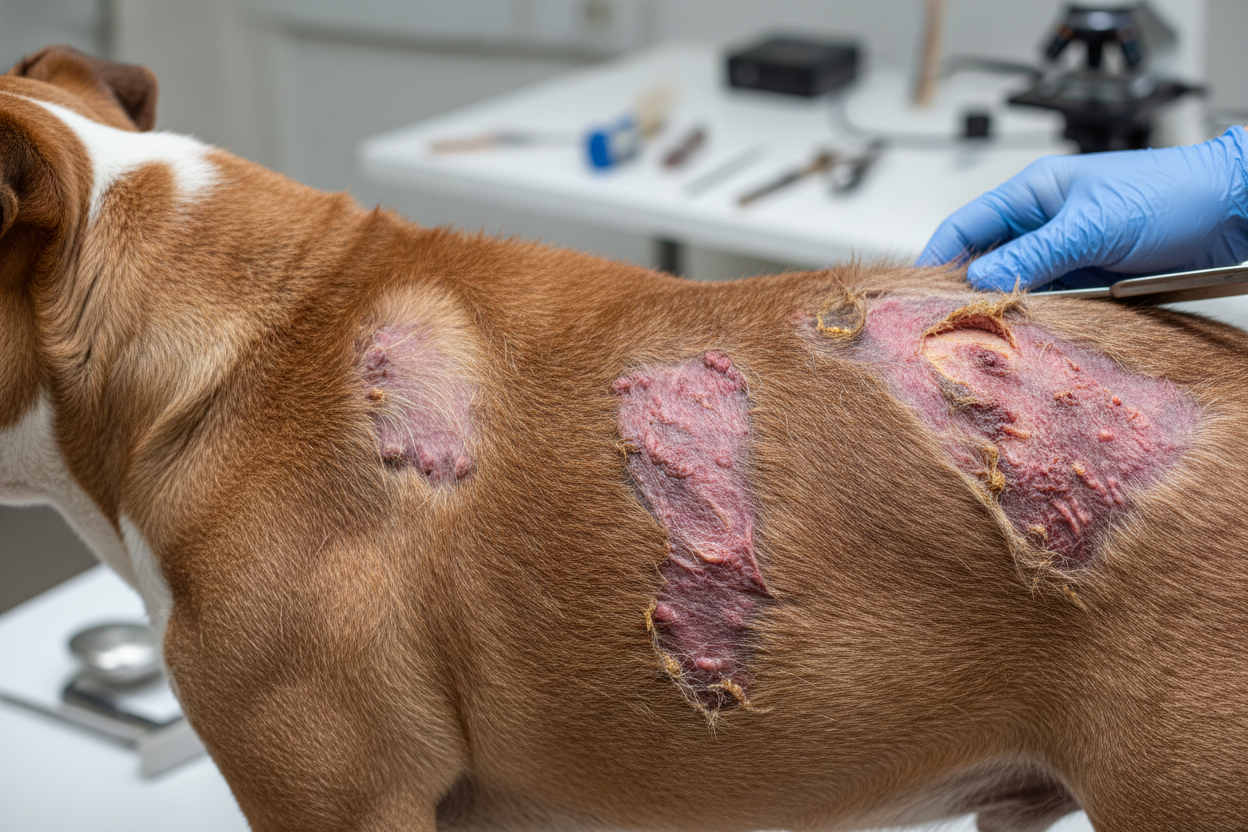
If your dog has been itching for more than a few days, has recurring skin problems, is losing fur, has reddened or thickened skin, or has previously been diagnosed with atopic dermatitis, Piriton is unlikely to provide meaningful relief. The itch pathway in chronic atopic dermatitis is not primarily histamine-driven, and antihistamines are not an appropriate substitute for veterinary assessment and treatment with Apoquel or Cytopoint where indicated [2, 3].
Side effects
As a first-generation antihistamine, Piriton is sedating which means drowsiness is a common and expected effect [4]. Other side effects include dry mouth, urinary retention (particularly relevant in older male dogs), and occasional GI upset. These are generally mild but should be factored into the decision to use it. 'Piriton Allergy' (10mg cetirizine tablets) — is a different drug entirely. Do not use any Piriton formulation containing decongestants or other active ingredients. Only standard Piriton 4mg chlorphenamine tablets are referenced in veterinary guidance.
Apoquel (oclacitinib) daily prescription tablet for chronic atopic dermatitis
What it is
Apoquel is a JAK (Janus kinase) inhibitor developed specifically for dogs by Zoetis, available in the UK as a prescription-only veterinary medicine (POM-V) [5]. It requires a veterinary prescription i.e.it cannot be purchased over the counter. It comes in three tablet strengths (3.6mg, 5.4mg, and 16mg) selected based on your dog's weight, and is approved for dogs over 12 months of age weighing more than 3kg.
How it works
Rather than targeting histamine, Apoquel works at a much more specific level by blocking JAK-1 and JAK-3 signalling pathways responsible for the itch and inflammation response in atopic dermatitis [5, 6]. Most importantly, it suppresses IL-31, the cytokine primarily responsible for the itch sensation in dogs. This is why it is dramatically more effective for atopic dermatitis than antihistamines because it addresses the actual mechanism of atopic itch rather than a secondary pathway.
When Apoquel is used
- Confirmed or suspected atopic dermatitis in dogs over 12 months
- Seasonal allergies — started at first signs of the allergy season and used daily for its duration
- Food or contact allergies with a skin manifestation
- Dogs where owners prefer daily control over dosing flexibility
- Dogs where Cytopoint has been ineffective or not tolerated
UK cost in 2026
Apoquel is prescription-only. UK costs vary considerably between vets and online pharmacies:
- UK registered online veterinary pharmacies (e.g. Pet Drugs Online, VioVet): approximately £40–£80 per month depending on dog weight, with a written prescription [7]
- Direct from your vet: typically higher, with dispensing fees or markup
UK money-saving tip: Under UK veterinary medicines regulations, your vet is legally obliged to provide a written prescription on request. Purchasing from a registered UK online pharmacy with that prescription can produce significant savings on the same medication. Our guide on understanding vet costs in the UK covers how to navigate this.
Side effects
Most dogs tolerate Apoquel well. Reported side effects include [5, 6]:
- GI upset (vomiting, diarrhoea) in a small percentage of dogs
- Slightly increased susceptibility to infections due to partial immune modulation
- Elevated liver enzymes in a small percentage of dogs on long-term use — periodic blood monitoring is recommended
- Adult-onset demodicosis has been reported rarely
- Not for use in dogs under 12 months, pregnant bitches, or breeding dogs
- Use with caution in dogs with a history of cancer — Apoquel does not cause cancer, but its immune-modulating effect warrants care in dogs with a cancer history
For full detail on how Apoquel works, see our complete guide: Oclacitinib (Apoquel) for dogs.
Cytopoint (lokivetmab) an injectable antibody treatment for chronic atopic dermatitis
For more detail: read this blog article: Cytopoint — is it the best choice for itchy skin?
What it is
Cytopoint is a monoclonal antibody treatment developed by Zoetis, administered by subcutaneous injection at the vet every 4–8 weeks [9]. Its active ingredient, lokivetmab, is a caninised antibody specifically engineered to be recognised by a dog's immune system as a natural protein rather than a foreign substance. This is why its side effect profile is exceptionally clean compared to other allergy treatments. It also requires a veterinary prescription (POM-V) and must be administered by a vet or vet nurse.
How it works
Cytopoint directly binds to and neutralises IL-31 the specific cytokine that triggers the itch sensation in canine atopic dermatitis before it can bind to nerve receptors in the skin [9]. Unlike Apoquel, which inhibits a broader JAK signalling pathway, Cytopoint acts on a single, highly specific target. Because it is a biological antibody rather than a chemical drug, it is processed through normal protein degradation pathways and does not place demands on the liver or kidneys.
When Cytopoint is used
- Atopic dermatitis in dogs of all ages including puppies under 12 months (unlike Apoquel) [9]
- Dogs where daily tablet administration is difficult — older dogs, dogs with GI issues, or owners who find tablet giving stressful for dog or owner
- Dogs with conditions where broader immune modulation is a concern — Cytopoint does not broadly suppress the immune system
- Dogs where Apoquel has been ineffective or not tolerated — the two treatments work differently enough that a dog not responding to one may respond to the other [6]
- Owners who prefer the convenience of a monthly or bi-monthly injection rather than daily tablets
UK cost in 2026
The cost of Cytopoint in the UK typically ranges from £50–£100 per injection at a standard vet practice, and £80–£150 at specialist referral centres. A dog requiring injections every 6 weeks could cost £400–£800 per year. Many pet insurance policies cover Cytopoint as a prescription treatment but check your policy wording for 'skin conditions' or 'atopic dermatitis' exclusions."Cytopoint must be administered by a vet or vet nurse.
UK costs are approximately:
- £79–£116 per injection at the vet, including the injection fee based on published UK vet pricing data [10]
- Some UK practices charge over £150 per injection including a consultation fee. It is worth asking whether a nurse appointment is available for repeat injections once your dog is established on treatment [11]
- For a medium-sized dog injected every 6 weeks, annual cost is approximately £700–£1,000
Many UK pet insurance policies cover both Apoquel and Cytopoint our post on the top 10 pet insurance companies for dogs and cats compares UK policies in detail.
Side effects
Cytopoint has the cleanest side effect profile of the three treatments [6, 9]:
- GI upset reported, but at a rate similar to placebo in clinical trials
- Rare hypersensitivity reactions (anaphylaxis, facial swelling, hives) have been reported
- No known drug interactions
- No effect on diagnostic testing but can be used alongside blood tests and allergy testing without interference
- No restrictions on use in the presence of most comorbidities
If Apoquel or Cytopoint are not enough
Neither Apoquel nor Cytopoint works for every dog — some dogs do not respond to either, and some respond initially and then stop responding [6]. This is not a reason to give up. If your dog is not adequately controlled on one or both, ask your vet to discuss:
- Allergen-specific immunotherapy (ASIT / hyposensitisation) — the only treatment that can modify the underlying allergic response rather than just managing symptoms. Requires allergy testing and a long-term commitment, but can produce lasting improvement in appropriate candidates.
- Ciclosporin (Atopica) — an immune-modulating drug with good evidence in canine atopic dermatitis, often used where Apoquel is contraindicated or ineffective.
- Short-term corticosteroids — highly effective for breakthrough flares but not suitable for long-term use due to side effects.
- Referral to a veterinary dermatologist — if your dog is not responding to treatment, a specialist referral via the Royal College of Veterinary Surgeons (RCVS) Find a Vet tool is the right next step.
Managing the underlying allergy AKA the bigger picture
None of these three treatments cure allergies — they manage symptoms. The itch returns when treatment stops. For long-term management, identifying and where possible avoiding the underlying allergen is the goal alongside medication. This may mean a dietary elimination trial to rule out food allergy, allergy testing for environmental allergens, or practical environmental changes such as more frequent hoovering, washing bedding at 60°C, and using air purifiers to reduce house dust mite load.
Alongside medication, shampoo and grooming product choices play a meaningful supporting role that is frequently underestimated. A shampoo formulated with SLS or other harsh surfactants strips the skin barrier, worsening the very dryness and permeability that underlies atopic dermatitis. Our post on whether the choice of shampoo really matters explains why this is particularly relevant for dogs on long-term allergy medication — and our post on why to avoid parabens in pet products is worth reading alongside it.
For the full picture of what causes chronic itching and how the treatment pathways fit together, our guide on understanding and treating the causes of dog itch covers the clinical detail in full. And our post on the long-term cost of managing canine allergies helps UK owners plan financially for what is often a lifelong condition.
Key takeaways
- Piriton, Apoquel and Cytopoint are not interchangeable. They treat different problems.
- Piriton is most useful for acute histamine-mediated reactions — stings, hives, mild vaccine reactions.
- Apoquel and Cytopoint are used for chronic allergic skin disease (atopic dermatitis) — they address the actual itch pathway in this condition.
- If your dog has been scratching for weeks or months, see your vet. Piriton is unlikely to help, and delaying appropriate treatment means unnecessary suffering.
- Neither Apoquel nor Cytopoint cures atopic dermatitis — they manage it. Identifying and addressing the underlying allergen, supporting the skin barrier, and reviewing insurance cover are all part of long-term management.
- Always follow veterinary guidance before giving any human medicine to a dog — including Piriton.
References
- VetCost UK. Piriton for Pets UK: Price Comparison and Guide. Updated March 2026. Available at: vetcost.co.uk. Sources cited therein: BSAVA Small Animal Formulary (current edition); CMA provisional decision October 2025.
- FurBabies Botanicals. Can You Give a Dog Piriton? Available at: myfurbabies.co.uk
- Cook CP et al. Treatment of Canine Atopic Dermatitis with Cetirizine, a Second Generation Antihistamine: A Single-Blinded, Placebo-Controlled Study. Canadian Veterinary Journal 2004; 45(5):414.
- Kinship UK. Can I Give My Dog Piriton? Updated December 2024. Available at: kinship.com
- Zoetis UK. Apoquel (oclacitinib maleate) Summary of Product Characteristics. Available via the Veterinary Medicines Directorate (VMD) product database.
- Heinrich NA. How to Choose Between Apoquel and Cytopoint. McKeever Veterinary Dermatology. Available at: mckeevervetderm.com
- Pet Drugs Online UK. Apoquel for Dogs. Available at: petdrugsonline.co.uk
- PharmacyChecker.com. Is there a generic available for Apoquel? Updated 2023. Available at: pharmacychecker.com
- Zoetis UK. Cytopoint (lokivetmab) Summary of Product Characteristics. Available via the VMD product database. Also: Cura-Pet UK. Available at: cura-pet.co.uk
- South Moor Vets UK. Our Prices — Cytopoint (inc. injection fee): £79.16–£116.17. Available at: southmoorvets.co.uk
- PistonHeads UK forum. User-reported Cytopoint pricing from UK vets, 2025. Available at: pistonheads.com
Disclaimer: This article is for informational purposes only and does not constitute veterinary advice. Always seek professional veterinary guidance before starting, stopping, or changing any medication. Individual dogs vary in their response to treatment and suitability for specific medications.






Share:
Baby Shampoo For Dogs Ingredient Safety - A Pharmacist's Guide
Dog Itch Relief: Causes, Treatments and When to See a Vet (UK)