
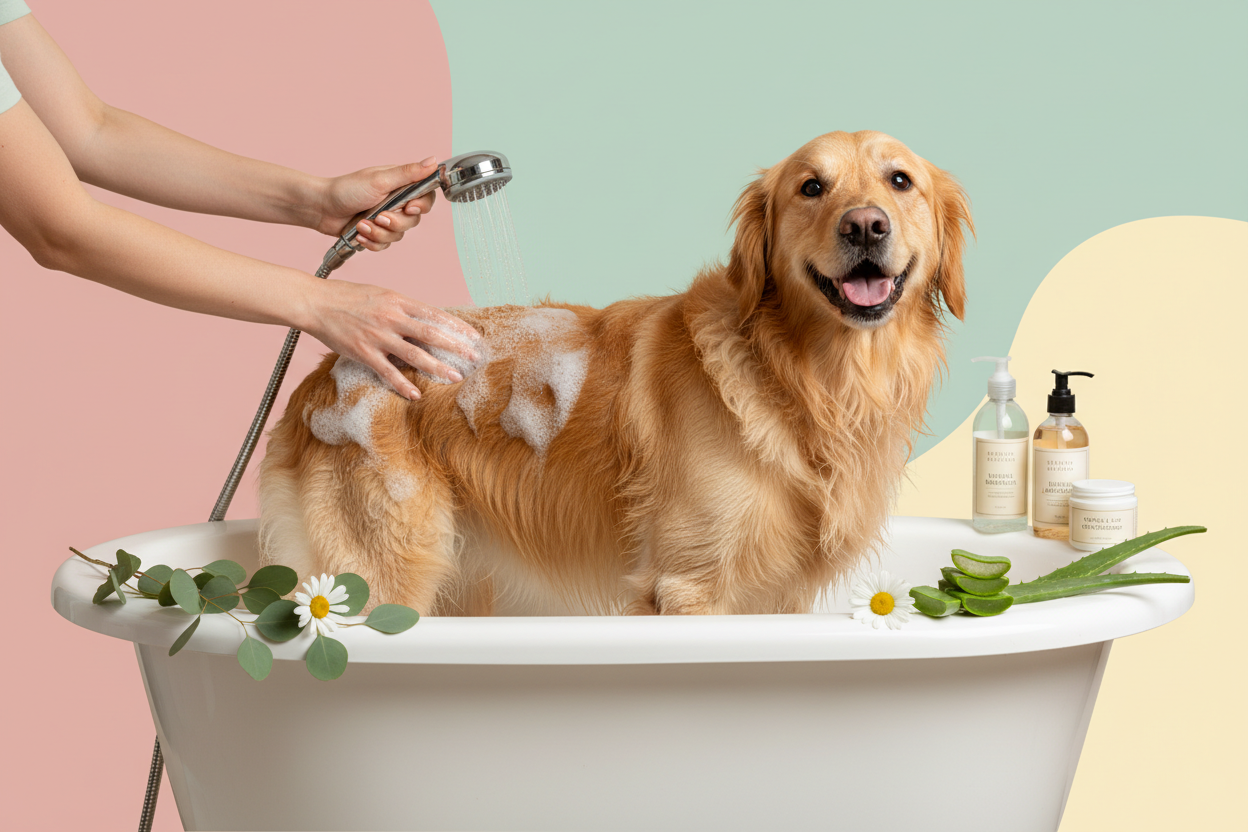
Walk down the pet care aisle in any UK supermarket and you'll find shelves of brightly packaged shampoos, many of them foaming generously in their promotional photos. That satisfying lather is largely down to one ingredient: SLS (Sodium Lauryl Sulphate) — the same detergent used in washing-up liquid, engine degreasers, and industrial cleaning products.
SLS and its close relative SLES (Sodium Laureth Sulphate) are cheap, effective at creating foam, and found in a huge proportion of pet shampoos on the market. They're also ingredients that many vets and pet dermatologists recommend avoiding particularly for animals with sensitive, thin, or already irritated skin.
Here's everything you need to know.
What exactly are SLS and SLES?
SLS (Sodium Lauryl Sulphate) is a surfactant — a substance that reduces the surface tension of water, allowing it to mix with oils and carry them away. It's an extremely powerful cleaner, which is precisely why it's used in household detergents. SLES (Sodium Laureth Sulphate) is a milder derivative, though it comes with its own set of concerns.
Both are used in pet shampoos primarily because they're inexpensive and produce a thick, rich lather that consumers associate with cleaning power. But lather is largely cosmetic; it has very little to do with how well a shampoo actually cleans. It's one of the most persistent myths in the personal care industry, and it costs pets dearly.
Seven reasons to avoid SLS and SLES in pet shampoos
1. SLS is typically derived from petroleum or palm oil
Most commercial SLS is synthesised from petroleum or, increasingly, from palm oil. Neither source is particularly planet-friendly. Palm oil production in particular is strongly linked to deforestation and habitat destruction. If sustainability matters to you as a UK pet owner, this alone is worth knowing.
2. SLES can be contaminated with a known carcinogen
During the manufacturing process of SLES, a by-product called 1,4-dioxane can form. 1,4-dioxane is classified as a possible human carcinogen and does not appear on ingredient labels because it's a contaminant, not a deliberate ingredient. Regulatory standards vary, and while levels in individual products may be low, regular repeated exposure, particularly through a pet's permeable skin — is a legitimate concern.
3. SLS is a well-documented skin irritant
SLS is widely used in clinical research as a standard irritant — scientists deliberately apply it to skin to produce a controlled irritation response when testing other products. If it's used to create irritation in lab settings, it's reasonable to question its place in a shampoo applied to a pet's already sensitive skin.
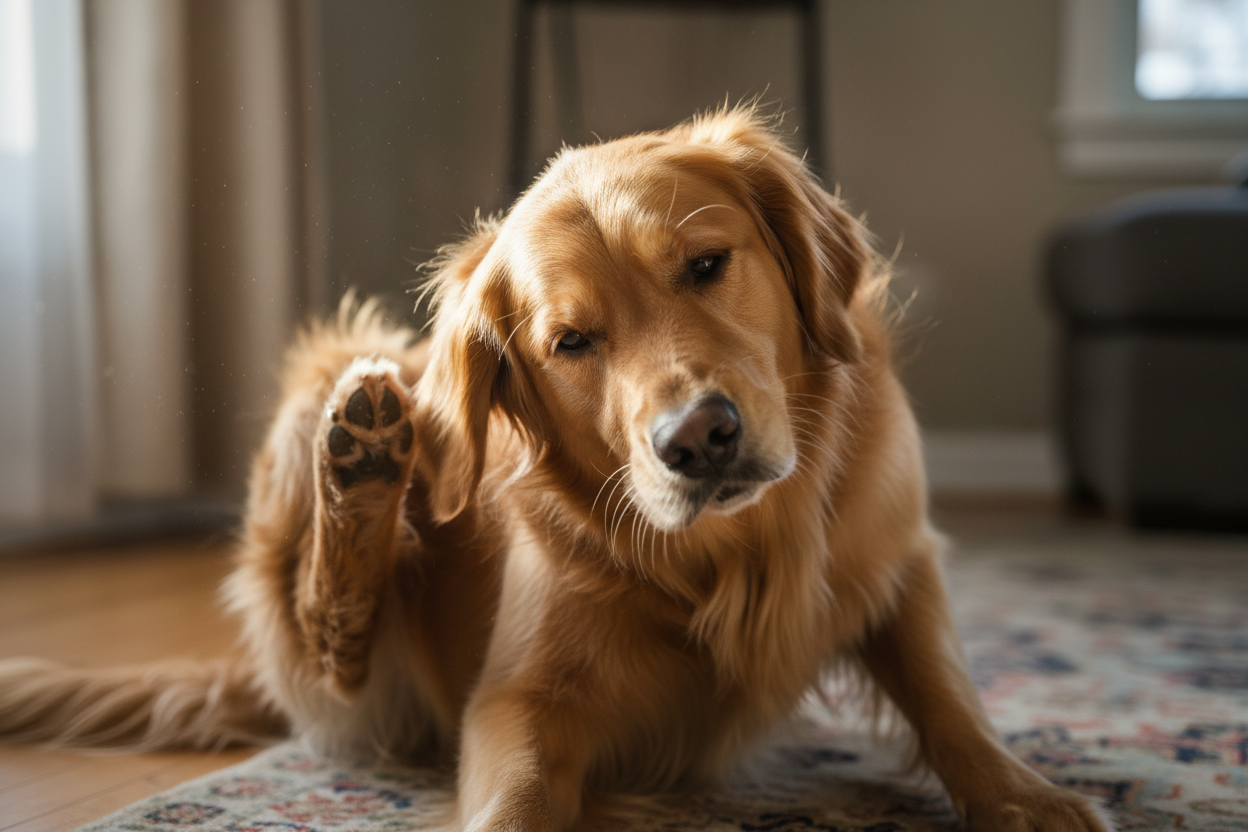
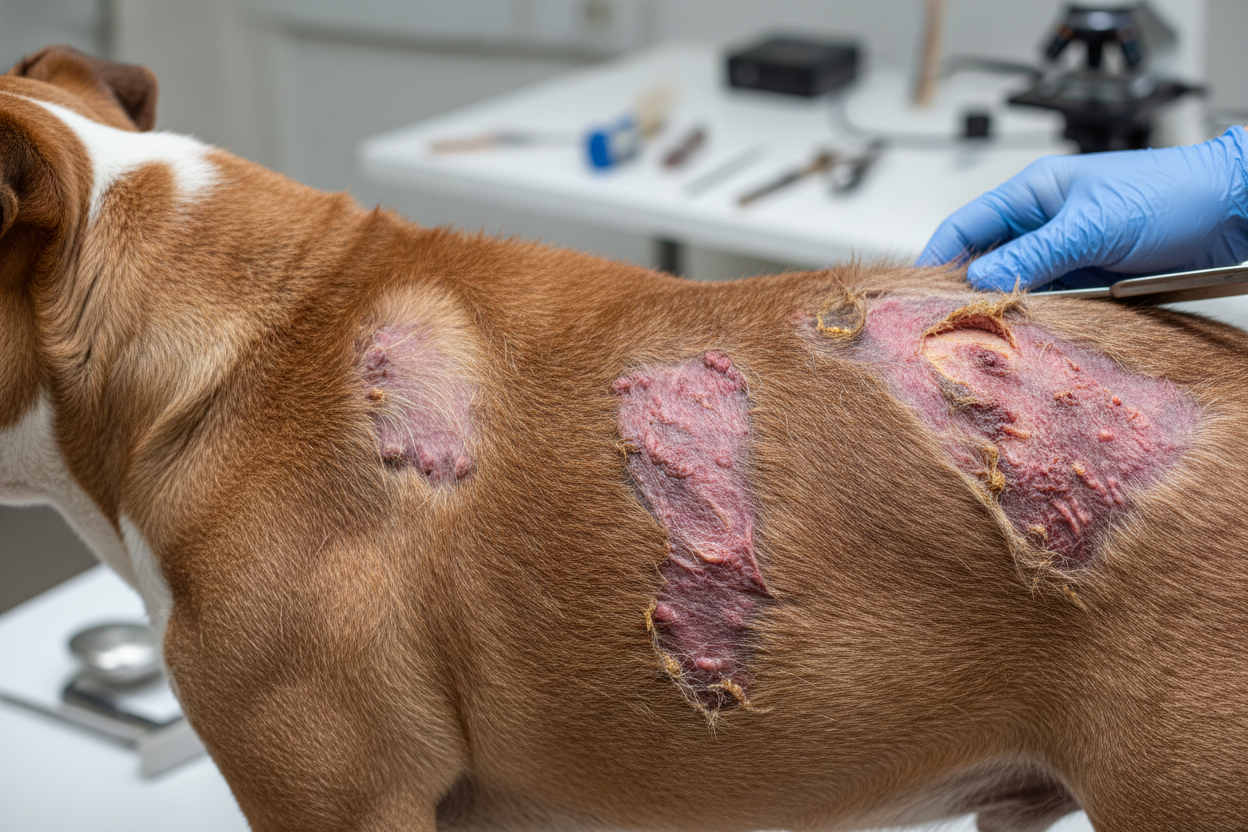
For pets already prone to itching or skin sensitivity, SLS can significantly worsen the cycle of irritation. Our guide on why dogs itch and our deeper dive into understanding and treating dog itch both explore how ingredient choices feed into this.
4. SLS causes the skin to lose water
One of the less obvious effects of SLS is transepidermal water loss; it damages the skin barrier in a way that causes moisture to evaporate more readily. The result is dry, tight, flaky skin, often appearing a day or two after bathing. Many owners assume this is just how their pet's skin is, not realising the shampoo is the cause.
5. SLS strips natural oils and can damage hair follicles
A healthy coat depends on natural sebum — the oils produced by the skin — to stay glossy, flexible, and protected. SLS is indiscriminate: it removes dirt, yes, but it also removes the oils your pet's coat needs. Repeated stripping of these oils leads to a dull, dry, brittle coat and, over time, can damage the follicles themselves, affecting coat regrowth and texture.
6. SLS is harmful to the environment
SLS doesn't break down easily and has been shown to increase the acidity of soil and waterways when it enters the environment via drainage. In a country like the UK, where water quality and wildlife protection are increasingly important, choosing products with biodegradable, gentle surfactants is a small but meaningful choice.
7. Cats face a specific risk from SLS inhalation
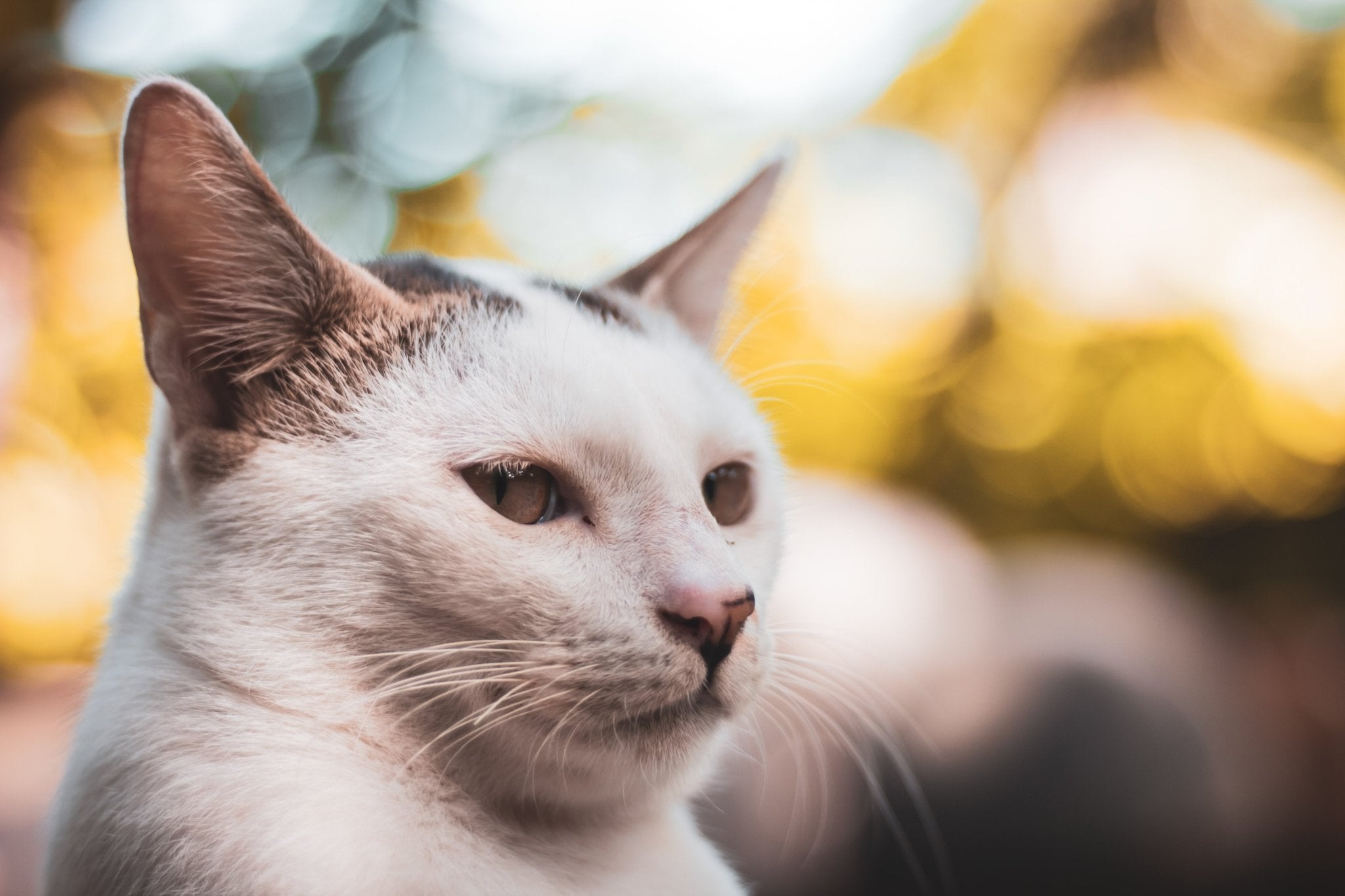
This is perhaps the most alarming point for cat owners. Cats groom themselves extensively after bathing, which means any shampoo residue left in their coat is effectively ingested. SLS in particular has been associated with respiratory compromise in cats when inhaled during grooming. Even if the concentration seems low, the cumulative effect of regular bathing with SLS-containing products is worth taking seriously. Our guide to shampoos for cats covers the full picture of safe bathing for felines.
But we hear you ask: don't shampoos need surfactants?
Yes all shampoos need some form of surfactant to work. The good news is that SLS and SLES are far from the only options. Gentler, naturally derived surfactants such as coco glucoside (derived from coconut and fruit sugars) and decyl glucoside — clean effectively without the damaging side effects. They're biodegradable, mild enough for sensitive skin, and don't produce the aggressive stripping action that SLS causes.
The trade-off is that they produce less foam. But as we've discussed, foam has nothing to do with cleaning performance — it's purely aesthetic. At FurBabies™ Botanicals, we spent considerable time researching and testing gentler formulations that clean just as well, rinse easily, and leave the coat soft and healthy. You can read exactly what we use in our post: What is in FurBabies™ Botanicals products?
How to check your current pet shampoo
Ingredients are listed on the label in descending order of concentration. To check whether your current shampoo contains SLS or SLES, look for any of these names:
- Sodium Lauryl Sulphate (SLS)
- Sodium Laureth Sulphate (SLES)
- Sodium Lauryl Sulfate (US spelling)
- Ammonium Lauryl Sulphate
- Ammonium Laureth Sulphate
If any of these appear near the top of the ingredients list, they're present in meaningful concentrations. If they appear lower down, they're less dominant — but for pets with sensitive or reactive skin, even small amounts can contribute to irritation over repeated use.
What to use instead
Look for shampoos that are:
- Specifically formulated for your pet's species (dog, cat, rabbit, guinea pig)
- Free from SLS and SLES
- Free from parabens and artificial fragrance
- pH balanced for pets, not humans
- Made with plant-derived or naturally sourced surfactants
For more guidance on what to look for and what the differences mean in practice our pillar post on whether the choice of shampoo really matters covers the full picture. And if your pet has particularly sensitive skin, our grooming guide for sensitive pets has practical bathing tips to minimise irritation whatever product you're using.
Questions about ingredients or which FurBabies™ Botanicals product is right for your pet? Get in touch — we're always happy to help.
Share:
Baby Shampoo for Dogs
Paraben The Hidden Ingredient in Most Pet Shampoos That Could Be Harming Your Dog