
Last updated: November 2026
Dog Dandruff in Winter: Why the Heating Makes Flakes Worse, and the 4-Week Plan to Fix It
Quick answer: Winter dandruff in dogs is usually dry skin. Central heating dries the air, dogs lie against radiators, and baths, rain and road grit strip the coat's natural oils. Fix it from three directions: keep indoor humidity at 40–60%, bathe no more than weekly with a gentle shampoo and brush often, and put moisture back with plant oils and butters on the coat and paws. Wipe paws after every gritted walk. Dandruff that moves, smells, or comes with hair loss or itching needs a vet.
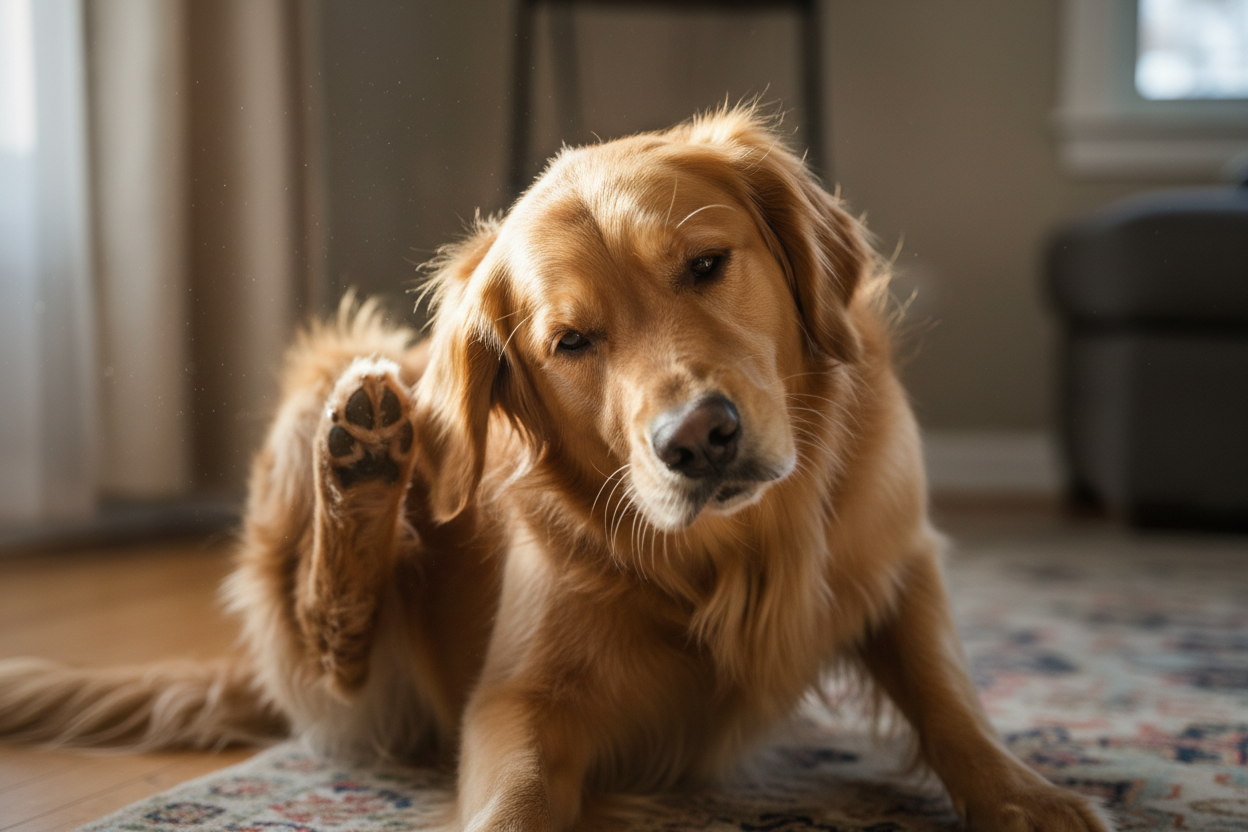
You stroke your dog on the sofa and your hand comes away dusted with white flakes. The coat that shone in summer now looks dull and feels rough, the pads are cracked, and there is a fine "snowfall" on every dark cushion. Sound familiar? It usually starts about the time the heating goes on.
The good news: most winter flakes are a moisture problem, not a medical one, and a few simple changes at home make a real difference. This guide explains why it happens, gives you a week-by-week plan to fix it, and includes a dandruff decoder so you can tell harmless winter flakes from the ones that need a vet.
Contents
- Why dogs get dandruff in winter
- Dandruff, dander or dry skin: what's the difference?
- The 40–60% humidity fix
- Putting the moisture back: what plant oils and butters do
- Bathing and brushing: the winter rules
- Cracked paws, road salt and grit
- The 4-week winter coat plan
- The dandruff decoder: when flakes are a red flag
- Cats and winter dandruff
- The FurBabies™ Botanicals winter routine
- When to see a vet
- FAQs
- References
Why dogs get dandruff in winter
Think of the outer layer of skin as a brick wall. The skin cells are the bricks, and a "mortar" of natural oils seals the gaps, holding water in and keeping irritants out. Winter attacks that seal from every side:
- Dry indoor air. Central heating warms the air but drops its humidity. In people, a major review found that low humidity and cold weather weaken the skin barrier, make skin more reactive and are linked with eczema flare-ups [1]. Dog skin hasn't been tested in the same way, but the same physics applies to any skin sitting in dry, heated air.
- The radiator habit. Dogs and cats love to stretch out against radiators and fires, baking one side of the body for hours.
- More baths, less drying time. Muddy winter walks mean more washing, and every wash strips natural oils.
- Rain, cold and grit. Repeated wetting and drying, plus road salt, dry out pads and the skin between the toes.
- Age. Older dogs have drier skin to start with. In a 2026 study of retrievers, skin hydration fell from 20.2 units in young dogs to 16.4 in middle-aged dogs and 9.8 in older dogs [2]. Senior dogs feel winter most.
Dandruff, dander or dry skin: what's the difference?
- Dander is the microscopic skin that every dog and cat sheds all the time. You can't see it, and it's what people with pet allergies react to.
- Dandruff is visible white or grey flakes in the coat, on the bedding and on your clothes.
- Dry skin is the most common cause of dandruff, but not the only one. Mites, allergies, hormone problems and greasy skin conditions can all cause flakes too, which is why we've included the decoder below.
The 40–60% humidity fix
A classic review of indoor air found that keeping relative humidity between 40% and 60% minimises health problems. It also found house dust mites are lowest below 50% humidity, and moulds need humidity above 60% to thrive [3]. Aim for 40–50% and you help your dog's skin, cut dust mites (a common allergy trigger) and keep mould away, all at once.
- Measure before you buy. A cheap digital hygrometer shows your real humidity. Many homes don't need a humidifier at all.
- If you're below 40%, a steam or evaporative humidifier is the simplest fix. Keep it and its cable out of reach and clean it regularly. Use plain water only, with no essential oils or scented additives near pets.
- Don't overshoot. Condensation on windows means it's too humid, and above 60% favours mould [3].
- Move beds away from radiators and fires, and give your pet a cosy spot that's warm but not baking.
For other hidden triggers around the house, read Is Your Home Making Your Dog Itchy?
Putting the moisture back: what plant oils and butters do
Humidity stops the skin drying out. Plant oils and butters put back what winter has stripped away. Applied to the coat and pads, they act as emollients: they soften dry, rough skin, smooth the coat, and form a light layer that slows water loss from the surface.
- Shea butter (Vitellaria paradoxa) is a rich, velvety butter that locks moisture into dry skin and pads. It is naturally rich in antioxidant vitamin E, and research shows the amount varies with the climate where the shea is grown [4].
- Coconut oil (Cocos nucifera) contains lauric acid, small enough to penetrate the hair shaft. In hair research comparing coconut, sunflower and mineral oil, coconut was the only one that reduced protein loss from both healthy and damaged hair [5]. For a winter coat, that means less brittle, glossier fur that brushes through easily.
- Avocado oil (Persea gratissima) is packed with nourishing fatty acids that soften rough skin and smooth frizzy fur.
- Jojoba (Simmondsia chinensis) is technically a liquid wax, so it's light and non-greasy and sinks in without weighing the coat down.
One tip matters more than any product: apply oils to a dry coat, not damp fur straight after a bath, and work them in as you brush.
What about omega-3 supplements?
Fish oil is often suggested for dry skin, but it is slow and the evidence is mixed. In healthy dogs given flax or sunflower oil, coat improvement didn't last beyond 28 days [6]. In itchy dogs on the prescription medicine ciclosporin, adding omega-3 allowed a lower dose and itch improved [7]. Benefits can take around 2 months to show [8]. If you want to try one, agree a product and dose with your vet and give it a fair trial.
Bathing and brushing: the winter rules
How often you wash matters. In a small study of 8 dogs, shampooing every other day changed skin hydration and pH, while shampooing every 5 or 8 days did not [9]. Weekly shampooing has also been shown to reduce itch in itchy dogs [10]. For winter:
- Bathe no more than once a week unless your vet advises otherwise. Between baths, a no-rinse shampoo or a wipe-down handles muddy legs without a full wash.
- Use lukewarm water and a gentle, sulphate-free shampoo, and rinse thoroughly, because leftover shampoo irritates. Read why we avoid SLS and parabens, or see our sensitive-skin shampoo guide.
- Dry fully before going out in the cold, especially thick or double coats. Our guide to dog coats covers which dogs need one.
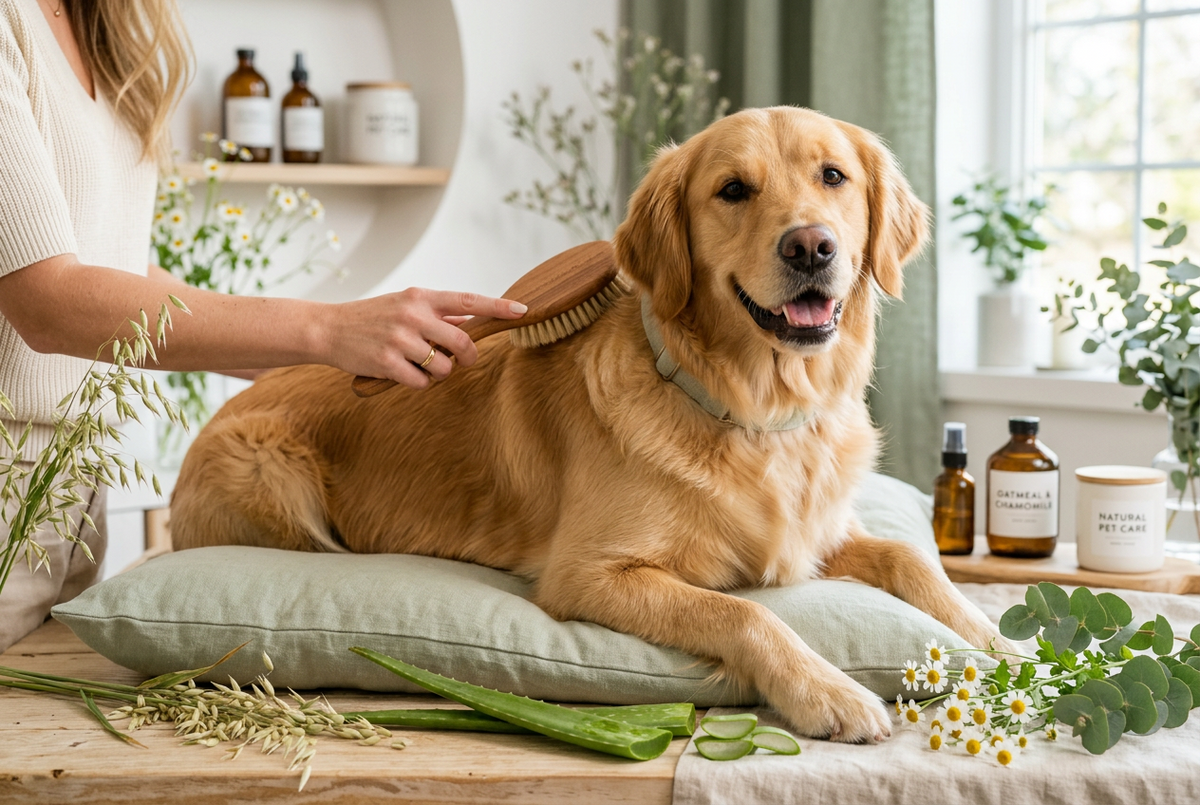
- Brush more, wash less. Regular brushing lifts loose flakes and dead hair and spreads the coat's natural oils. It's free, and most dogs love it.
Cracked paws, road salt and grit
Dog paws are built for cold. Researchers found the blood vessels in the pads form a counter-current heat exchanger: warm arteries run alongside cold returning veins, so heat stays in the body instead of escaping through the feet [11]. But pads aren't indestructible. Wet-dry cycles and grit do the damage.
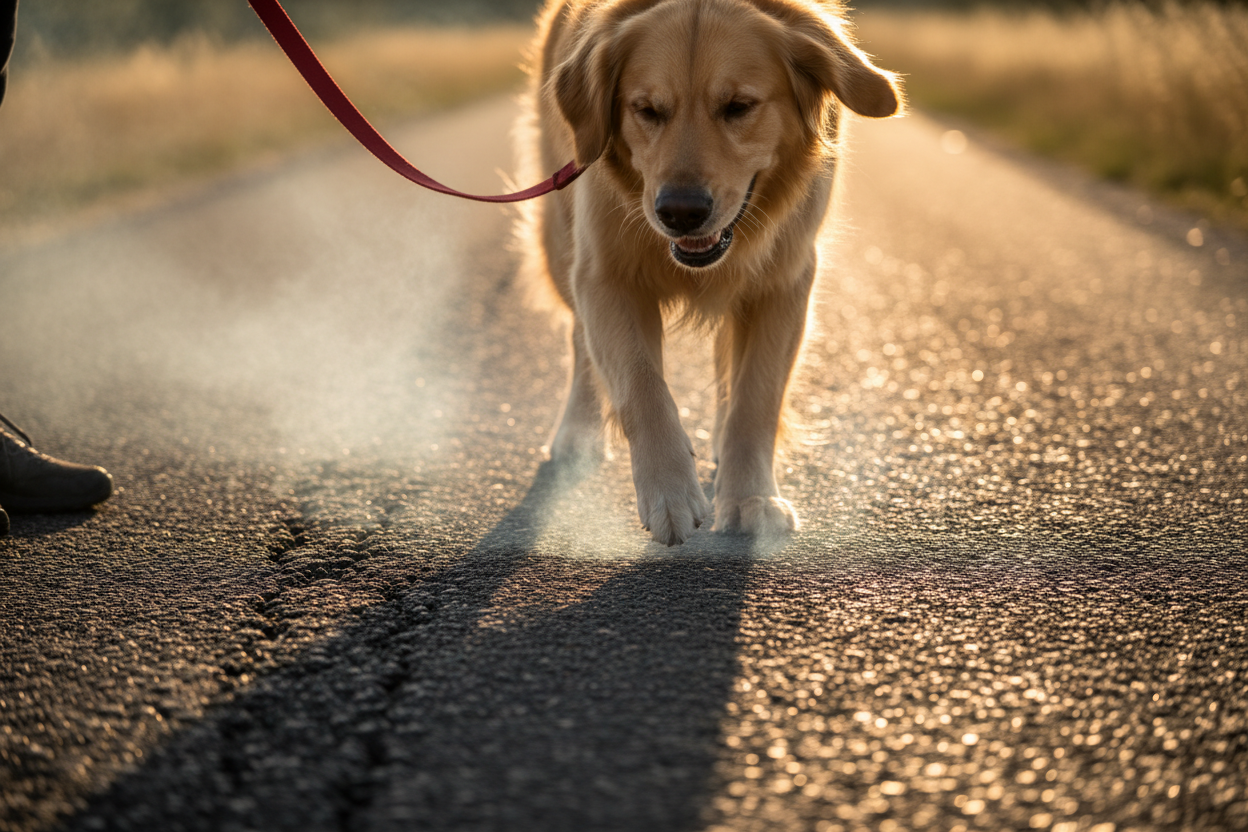
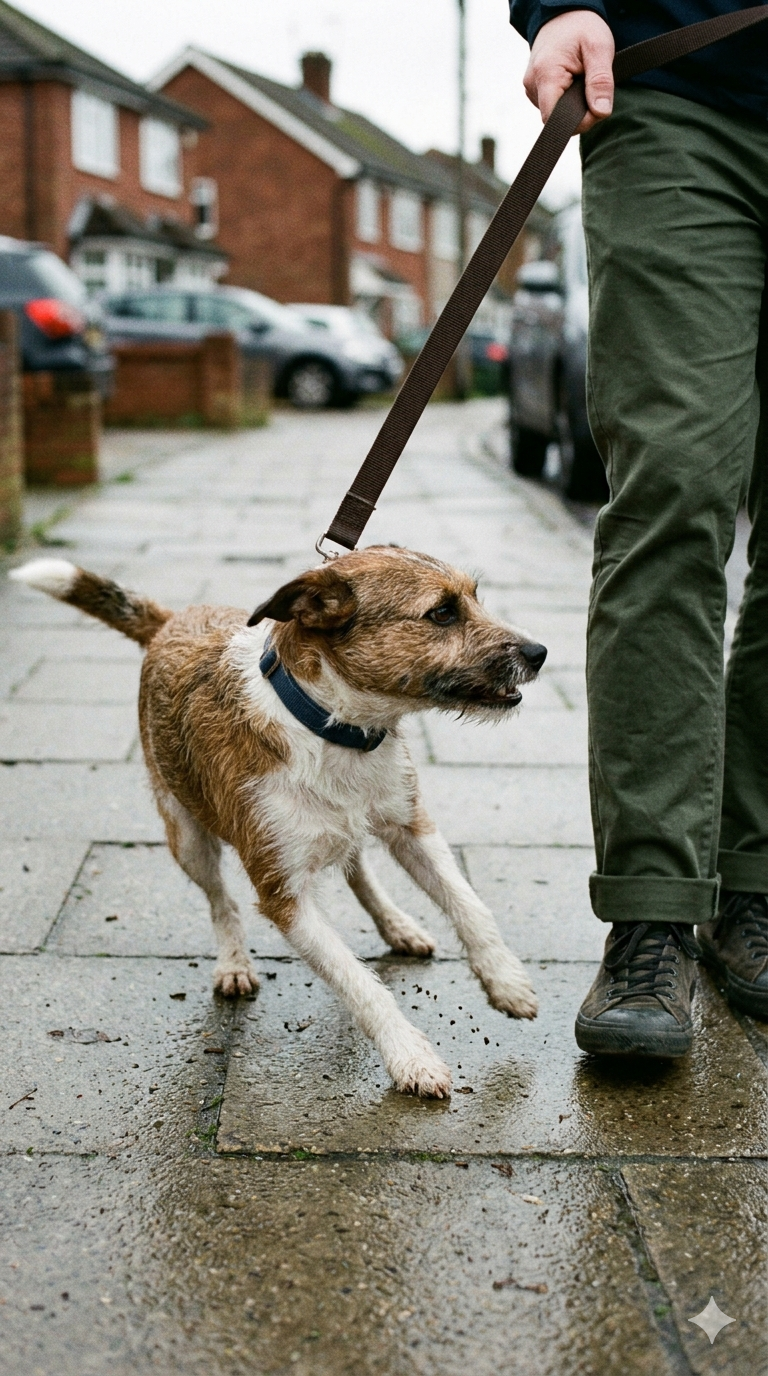
Dogs Trust warns that grit and salt can leave pads sore, cracked and even burned, and advises checking paws and wiping between the toes after walks [12]. The bigger danger is licking: the RSPCA reports that most rock salt poisoning cases involved dogs that walked through gritted snow and then licked their paws, and even a small amount of pure salt can be dangerous [13].
The 3-minute after-walk paw routine
- Wipe feet, legs and belly with a damp cloth or lukewarm water after gritted walks [13].
- Spread the toes and wipe between them, where grit collects [12].
- Dry thoroughly, including between the pads.
- Moisturise dry pads with a thin layer of balm, and distract your dog for a minute or two so it sinks in.
Keep the fur between the pads trimmed short so ice and grit have less to cling to.
The 4-week winter coat plan
Most winter dandruff improves within a few weeks once you tackle all the causes together. Here's a simple plan for a healthy dog with no red flags from the decoder below.
| Week | Focus | What to do |
|---|---|---|
| 1 | Fix the environment | Check humidity with a hygrometer and aim for 40–50%. Move the bed away from the radiator. Switch to a gentle, sulphate-free shampoo and cut baths to weekly at most. |
| 2 | Put moisture back | Start a brushing routine every day or two. Once or twice a week, work a coat serum into the dry coat as you brush, focusing on the back, tail base and any flaky patches. |
| 3 | Protect the paws | Do the 3-minute paw routine after every wet or gritted walk. Balm dry pads. Trim the fur between the pads. |
| 4 | Review | Fewer flakes and a softer, shinier coat? Keep going all winter. No better, or any red flags? Book a vet check and use the decoder below. |
The dandruff decoder: when flakes are a red flag
Dandruff is a sign, not a diagnosis. Use this table to decide whether to carry on at home or book a vet.
| What you see | What it might be | What to do |
|---|---|---|
| Fine white flakes, worse since the heating went on; dog otherwise well and not very itchy | Winter dry skin | Follow the 4-week plan |
| Dandruff that seems to move, heavy scale along the back, and itchy red spots on you | Cheyletiella mites ("walking dandruff"), which can cause itchy spots on people [14] | See your vet, who can confirm with a flea comb or tape test. All pets in the home may need treating |
| Dry, flaky coat with heavy shedding in a dog aged 4–10 | Possible underactive thyroid; a dry coat and excess shedding can be early signs [15] | Vet check and blood test |
| Greasy, waxy or smelly scale | Seborrhoea, most commonly linked to hormonal problems or allergies [16] | See your vet. Our guide to contact vs seborrheic dermatitis explains the difference |
| Flakes plus scratching, licking, red skin or chewed paws | Allergy, or parasites such as fleas [17] | Read our itchy skin guide and check flea protection is up to date |
| Older or overweight cat with dandruff over the lower back and base of tail | Can't groom properly, often because of stiffness or weight [17] | Vet check for pain; gently brush the areas they can't reach |
Not sure what's behind your dog's flakes or scratching? Try our free Dog Itch & Smell Checker.
Cats and winter dandruff
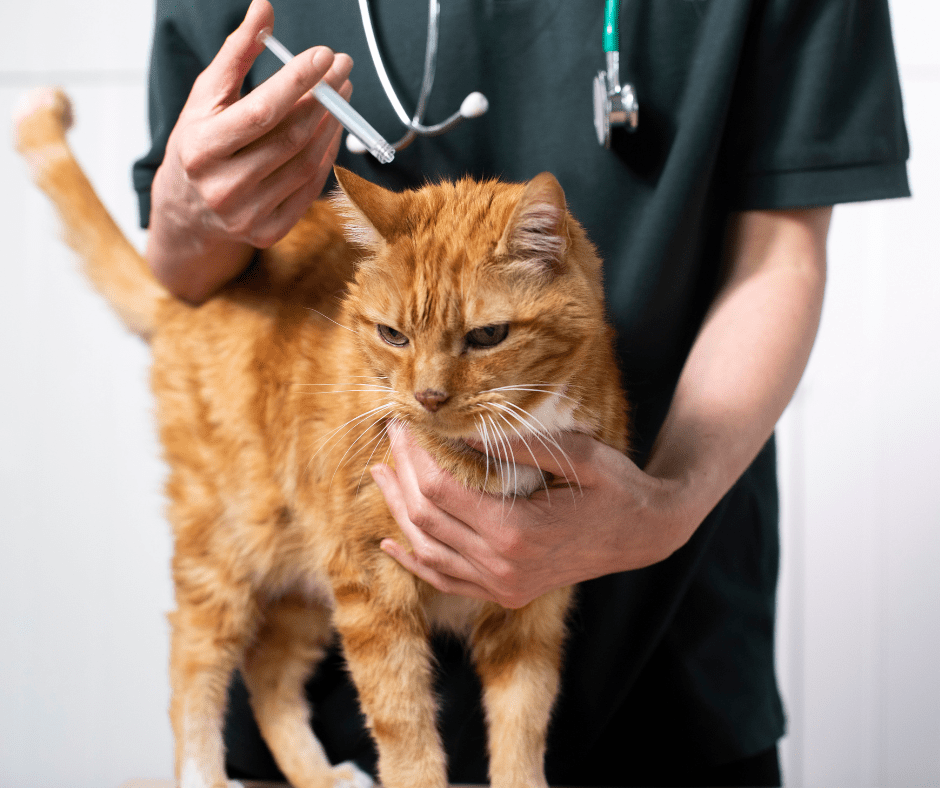
Cats are radiator experts, so the humidity advice applies to them too. But dandruff in cats is often a grooming problem rather than a skin problem: a cat that's stiff, sore or overweight simply can't reach its lower back [17]. Gentle brushing of those hard-to-reach areas helps, and a vet check can pick up hidden pain. If your cat is grooming far more than usual instead, read our guide to cat overgrooming.
Only use products labelled for cats on your cat.
Pharmacist's safety note
- If your dog has licked or eaten rock salt or grit and is vomiting, drinking a lot, wobbly or unusually quiet, call your vet straight away [13].
- The RSPCA says it isn't aware of antifreeze being added to road grit [13], but antifreeze spills on driveways are a separate winter danger. Treat any suspected contact as an emergency.
- Don't use human medicated dandruff shampoos, steroid creams or heavily fragranced moisturisers on pets without vet advice.
- Tell your vet about any supplement your pet takes.
The FurBabies™ Botanicals winter skin and coat routine
Everything in the 4-week plan, in three products made from plant oils and butters, with no SLS, parabens, synthetic fragrance or mineral oil:
- Wash gently, no more than weekly: Gentle Rinse-Off Shampoo, a sulphate-free cleanser with panthenol (provitamin B5) that leaves the coat soft and easy to brush. For muddy legs between baths, try the No-Rinse Shampoo.
- Condition the dry coat, once or twice a week: DermaRenew Serum, a blend of shea butter, jojoba, avocado, coconut and carrot seed oils with lavender. Work it into a dry coat as you brush. Owners tell us coats look glossier and the flakes settle.
- Balm the pads after walks: Paw, Nose & Wrinkle Balm, a wax-free blend of shea, cocoa butter, avocado, jojoba and coconut that melts into dry, cracked pads and noses.
Grooming products are for dry skin and pads. Broken, bleeding, infected or very itchy skin needs a vet.
When to see a vet
- Dandruff that moves, or itchy spots appearing on people in the house
- Hair loss, bald patches or heavy shedding alongside flaky skin
- Greasy, smelly or crusty skin, or recurring ear problems
- Intense itching, red or broken skin, or sores
- Pads that are bleeding, deeply cracked, swollen or making your dog limp
- Vomiting, excessive thirst or wobbliness after walking on gritted roads
- An older or overweight cat that has stopped grooming
- No improvement after 4 weeks of the plan above
FAQs
Why does my dog get dandruff in winter?
Usually because winter dries the skin from every side. Central heating lowers indoor humidity, dogs lie against radiators, and extra baths, rain and road grit strip the coat's natural oils. Older dogs have drier skin to start with. Keeping humidity at 40–60%, bathing less and moisturising the coat usually helps within a few weeks.
Can central heating dry out a dog's skin?
Yes, it can contribute. Heating warms the air but lowers its humidity, and in people, dry, cold air is shown to weaken the skin barrier. Dogs that sleep against radiators are especially exposed. Aim for indoor humidity of 40–50% and move beds away from direct heat.
Should I get a humidifier for my dog's dry skin?
Measure first with a cheap hygrometer. If humidity is below 40%, a steam or evaporative humidifier can bring it into the 40–60% range. Staying below 50% also keeps dust mites down, and going above 60% encourages mould. Use plain water only and never add essential oils near pets.
How often should I bathe a dog with dry skin in winter?
No more than once a week for most dogs. A small study found bathing every other day changed skin hydration and pH, while every 5 or 8 days did not. Use lukewarm water and a gentle, sulphate-free shampoo, rinse thoroughly and dry fully. Brush more, wash less.
What can I put on my dog's dry, flaky skin?
Plant oils and butters such as shea, coconut, avocado and jojoba soften dry skin, smooth the coat and help hold in moisture. Apply them to a dry coat, not damp fur, and work them in as you brush. Avoid human medicated dandruff shampoos and fragranced creams, and see a vet if the skin is red, broken or very itchy.
Is road salt poisonous to dogs?
It can be. The RSPCA reports that most rock salt poisoning cases involve dogs that walked through gritted snow and then licked their paws, and even a small amount of pure salt can be dangerous. Wipe feet, legs and belly after gritted walks, and call your vet if your dog vomits or seems unwell.
How can I protect my dog's cracked paws in winter?
Wipe and dry paws after every wet or gritted walk, including between the toes, then apply a thin layer of paw balm. Keep the fur between the pads trimmed so ice and grit have less to cling to. Pads that bleed, swell or make your dog limp should be checked by a vet.
When is dog dandruff a sign of something serious?
See a vet if the dandruff seems to move, as this may be Cheyletiella mites, which can also cause itchy spots on people. A dry coat with heavy shedding in a dog aged 4 to 10 can be an early sign of an underactive thyroid. Greasy or smelly scale can point to seborrhoea, often linked to hormones or allergies.
Related articles
- Dog Itchy Skin: Causes, Relief and What Actually Helps
- Is Your Home Making Your Dog Itchy?
- What's in FurBabies™ Botanicals Products?
- Dog Contact Dermatitis vs Seborrheic Dermatitis
- Dog Shampoo for Sensitive Skin: A Pharmacist's Guide
- Cat Overgrooming: Causes and What to Do
- Does Cold Weather Make Dog Arthritis Worse?
References
- Engebretsen KA, Johansen JD, Kezic S, Linneberg A, Thyssen JP (2016) The effect of environmental humidity and temperature on skin barrier function and dermatitis. Journal of the European Academy of Dermatology and Venereology 30(2): 223–249. doi:10.1111/jdv.13301
- Lee E-H, Yoo D, Lee J-R, Kim J-S, Han H-J, Hyun J-E (2026) Age-related evaluation of skin barrier parameters in retrievers. Frontiers in Veterinary Science 12: 1717581. doi:10.3389/fvets.2025.1717581
- Arundel AV, Sterling EM, Biggin JH, Sterling TD (1986) Indirect health effects of relative humidity in indoor environments. Environmental Health Perspectives 65: 351–361.
- Maranz S, Wiesman Z (2004) Influence of climate on the tocopherol content of shea butter. Journal of Agricultural and Food Chemistry. doi:10.1021/jf035194r
- Rele AS, Mohile RB (2003) Effect of mineral oil, sunflower oil, and coconut oil on prevention of hair damage. Journal of Cosmetic Science 54(2): 175–192. library.scconline.org
- Rees CA, Bauer JA, Burkholder WJ, Kennis RA, Dunbar BL, Bigley KE (2001) Effects of dietary flax seed and sunflower seed supplementation on normal canine serum polyunsaturated fatty acids and skin and hair coat condition scores. Veterinary Dermatology 12(2): 111–117.
- Müller MR, Linek M, Löwenstein C, Röthig A, Doucette K, Thorstensen K, Mueller RS (2016) Evaluation of cyclosporine-sparing effects of polyunsaturated fatty acids in the treatment of canine atopic dermatitis. The Veterinary Journal 210: 77–81.
- Reballi EE (2016) Using essential fatty acids in canine atopic dermatitis. Vet Times, 18 July 2016.
- Yu JW, Shin HJ, Bae S, Choi S, Oh TH (2013) Functional assessment of frequency of a commercial shampoo for normal canine skin. Journal of Veterinary Clinics 30(4): 283–287.
- Löflath A, von Voigts-Rhetz A, Jaeger K, Schmid M, Kuechenhoff H, Mueller RS (2007) The efficacy of a commercial shampoo and whirlpooling in the treatment of canine pruritus. Veterinary Dermatology 18(6): 427–431. doi:10.1111/j.1365-3164.2007.00639.x
- Ninomiya H, Akiyama E, Simazaki K, Oguri A, Jitsumoto M, Fukuyama T (2011) Functional anatomy of the footpad vasculature of dogs. Veterinary Dermatology 22(6): 475–481. doi:10.1111/j.1365-3164.2011.00976.x
- Dogs Trust (2025) Winter paw advice on grit and salt, reported by VetClick, 19 November 2025.
- RSPCA (2013) Rock salt poisoning factsheet.
- Companion Animal Parasite Council (2020) Hairclasping mite (Cheyletiella spp.). capcvet.org
- Heseltine J. Hypothyroidism in animals. MSD Veterinary Manual.
- White SD. Seborrhea in dogs. MSD Veterinary Manual.
- PDSA (2020) Dandruff in dogs; Dandruff in cats. PDSA Pet Health Hub.
Disclaimer: This article is for educational purposes only and does not replace veterinary advice, diagnosis or treatment. If your pet is distressed, injured or unwell, contact your veterinary surgeon or an out-of-hours vet.

Share:
Harvest Mites in Dogs and Cats (UK): Orange Specks Between the Toes, What Kills Them and When to Worry
Seasonal Canine Illness (SCI) in the UK: Symptoms, Real Risks and What's Still Unknown