
Last updated: November 2026 |
Quick answer: Seasonal Canine Illness (SCI) is a sudden illness in dogs, mainly sudden vomiting, diarrhoea and lethargy, that starts within about 72 hours of a walk in UK woodland between August and November. Its cause is still unknown and there is no specific test. In 2010, about 1 in 5 reported cases died, but by 2012 that had fallen to under 2%, and most dogs treated promptly recover in 7 to 10 days. If your dog becomes ill after an autumn woodland walk, phone your vet the same day.
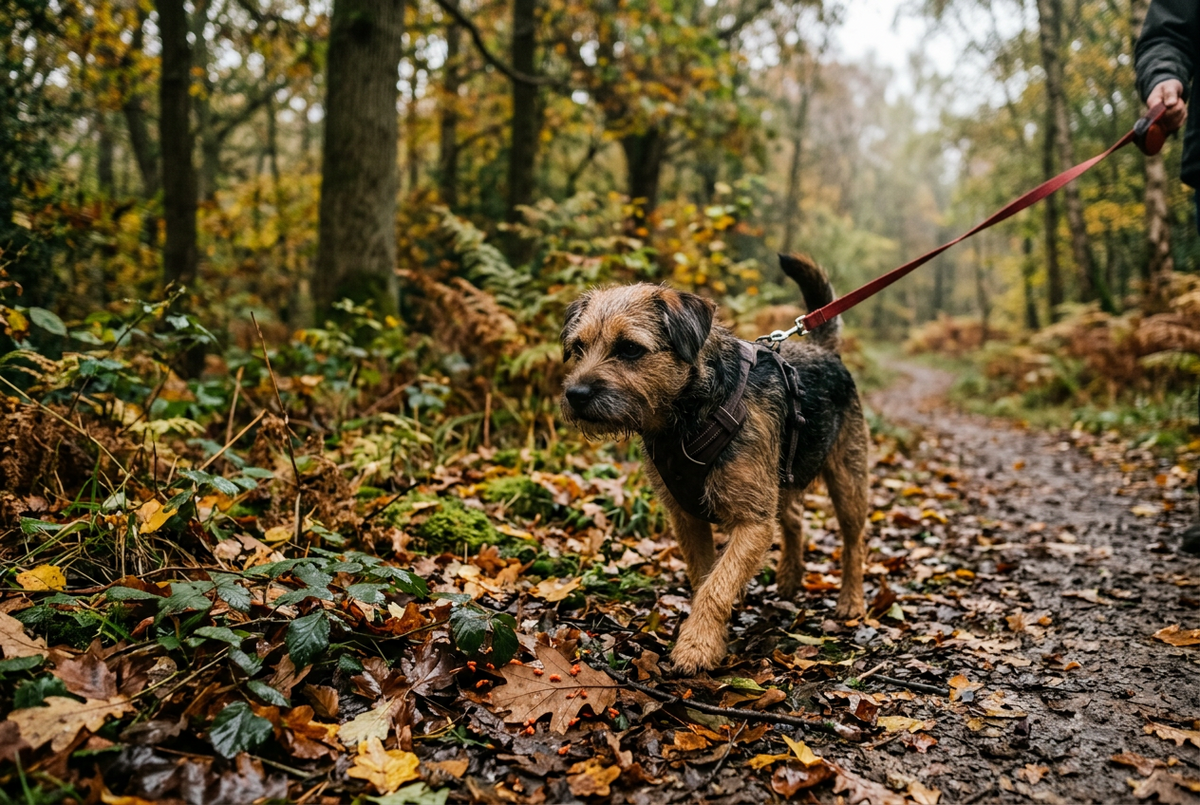
Seasonal Canine Illness first came to attention when dogs fell suddenly ill after walks on a handful of English estates and forests, including Sandringham, Thetford, Clumber Park, Sherwood and Rendlesham. Cases cluster between August and November. In 2010, around 1 in 5 reported cases died; by 2012, fewer than 2% did [1].
Most guides repeat the same tips. This one is different. The research into SCI was led by the Animal Health Trust, which went into liquidation on 31 July 2020 [2] and left the work unfinished [3]. So we've laid out plainly what is known, what has been ruled out and what nobody yet knows, along with a 0 to 72 hour watch timeline and a script for what to tell your vet.
Contents
- What is seasonal canine illness?
- Where and when does SCI happen?
- What we know, what's been ruled out, what's still unknown
- Is seasonal canine illness fatal? The numbers in context
- The puzzling 50 km finding
- The 0 to 72 hour after-walk watch timeline
- What to tell your vet
- SCI vs winter "mystery vomiting"
- Can you prevent SCI? An honest look
- When to see a vet
- FAQs
- References
What is seasonal canine illness?
SCI is the name given to a sudden illness in dogs that have recently walked in woodland in late summer and autumn. Signs typically appear within 72 hours of the walk [1]. Earlier veterinary appeals described onset at 24 to 72 hours [4], and current vet advice gives a similar window of one to three days [5].
The main signs owners notice are:
- Sudden vomiting, sometimes repeated
- Diarrhoea
- Lethargy, weakness or being "flat" and unwilling to move
- Refusing food
Vets will also ask about blood in vomit or poo, trembling, a painful tummy and changes in drinking or urination, because these help them judge how unwell your dog is.
Vets diagnose SCI by ruling out other causes of vomiting and diarrhoea and by putting the history together: an autumn woodland walk followed by sudden illness [6]. There is no specific test for it [7]. That is why the details you give your vet matter so much (see What to tell your vet).
Where and when does SCI happen?
The five sites most often linked with SCI are [1]:
- Sandringham Estate, Norfolk
- Thetford Forest, Norfolk
- Clumber Park, Nottinghamshire
- Sherwood Forest, Nottinghamshire
- Rendlesham Forest, Suffolk
The season runs from August to November [1], with cases peaking in September [3]. Cases have kept appearing at some sites in later years: Sandringham Estate warned of 15 dogs falling ill there in 2015 [8].
These are where cases were reported, not a list of "safe" and "unsafe" woods. Stay watchful after any autumn woodland walk.
What we know, what's been ruled out, what's still unknown
This is the part most SCI articles skip. There is no full peer-reviewed research paper on SCI. The most detailed published work is a case-control study presented as a conference abstract [9, 10], plus news reports and charity advice.
What we know
- Illness follows a woodland walk, usually within 72 hours, from August to November [1].
- Most dogs treated promptly recover, typically within 7 to 10 days [1].
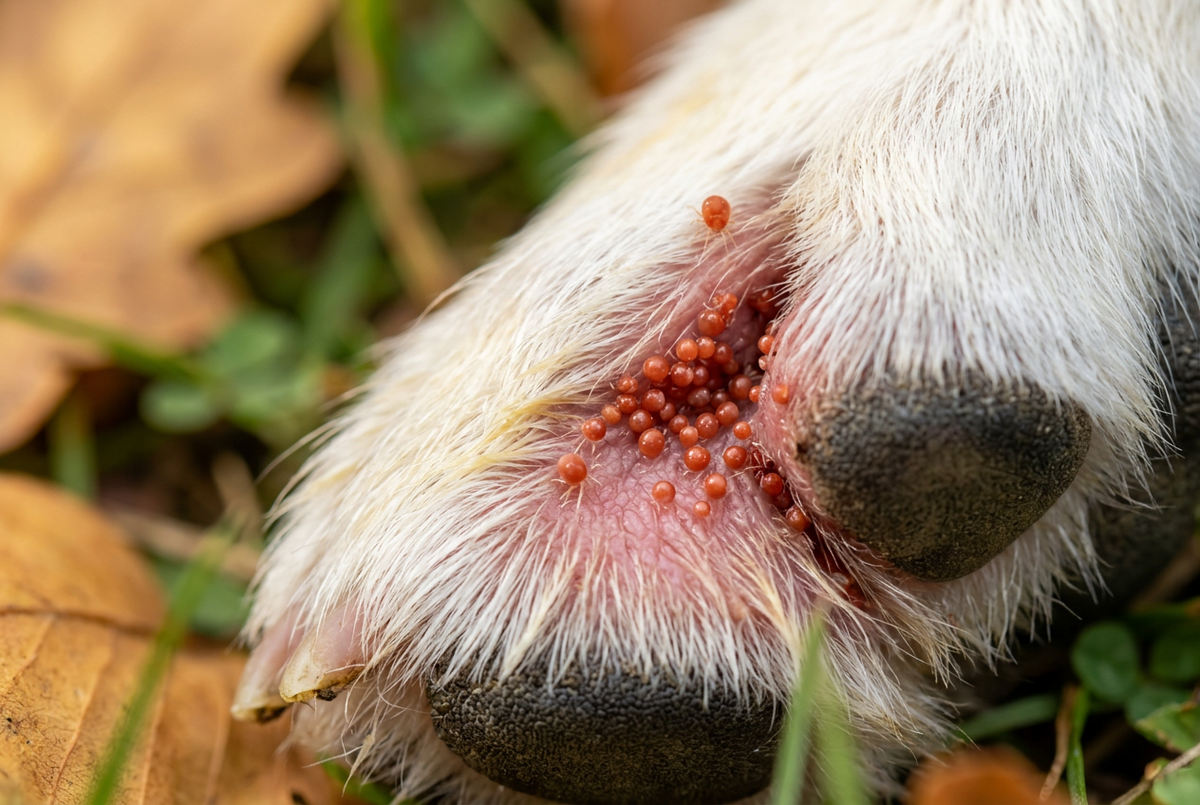
- In 2013, a large majority of affected dogs were found to have harvest mites [3]. Harvest mites are active from July to November, and SCI is suspected to be linked to them [11].
What's been looked at and judged unlikely
- The case-control study found algae, plants and fungi were unlikely causes [9].
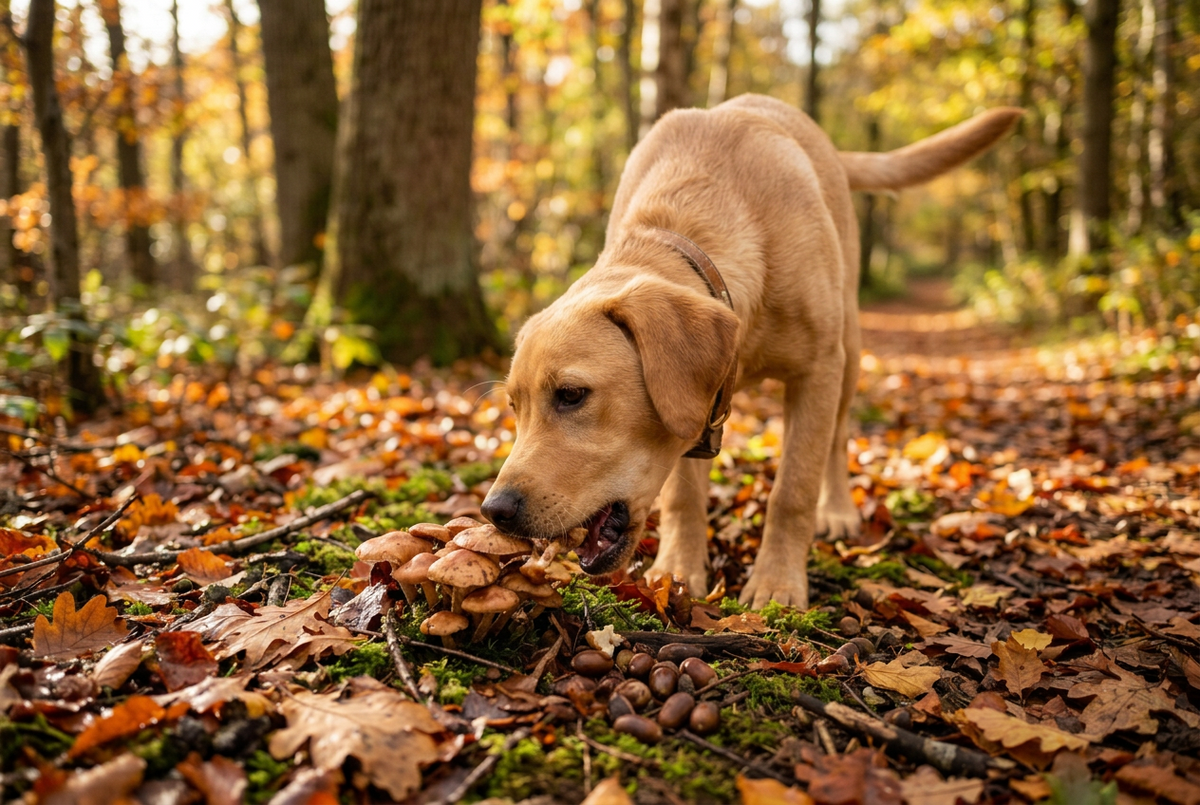
- The theory that mushrooms were responsible has been discounted [6].
What's still unknown
- The actual cause. Toxin testing was carried out with the University of Nottingham [12], but no cause was confirmed.
- Whether harvest mites cause SCI, or simply share the same season and habitat.
- Why dogs from further away seem to be at higher risk (see below).
- Whether the research will ever be completed. The Animal Health Trust led it and closed in 2020 with the work unfinished [2, 3].
Is seasonal canine illness fatal? The numbers in context
"1 in 5 died" is real, but it needs context.
- 2010: about 20% of reported cases died [1].
- By 2012: fewer than 2% died [1].
Why such a big fall? No study has answered that directly, but the early numbers were small: more than 50 cases across 2009 and 2010 [12], so a handful of deaths made a big percentage. It's also possible that, as awareness grew, milder cases were recognised and reported and owners got to the vet sooner; prompt treatment is linked to recovery [1]. That is our reading of the data, not a proven explanation.
You may also see a figure of more than 300 cases and 16 deaths [13]. Treat that with caution: it comes from a trade news item that is undated, so we can't tell which years it covers or how cases were counted.
Bottom line: SCI can kill, but today most dogs who get prompt veterinary care make a full recovery [5]. Getting to the vet quickly is one thing you can control.
The puzzling 50 km finding
The case-control study compared 53 dogs with SCI against 347 control dogs [9]. One finding stands out: dogs whose owners lived more than 50 km from the site had about 2.4 times the odds of becoming ill compared with dogs living nearer (95% confidence interval 1.19 to 4.96) [9, 10].
Nobody knows why. It might reflect visiting dogs' routes or lack of previous exposure, or simply be a quirk of a small study. None of these ideas has been tested, so treat the finding as unexplained. If you're visiting one of these sites on holiday, be at least as watchful as a local.
The 0 to 72 hour after-walk watch timeline
Signs usually appear within 72 hours of a walk [1, 4]. This is a practical checklist, not a research protocol.
| When | What to do | Phone the vet if... |
|---|---|---|
| Straight after the walk | Note the wood, the route and the time. Check legs, paws, ears and belly for tiny orange or red specks (possible harvest mites). Take a photo if you see any. | Your dog ate something unknown, such as fungi or berries. See our autumn poisons guide. |
| 0 to 24 hours | Watch appetite, energy, drinking and toileting. Know your vet's out-of-hours number. | Any vomiting, diarrhoea or unusual tiredness. Don't wait to see if it settles. |
| 24 to 72 hours | This is the main window for SCI signs [4]. Keep checking, especially first thing in the morning and after meals. | Vomiting, diarrhoea, lethargy, trembling or tummy pain. Mention the woodland walk straight away. |
| After 72 hours | SCI becomes less likely, but other illnesses don't follow a timetable. | Your dog is unwell for any reason. Still tell the vet about the walk. |
What to tell your vet
Because SCI is diagnosed from the history and by ruling out other causes [6], a clear account saves time. Note this on your phone before you ring:
- Which wood you walked in, and roughly which part or path.
- When you walked (date and time).
- When the first vomit or diarrhoea happened.
- How often your dog has vomited or had diarrhoea since.
- Any blood in vomit or poo, and what it looked like (fresh red or dark).
- Drinking and urination: more, less or none.
- Trembling or shaking, weakness or collapse.
- Mites seen: tiny orange or red clusters, often between toes or on ears.
- A photo of the vomit, poo or mites.
- Anything your dog ate or chewed on the walk, and any medicines or flea products used recently.
A simple script: "My dog walked in [wood] on [day] at [time]. First vomit at [time], [number] times since, [blood or no blood]. Drinking [more/less]. [Trembling or not]. I saw mites: [yes/no]. I have photos."
Not sure where your nearest out-of-hours practice is? Our guide to finding a vet and understanding vet costs explains what to expect.
SCI vs winter "mystery vomiting"
Winter brings reports of a "mystery vomiting bug" in dogs. That's a different pattern. A 2024 UK study found veterinary consultations for gut illness peak in January and February, linked with canine enteric coronavirus, and in 59.3% of cases a dog living in the same household was also ill [14].
| Feature | Seasonal Canine Illness | Winter "mystery vomiting" |
|---|---|---|
| Season | August to November, peaking in September [1, 3] | Peaks January to February [14] |
| Trigger | A woodland walk in the previous 72 hours [1] | No particular walk; spreads between dogs |
| Cause | Unknown [2, 3] | Linked with canine enteric coronavirus [14] |
| Contagious? | Not established; the common link is the walk, not contact between dogs | Yes, behaves like a contagious illness [14] |
| Other dogs at home ill? | Only if they also did the walk | Common: 59.3% of cases had an ill co-habiting dog [14] |
| What to do | Phone your vet promptly and mention the walk | Phone your vet; keep the dog away from other dogs |
Either way, sickness is not always a bug. Dogs who eat grass or odd objects can also vomit. See why dogs eat grass and pica in dogs.
Can you prevent SCI? An honest look
There is no proven way to prevent SCI. Here's what was tried and what is sensible.
- Fipronil spray pilot: an Animal Health Trust pilot at Sandringham tested a fipronil spray against harvest mites. The Animal Health Trust said fipronil "may not protect" against SCI [15].
- No licensed harvest mite product: Blue Cross notes there is no product licensed for harvest mites in dogs, and that while a paw spray might help, this is not proven [16].
- Common-sense steps (not research-proven): keep to wide paths during August to November, keep your dog out of dense undergrowth, check and wipe legs and paws after walks, and avoid walking at a site where cases have been reported that season.
For more on the mites themselves, read our harvest mites guide for dogs and cats.
Safety note
- Don't give human anti-sickness or anti-diarrhoea medicines. Doses and safety differ in dogs, and stopping diarrhoea can hide how ill your dog really is.
- Don't withhold water. Vomiting and diarrhoea dehydrate dogs quickly. If your dog can't keep water down, that is a reason to see a vet now.
- Don't use a flea or mite spray as "SCI protection". It hasn't been shown to prevent SCI [15, 16], and it may give false reassurance.
When to see a vet
If your dog becomes ill after an autumn woodland walk, phone your vet the same day. Prompt treatment is linked to recovery [1, 5]. Go now, including out of hours, if you see:
- Repeated vomiting, or vomiting with diarrhoea
- Blood in vomit or poo
- Your dog can't keep water down, or isn't drinking at all
- Weakness, collapse or extreme lethargy
- Trembling or shaking
- A painful or swollen tummy
- Pale gums, or heavy panting when it isn't warm (see why is my dog panting so much)
- A puppy, an elderly dog or a dog with other health problems with any of these signs
Check what your policy covers; our UK pet insurance comparison may help.
FAQs
What is seasonal canine illness?
Seasonal Canine Illness (SCI) is a sudden illness, mainly vomiting, diarrhoea and lethargy, seen in dogs within about 72 hours of walking in UK woodland between August and November. Its cause is unknown and there is no specific test. Vets diagnose it by ruling out other causes and by the history of a recent woodland walk.
What are the symptoms of SCI in dogs?
The main signs are sudden vomiting, diarrhoea and lethargy, often with loss of appetite. Your vet will also want to know about any blood, trembling or tummy pain. Signs usually start within 72 hours of an autumn woodland walk. Any of these after a woodland walk is a reason to phone your vet the same day.
Is seasonal canine illness fatal?
It can be, but deaths are now uncommon. About 20% of reported cases died in 2010, falling to under 2% by 2012. The reason for the fall hasn't been studied, but early figures were based on small numbers. Most dogs treated promptly recover within 7 to 10 days.
My dog was sick after a woodland walk. What should I do?
Phone your vet the same day and tell them about the walk. Note which wood, the time you walked, when the vomiting started, how often it has happened, and whether there is blood. Keep water available and don't give human medicines. Go straight in if your dog is weak, can't keep water down or is trembling.
How long after a walk do SCI symptoms start?
Signs usually appear within 72 hours of the walk, and veterinary reports describe onset at roughly 24 to 72 hours. Keep a close eye on your dog for three days after an autumn woodland walk, and contact your vet promptly if vomiting, diarrhoea or lethargy develops.
Is seasonal canine illness contagious?
That has not been established. The common link in SCI cases is a woodland walk, not contact with other dogs. Winter vomiting outbreaks are different: they peak in January and February, are linked with canine enteric coronavirus, and often affect other dogs in the same home.
Can I prevent seasonal canine illness?
There is no proven prevention. A fipronil spray pilot was run, but the Animal Health Trust said fipronil may not protect, and there is no licensed harvest mite product for dogs. Sensible steps are sticking to wide paths in autumn, checking legs and paws after walks, and watching your dog for 72 hours.
Where does seasonal canine illness occur in the UK?
The sites most linked with SCI are Sandringham Estate and Thetford Forest in Norfolk, Clumber Park and Sherwood Forest in Nottinghamshire, and Rendlesham Forest in Suffolk. These are where cases were reported, so stay watchful after any autumn woodland walk, not only at these sites.
Related articles
- Harvest Mites in Dogs and Cats: A UK Guide
- Conkers, Acorns and Mushrooms: Autumn Poisons for Dogs
- Why Does My Dog Eat Grass? A Clinical Pharmacist's Complete Guide
- Why Dogs Eat Strange Things: The Science Behind Canine Pica
- Why Is My Dog Panting So Much? A Pharmacist's Complete Guide
- Vets Near Me: Finding a Vet and Understanding Costs
- Best Pet Insurance UK 2026
References
- MRCVSonline. Vigilance for mystery illness. mrcvs.co.uk
- Wikipedia. Animal Health Trust (entry on its liquidation, 31 July 2020). en.wikipedia.org
- Lingley N (2021, updated 2024) What is Seasonal Canine Illness and is my dog at risk? Vet Help Direct. vethelpdirect.com
- VetClick (2012) Animal Health Trust is appealing for help with Seasonal Canine Illness. vetclick.com
- Kuhl C (2025) What is canine seasonal illness? VetPartners. vetpartners.co.uk
- Vets Now. Seasonal canine illness. vets-now.com
- Animal Trust (2026) Seasonal canine illness. animaltrust.org.uk
- VN Online (2016) Sandringham Estate warns of mystery dog illness. vnonline.co.uk
- Robin C, Ireland J, Wylie C, Cruz F, O'Brien M, Newton R. Seasonal canine illness case-control study (abstract). VIN. vin.com
- Robin C, Cruz F, Ireland J, Newton R (2012) ISVEE 13 Proceedings, p144. sciquest.org.nz
- PDSA. Harvest mites in dogs (leaflet). pdsa.org.uk
- VetSurgeon. Seasonal canine illness news report. vetsurgeon.org
- Vet Times. Seasonal canine illness news item (undated; development subdomain). vettimes.co.uk
- Cunningham-Oakes E, et al. (2024) Emerging Infectious Diseases 30(6). doi:10.3201/eid3006.231184
- MRCVSonline. Harvest mite pilot study (fipronil, Sandringham). mrcvs.co.uk
- Blue Cross (2022) Seasonal canine illness (SCI). bluecross.org.uk
Disclaimer: This article is for educational purposes only and does not replace veterinary advice, diagnosis or treatment. If your pet is distressed, injured or unwell, contact your veterinary surgeon or an out-of-hours vet.

Share:
Dog Dry Skin and Dandruff in Winter: Central Heating, Cracked Paws and Road Salt (UK Guide)