
Last updated: November 2026
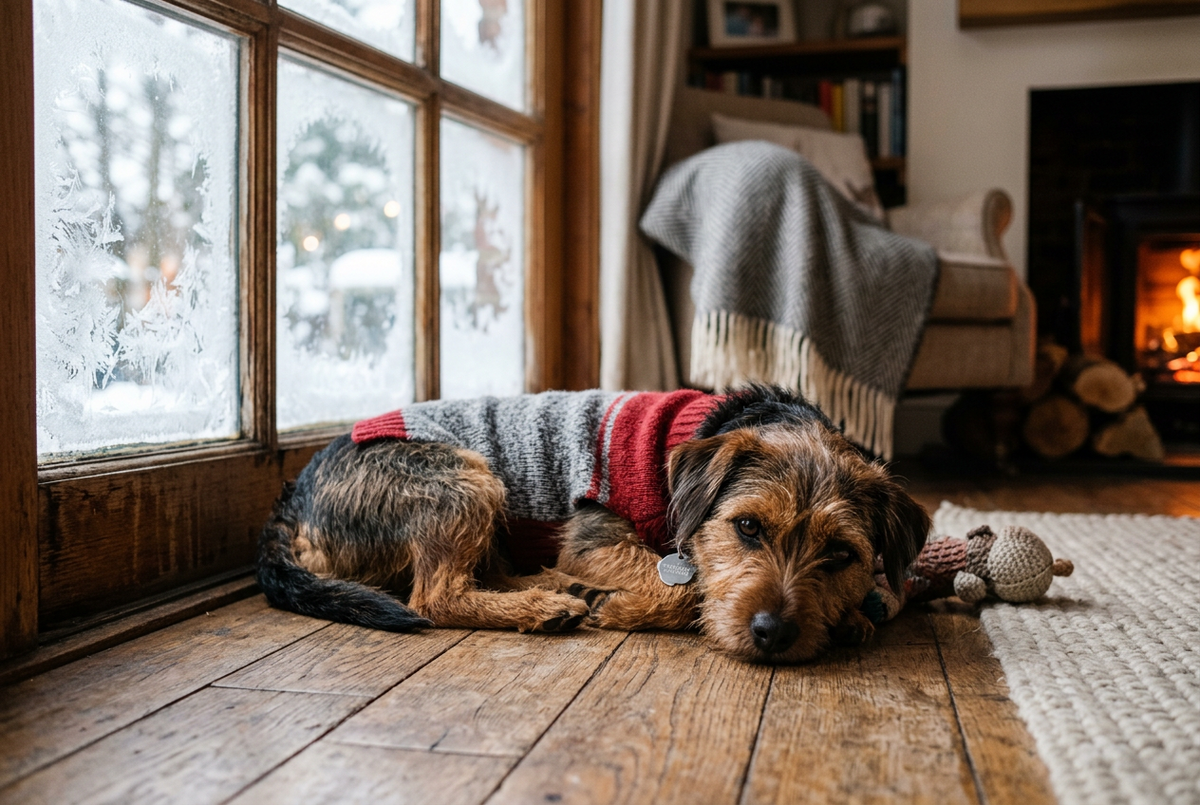
Quick answer: Yes, cold and damp weather can make some dogs with arthritis seem stiffer and less comfortable. Many pet parents notice slower starts, reluctance to walk and difficulty settling when temperatures drop. The science in dogs is still limited: one small study found that weather explained little of the variation in activity and did not show a link with owners' pain scores. That does not prove that no individual dog is affected. Cold, damp conditions may contribute to stiffness, while longer periods of inactivity, shorter walks and muscle loss can add to the problem. The practical response is to keep your dog warm, maintain gentle regular movement, manage their weight, follow your vet's pain-management plan and use massage only as supportive care. New or worsening stiffness deserves a veterinary check.
Many owners notice their older dog is slower on cold, wet mornings. They take longer to get up. They pause at the bottom of the stairs. They hesitate before getting into the car. Sometimes the change is striking: a dog who managed reasonably well in September seems much stiffer by January.
That seasonal change deserves to be taken seriously. Cold weather does not affect every dog in the same way, and research has not yet established exactly how much it contributes to arthritis pain. But a lack of definitive canine evidence is not proof that weather makes no difference. This guide explores what we know, why cold and damp conditions may make movement harder, how winter routines can add to the problem, and what you can do to help your dog stay comfortable.
Contents
- What the research shows about weather and arthritis
- The "80% of dogs over 8" myth
- Why cold and damp weather can make movement harder
- The October vs January check
- What helps: graded by the evidence
- Massage: the part most owners miss
- The 5-minute home massage routine
- The Joint & Muscle Massage Rub
- Warmth: comfort first, heat pads second
- Cats: the arthritis nobody notices
- When to see a vet
- FAQs
- References
What the research shows about weather and arthritis
In dogs: evidence is limited
There is very little published research directly examining weather and osteoarthritis symptoms in dogs. One study followed 62 dogs with osteoarthritis and compared their activity with local weather. Temperature and daylight hours were associated with activity, but explained less than 1% of the variation. Humidity, rain and air pressure showed no association, and weather was not linked with owners' pain scores on a validated questionnaire [1].
This is useful evidence, but it has limits. It was a small study, activity is not the same as pain, and a group-level result cannot tell us whether an individual dog becomes more uncomfortable in cold or damp conditions. It does not establish that cold weather has no effect on any dog.
Why owners may notice a seasonal difference
Cold weather may make an already painful or stiff musculoskeletal system feel harder to get moving. A dog with osteoarthritis may also spend longer resting, take shorter walks or tense their muscles when cold. These factors can overlap, so it is difficult to separate the direct effect of temperature from the effect of a changed winter routine. The precise mechanisms and size of the effect in dogs are not yet well established.
In people: mixed, and modest
- Rain made no difference in a study of over 1.5 million older Americans: joint or back pain visits were 6.35% on rainy days and 6.39% on dry days [2].
- A UK smartphone study of 2,658 people found higher humidity had the strongest link with pain, followed by low air pressure and wind. Temperature and rain had no effect. The effect was modest: about 6 painful days in 100 instead of 5 [3]. People vary a lot, with roughly 1 in 10 appearing sensitive to temperature [4].
- Damp plus cold: in 810 people with osteoarthritis, humidity was linked to pain, and the link was stronger when it was cold [5].
- Belief is common: 67.2% of people with osteoarthritis felt weather-sensitive in one study, most often to damp weather (39.2%) rather than cold (30.2%) [6]. An earlier study linked changes in air pressure and temperature with knee pain [7].
Our verdict: the evidence in dogs is not strong enough to quantify how much cold or damp weather contributes to arthritis symptoms. But it is not strong enough to dismiss an individual dog's seasonal pattern either. Cold and damp conditions may aggravate stiffness for some dogs, while reduced movement, muscle tension and changes in routine can add to the discomfort. If you notice a repeatable winter pattern, record it and discuss it with your vet.
The "80% of dogs over 8" myth
You'll often read that 80% of dogs over 8 have arthritis. There is no study behind that figure. The real numbers are more useful, and more worrying.
| What you'll read | What the evidence shows |
|---|---|
| "80% of dogs over 8 have arthritis" | In an X-ray study of dogs over 8, osteoarthritis changes were found in the elbow in 57.4%, shoulder 39.2%, stifle (knee) 36.4% and hip 35.9%. The authors stress this is not normal ageing [8]. |
| "Vets diagnose most cases" | In UK vet records for 455,557 dogs, only 2.5% had diagnosed osteoarthritis in a year, around 200,000 dogs [9]. |
| "Stiffness is just old age" | Higher risk of diagnosis was linked to being over 8, heavier, neutered, or a Labrador or Golden Retriever [9]. Stiffness is a sign worth checking, not something to accept. |
X-ray changes don't always mean pain, and the studies used different dogs. Even so, the gap between joint changes in a third to over half of older dogs and a 2.5% diagnosis rate suggests a great deal of arthritis is never picked up.
Why cold and damp weather can make movement harder
There may be more than one reason your dog feels stiffer in winter. Cold and damp conditions may be uncomfortable in their own right for some dogs, while the seasonal changes around them can add another layer. The exact contribution of each factor is not yet clear in canine arthritis research.
- Shorter, irregular walks. Dark evenings and rain mean quick weekday loops, then a long weekend hike. An arthritic dog copes better with steady, similar walks every day than stop-start exercise.
- More lying still. Hours on a cold floor, then a sudden dash to the door, means stiff starts. Muscles that have been still too long are tight when they're asked to move. See dogs jumping on and off the bed.
- Muscle loss. Sarcopenia is the loss of muscle with age and illness [10]. Muscle supports and steadies joints, so a winter of less walking can leave an older dog weaker by spring. Read our guide to sarcopenia in senior dogs.
- Guarding. A dog with a sore hip shifts weight onto other legs and tenses the muscles around the joint. Over weeks, those tight muscles make every movement feel harder.
- Christmas weight gain. Leftovers, extra treats and less exercise add up on sore joints.
The point is this: if your dog is stiffer in winter, do not dismiss the change or assume it is simply old age. Weather may be one contributor, alongside reduced activity, muscle changes and the underlying joint disease. The aim is to reduce avoidable discomfort and keep your dog moving safely.
Why a little weight matters so much
In a weight-loss study of dogs with osteoarthritis, lameness improved once dogs had lost around 6% of body weight [11]. In a lifelong study, dogs fed 25% less than a comparison group developed hip osteoarthritis far less often (3 of 21 dogs versus 15 of 22) [12] and lived longer [13]. Use our guide Is My Dog Too Fat? and weigh your dog before Christmas and again in January.
The October vs January check
Rather than guessing whether winter makes your dog worse, measure it. The LOAD questionnaire is a validated UK owner questionnaire for dogs with osteoarthritis, and it literally asks how cold, damp weather affects your dog [14]. The Canine Brief Pain Inventory [15] and the Helsinki Chronic Pain Index [16] are alternatives. Ask your vet which they use.
- Complete the questionnaire now, in autumn, and write down your dog's weight.
- Repeat it in January, ideally after a cold, wet spell.
- Note the simple things below each time.
- Take both sets of scores to your vet. A change between the two is real information, not a hunch.
| What to note | Autumn | January |
|---|---|---|
| Questionnaire score | ||
| Weight (kg) | ||
| Seconds to get up after a nap | ||
| Minutes walking before slowing down | ||
| Stairs, car or sofa: yes, hesitant or no | ||
| Restless nights or licking joints | ||
| Weather that day |
Clicking joints can be part of the picture too: see Why Do My Dog's Joints Click? Our free Senior Dog Mobility Checklist gives you a printable version of this check.
What helps: graded by the evidence
| Option | Best evidence | Our verdict |
|---|---|---|
| Keeping your dog lean | Lameness improved from about 6% weight loss [11]; restricted feeding meant far less hip osteoarthritis [12] | Strong. The most powerful thing you control. |
| Vet pain relief, e.g. anti-NGF injection bedinvetmab (Librela) | Trial of 287 dogs: owner-scored treatment success at day 28 in 43.5% versus 16.9% in the comparison group [17] | Strong. Discuss benefits and side effects with your vet. |
| Omega-3 (fish oil) | Trial: 82% improved versus 38% of controls; weight-bearing rose 5.6% versus 0.4%. Industry-linked (Hill's) [18] | Moderate. Worth discussing with your vet. |
| Regular, gentle exercise | No direct trial, but movement maintains the muscle that supports joints | Sensible and low risk. Little and often. |
| Massage | 527 dogs: pain severity fell significantly after one session and kept falling over three; owner and practitioner rated, no control group [19] | Promising. Low risk, and most dogs love it. See below. |
| Warmth (warm bed, warm hands, warm covers) | A 10-minute warm compress warmed the tissues in healthy dogs; pain wasn't tested [20] | Comforting, and a natural partner to massage. Heat pads need care. |
A coat on cold, wet walks and drying off afterwards are common sense. Our dog coats guide explains which dogs benefit. For a wider look, see Natural Pain Relief for Dogs.
Pharmacist's safety note
- Never give your dog human painkillers such as ibuprofen, naproxen, aspirin or co-codamol unless your vet has prescribed the medicine and the dose. Read Paracetamol for Dogs first. Paracetamol must never be given to cats.
- Don't use human heat rubs or muscle gels on pets. They're made for human skin and pets lick them off. See Deep Heat for dogs?
- Tell your vet about every supplement your pet takes, including fish oil and joint chews, so they can check for interactions.
- Don't stop or double up prescribed pain relief because the weather has changed. Speak to your vet first.
Massage: the part most owners miss
When a dog becomes stiffer, it's easy to focus only on the joint. But joints don't move on their own. They're moved and supported by muscles, tendons and connective tissue. When a dog is less active, or guarding a sore area, those muscles tighten and shorten. Tight muscles make everyday movement feel harder, and that's exactly what a long, still winter produces.
That's why massage belongs in the conversation. It's used routinely in canine rehabilitation, and the biggest study so far is encouraging. Researchers at the University of Winchester analysed 527 dogs with vet-diagnosed muscular and musculoskeletal conditions who were given a course of three massage sessions by Canine Massage Guild practitioners. Pain severity fell significantly after a single session and kept falling with each one, with average pain moving from "moderate" to "mild". Practitioners also judged that quality of life improved. Around 93% of dogs responded [19].
Be clear about what that does and doesn't show. The scores were rated by owners and practitioners, and there was no comparison group, so it's promising rather than proof. Massage won't cure arthritis. But it does mean gentle, hands-on care is worth taking seriously, especially when your dog enjoys it, and almost all of them do.
The 5-minute home massage routine
You don't need training to give an older dog a comforting massage. The aim isn't to press hard or "fix" a joint. It's to warm and loosen the muscles around it and give your dog five minutes of calm, focused attention.
- Pick a calm moment. Evening, after the last walk, with the TV low and no distractions. Let your dog settle on their bed.
- Warm your hands. Cold hands make muscles tense. Rub your palms together or run them under warm water first.
- Start with long, slow strokes from shoulders to tail, along the big muscles either side of the spine. Light pressure, slow rhythm. This tells your dog what's coming.
- Work the muscles, not the joints. Use slow circular strokes or very light kneading over the thigh muscles, the shoulders, the muscles along the back and the belly. Avoid pressing directly on a joint, and avoid the face, neck and genital area.
- Follow your dog's cues. Leaning in, sighing and going floppy mean yes. Moving away, lip-licking or tensing means stop or go lighter. Never massage over a swollen, hot or painful area.
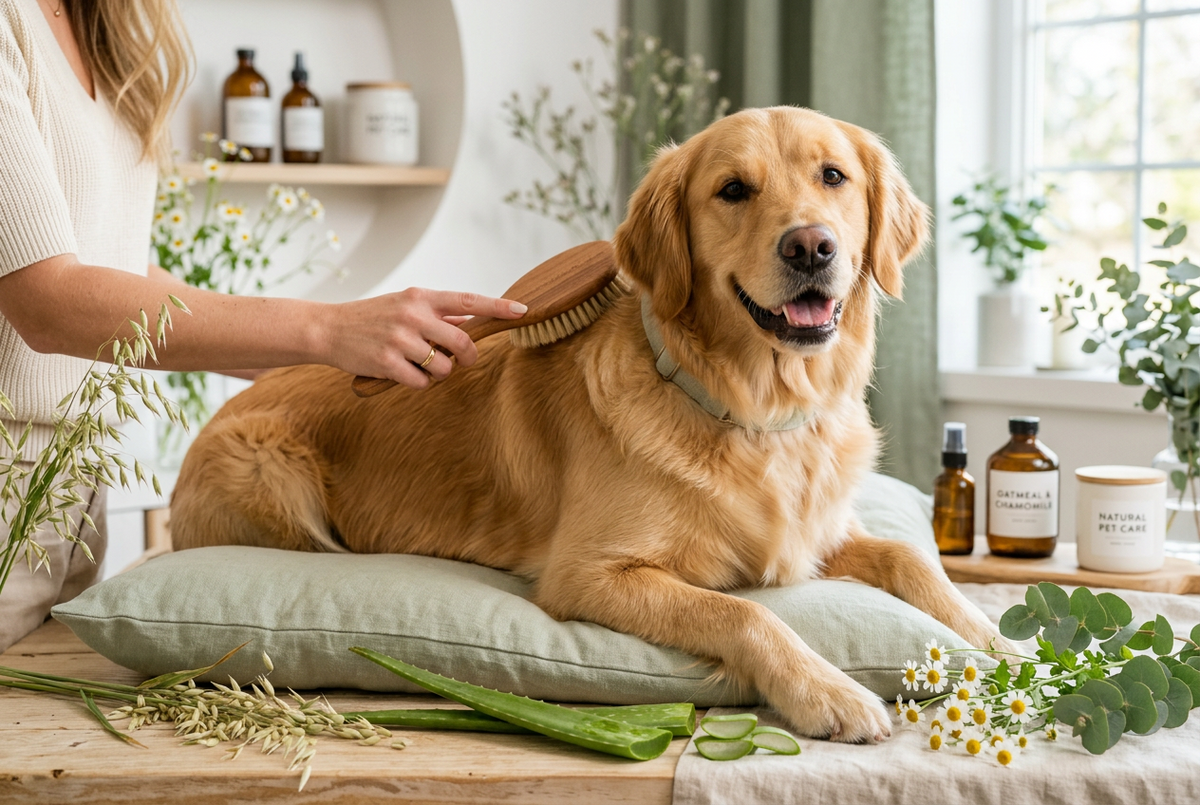
- Finish warm. Brush the coat through, then tuck your dog under a warm blanket. Warmth after massage keeps the loosened muscles relaxed.
Once a week is a good rhythm for a dedicated session, with a minute or two of gentle stroking on other evenings.
The Joint & Muscle Massage Rub
Our Joint & Muscle Massage Rub was made for exactly this routine. It's a topical blend of warming and cooling botanicals in a light coconut base, designed to be massaged into the hips, legs, back and the muscles along the spine.
- Warming ginger (Zingiber officinale) and cooling peppermint (Mentha piperita) give the massage a gentle warm-then-tingle sensation that makes the session feel like something, for you and your dog.
- Frankincense (Boswellia carterii), Atlas cedarwood and clary sage add a deep, grounding scent that turns a quick rub into a calm ritual.
- Arnica (Arnica montana), the classic massage botanical, used in rubs for generations.
- It goes on your dog, not in them. No extra tablet, chew or powder to add to an older dog's routine, and no fillers.
How to use it: part the fur and spray two pumps onto your hands, then follow the routine above: legs, hips, the muscles along the spine, the back and the underbelly. Brush through and tuck your dog under warm covers. Once a week is the sweet spot. Patch test first, as with any new product.
One honest line: the rub is a botanical massage product, not a medicine, and it hasn't been through clinical trials. The massage is what the research points to. The rub makes that massage warmer, more enjoyable and far more likely to become a habit, and habit is what helps a stiff dog over a long winter.
Read more about every ingredient on our What's in FurBabies™ Botanicals products? page.
Warmth: comfort first, heat pads second
Warmth is a practical part of winter comfort. A warm, draught-free resting place may help a dog who seems uncomfortable in cold conditions, and warm hands make a massage more pleasant. Warmth should be thought of as supportive comfort, not a treatment for the underlying arthritis. Research has not established that warming the tissues reduces arthritis pain in dogs.
The simplest warmth is the best: a thick, supportive bed off the floor and away from draughts, a coat for thin-coated dogs on cold walks, and a towel-dry after wet ones. Let a stiff dog settle somewhere warm for a few minutes before expecting them to move.
Heat pads are a step further and need care. A warm compress has been shown to warm the tissues in healthy dogs [20], but no study has tested whether heat reduces arthritis pain, and pads can burn an older dog who doesn't move away in time. If you use one: choose a pet-specific product, put a towel between the pad and your dog, keep sessions short, check the skin, and never leave it under a sleeping, sedated or immobile dog. Don't apply heat over a swollen, hot or acutely painful area.
Cats: the arthritis nobody notices
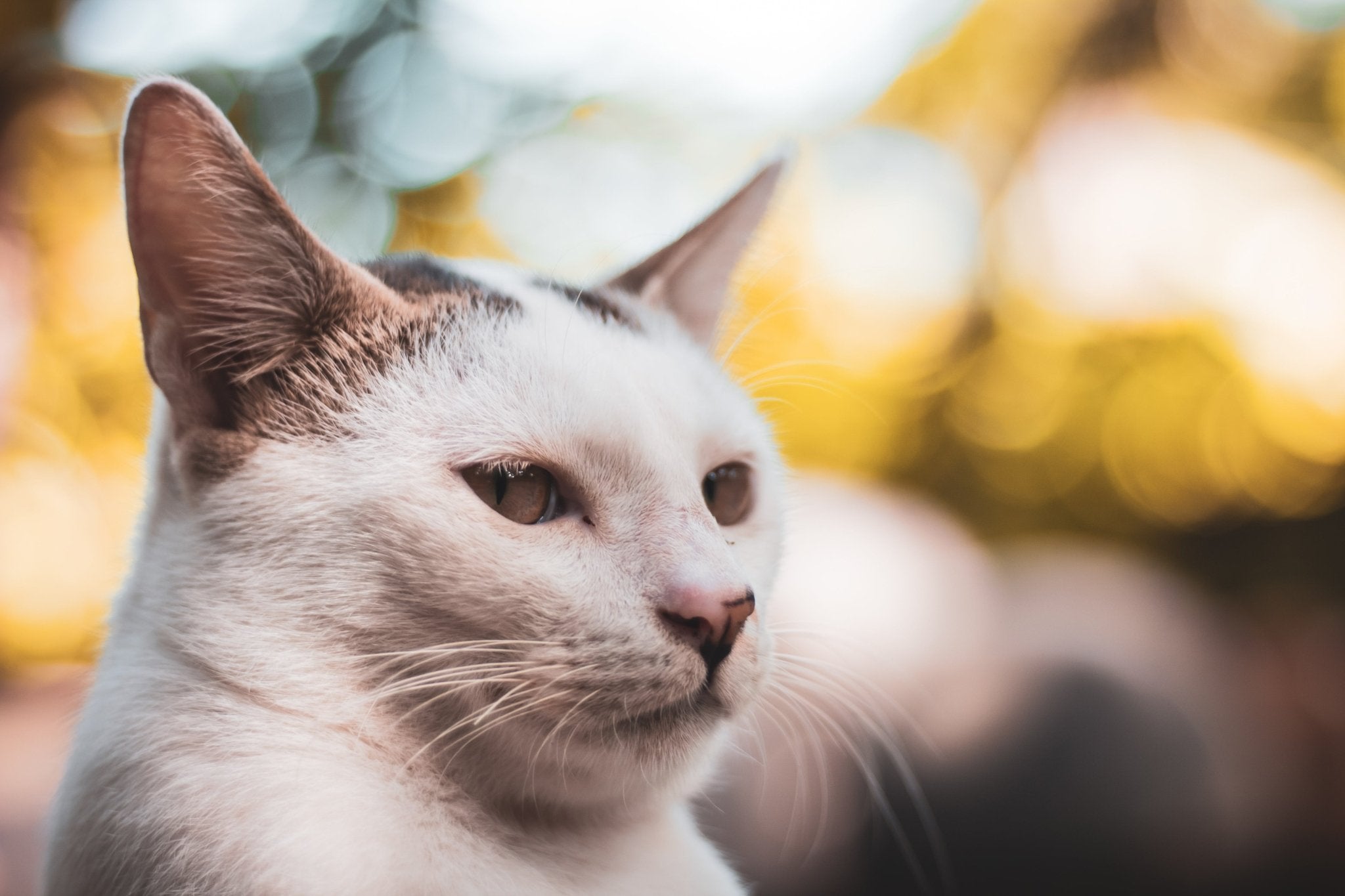
In one study, 61% of 100 cats had osteoarthritis in at least one joint [21]. Cats rarely limp. Instead, watch for:
- Jumping less, or stopping halfway (chair before worktop)
- Toileting just outside the litter tray
- A scruffy or matted coat along the back, where grooming hurts
- Sleeping more, or grumpiness when stroked over the hips
Offer a warm bed at floor level, steps to favourite spots and a low-sided litter tray. Many cats enjoy slow stroking along the back and thighs; follow their cues, and speak to your vet if your cat stops jumping altogether.
When to see a vet
Book an appointment if your dog is stiff for more than a few minutes after getting up, is reluctant on stairs or into the car, has slowed on walks, or your January scores are worse than autumn. Contact your vet urgently if:
- Your pet suddenly won't put weight on a leg
- They cry out, yelp when touched, or a joint is hot or swollen
- They can't get up, or collapse
- They are panting or restless at night, or stop eating
- A cat stops using the litter tray or can no longer jump at all
If you're weighing up how your older dog is coping overall, our quality of life guide and Dogs in Pain, Part 1 can help you prepare for the conversation.
FAQs
Does cold weather affect dogs with arthritis?
It may aggravate stiffness or discomfort in some dogs, particularly when cold and damp conditions coincide with less movement. The canine evidence is limited: one study of 62 dogs found weather explained little of the variation in activity and was not associated with owners' pain scores. That finding does not rule out individual sensitivity. If your dog repeatedly becomes stiffer in winter, keep a record and discuss it with your vet.
Why is my old dog stiffer in winter?
Usually it's a combination: shorter, irregular walks, long spells lying on cold floors, tight muscles from guarding a sore joint, extra festive treats and gradual muscle loss. Tight, under-used muscles make stiff joints feel worse. Stiffness that's getting worse is usually a sign of pain, not just old age, so book a vet check.
Does massage help dogs with arthritis?
It's promising. In a study of 527 dogs with musculoskeletal conditions given three massage sessions, pain severity fell significantly after the first session and kept falling, with average pain moving from moderate to mild. Scores were owner and practitioner rated with no control group, so it isn't proof, but gentle massage is low risk and most dogs enjoy it.
How do I massage my dog with arthritis at home?
Choose a calm moment, warm your hands, and use long slow strokes from shoulders to tail, then gentle circles over the thigh, shoulder and back muscles. Work the muscles, not the joints, avoid the face, neck and genitals, and stop if your dog moves away. Finish by brushing and tucking them under a warm blanket. Once a week is a good rhythm.
How can I help my arthritic dog in cold weather?
Keep walks short but regular, dry your dog off after wet walks, provide a thick, warm bed away from draughts, consider a coat for thin-coated dogs, and keep them lean. Add a weekly warm massage to loosen tight muscles, and ask your vet about pain relief, which has strong trial evidence.
Is a heat pad safe for a dog with arthritis?
It can be, with care, but a warm bed and warm hands during massage do most of the job. If you use a pad, choose one made for pets, put a towel between the pad and your dog, keep sessions short, and only use it while you're watching. Never leave a heat pad under a sleeping, elderly or immobile dog.
How common is arthritis in dogs over 8?
Very common, but the popular "80% of dogs over 8" figure has no clear source. A 2024 X-ray study of dogs over 8 found osteoarthritis changes at the elbow in 57.4% and the hip in 35.9%. Yet in UK vet records, only 2.5% of dogs had a diagnosis in a year, so many cases go undiagnosed.
Can I give my dog paracetamol or ibuprofen for stiff joints?
No. Never give human painkillers unless your vet has prescribed the medicine and the dose. Ibuprofen and similar anti-inflammatories can cause serious harm in dogs, and paracetamol must never be given to cats. Human heat rubs are unsuitable too, because pets lick them off. Ask your vet about licensed pain relief.
Related articles
- Chronic Pain, Muscle Loss and Sarcopenia in Senior Dogs
- Natural Pain Relief for Dogs
- Is My Dog Too Fat?
- Why Do My Dog's Joints Click?
- Deep Heat for Dogs?
- What's in FurBabies™ Botanicals Products?
- Dog Dandruff and Dry Skin in Winter
References
- Katz EM et al (2017) Vet Comp Orthop Traumatol 30(6): 385–390. doi:10.3415/VCOT-17-02-0028
- Jena AB et al (2017) BMJ 359: j5326. doi:10.1136/bmj.j5326
- Dixon WG et al (2019) npj Digital Medicine 2: 105. doi:10.1038/s41746-019-0180-3
- Yimer BB et al (2022) Pain Reports 7(1): e963. doi:10.1097/PR9.0000000000000963
- Timmermans EJ et al (2015) J Rheumatol 42(10): 1885–1892. doi:10.3899/jrheum.141594
- Timmermans EJ et al (2014) BMC Musculoskelet Disord 15: 66. doi:10.1186/1471-2474-15-66
- McAlindon T et al (2007) Am J Med 120(5): 429–434. doi:10.1016/j.amjmed.2006.07.036
- Reese S, Meyer-Lindenberg A (2024) Vet J 305: 106132.
- Anderson KL et al (2018) VetCompass study of osteoarthritis in UK dogs. Sci Rep 8: 5641. doi:10.1038/s41598-018-23940-z
- Freeman LM (2012) J Vet Intern Med 26(1): 3–17.
- Marshall WG et al (2010) Vet Res Commun 34(3): 241–253. doi:10.1007/s11259-010-9348-7
- Kealy RD et al (2000) JAVMA 217: 1678–1680.
- Kealy RD et al (2002) JAVMA 220(9): 1315–1320. doi:10.2460/javma.2002.220.1315
- Walton MB et al (2013) LOAD questionnaire. PLoS ONE 8(3): e58125. doi:10.1371/journal.pone.0058125
- Brown DC et al (2008) Canine Brief Pain Inventory. JAVMA 233(8): 1278–1283. doi:10.2460/javma.233.8.1278
- Hielm-Björkman AK et al (2009) Helsinki Chronic Pain Index. Am J Vet Res 70(6): 727–734. doi:10.2460/ajvr.70.6.727
- Corral M et al (2021) Vet Anaesth Analg 48(6): 943–955. doi:10.1016/j.vaa.2021.08.001. Figures as summarised in Kronenberger (2023) Veterinary Evidence 8(1). doi:10.18849/ve.v8i1.598
- Roush JK et al (2010) JAVMA 236(1): 67–73. doi:10.2460/javma.236.1.67
- Riley LM, Satchell L, Stilwell LM, Lenton NS (2021) Effect of massage therapy on pain and quality of life in dogs: a cross sectional study. Vet Rec 189(11). doi:10.1002/vetr.586
- Millard RP et al (2013) Am J Vet Res 74(3): 448–451. doi:10.2460/ajvr.74.3.448
- Slingerland LI et al (2011) Vet J 187(3): 304–309. doi:10.1016/j.tvjl.2009.12.014
Disclaimer: This article is for educational purposes only and does not replace veterinary advice, diagnosis or treatment. If your pet is in pain, lame or unwell, contact your veterinary surgeon or an out-of-hours vet.

Share:
Seasonal Canine Illness (SCI) in the UK: Symptoms, Real Risks and What's Still Unknown