

In our previous deep dives, we explored the "Outside-In" theory and how a "Leaky Skin Barrier" allows irritants to penetrate the skin. But for the owner of a dog with Contact Dermatitis, the biggest question remains: What exactly is getting through the gates?
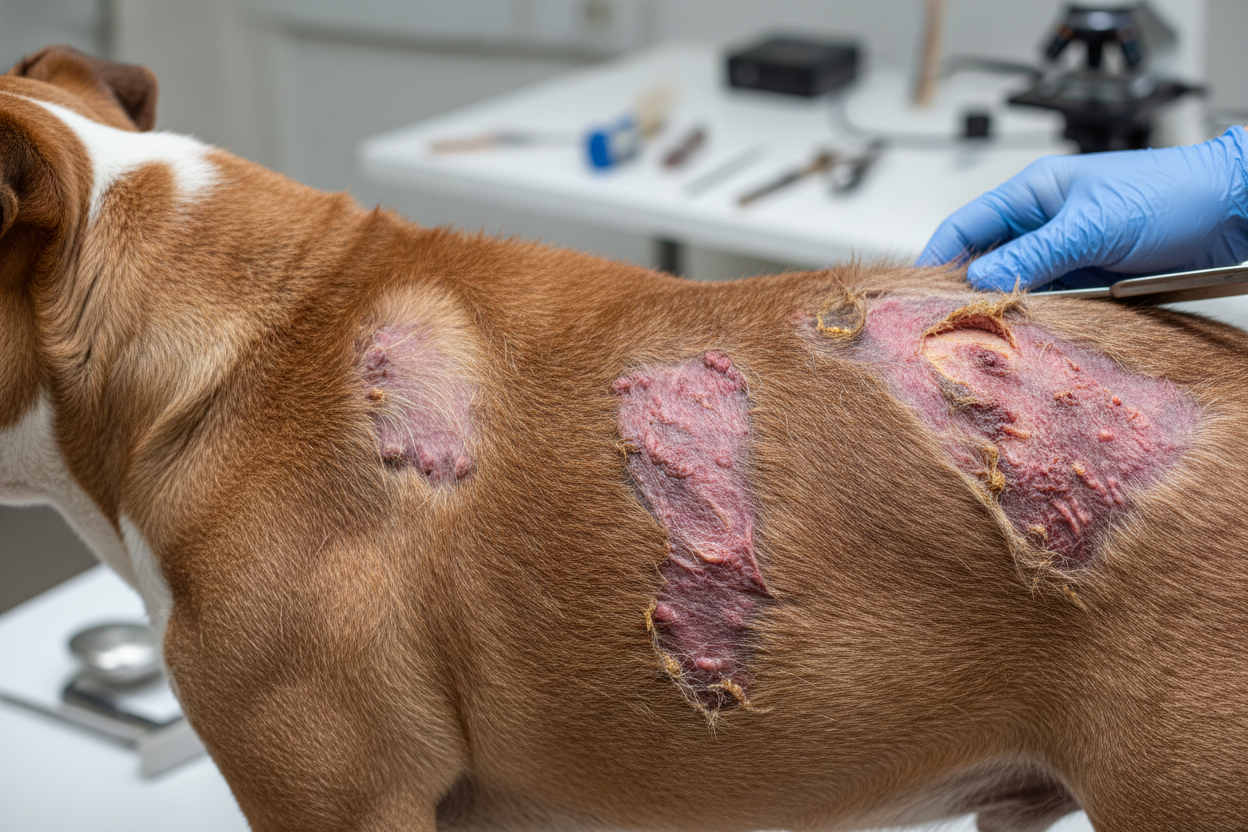
Contact Dermatitis is an inflammatory reaction caused by direct contact with an external substance. Unlike systemic allergies, this is a localized battle. If your dog has red, raw skin on their belly, paws, or chin areas with the least amount of fur, you are likely looking at a reaction to something in their immediate environment.
1. The Two Faces of Contact Dermatitis
Clinical dermatology categorizes these reactions into two distinct types:
-
Irritant Contact Dermatitis (ICD): This occurs when a substance physically or chemically damages the skin barrier directly. It happens to any dog if the concentration is high enough (e.g., undiluted bleach).
-
Allergic Contact Dermatitis (ACD): This is an immune-mediated hypersensitivity. The dog's immune system "remembers" a specific molecule (a hapten) and overreacts every time it touches the skin [1].
Research in Veterinary Science indicates that ACD is often underdiagnosed because it can take years of exposure for a dog to develop the "memory" of the allergen, making it difficult for owners to spot the sudden change [2].
2. The "Usual Suspects": A Household Audit
To manage Contact Dermatitis, you must perform a "Discovery Audit" of your dog’s environment. Modern homes are full of haptens that bypass a weak skin barrier.
The Garden: Pollens and Pesticides
We often blame "grass allergies," but the culprit is frequently the Nitrates in fertilizers or Glyphosate in weedkillers. These chemicals sit on the grass blades and transferred directly to the thin skin of the dog’s inguinal (groin) area and paws. Clinical studies have shown that dogs with compromised barriers show an immediate spike in inflammatory cytokines when exposed to common lawn chemicals [3].
The Laundry: Residual Surfactants
If your dog sleeps on a bed washed in biological detergent, they are lying on a bed of residual enzymes and synthetic fragrances. Sodium Lauryl Sulphate (SLS) and Fragrance Mix I & II are leading allergens in veterinary patch testing [4]. These residues strip the skin's lipid "mortar" while the dog sleeps, ensuring they wake up with a "leaky" barrier.
The Floor: Modern Cleaners
Dogs spend 90% of their time in contact with the floor. Many floor cleaners use "quat" (Quaternary Ammonium) compounds. While effective at killing germs, they are potent skin irritants that increase Transepidermal Water Loss (TEWL), keeping the "gates" of the skin barrier permanently open [5].
3. Breaking the Cycle: "Avoidance and Fortification"
The clinical gold standard for treating contact dermatitis is the Avoidance of the Offending Substance. However, in a world full of "invisible" chemicals, total avoidance is impossible. This is where Fortification becomes vital.
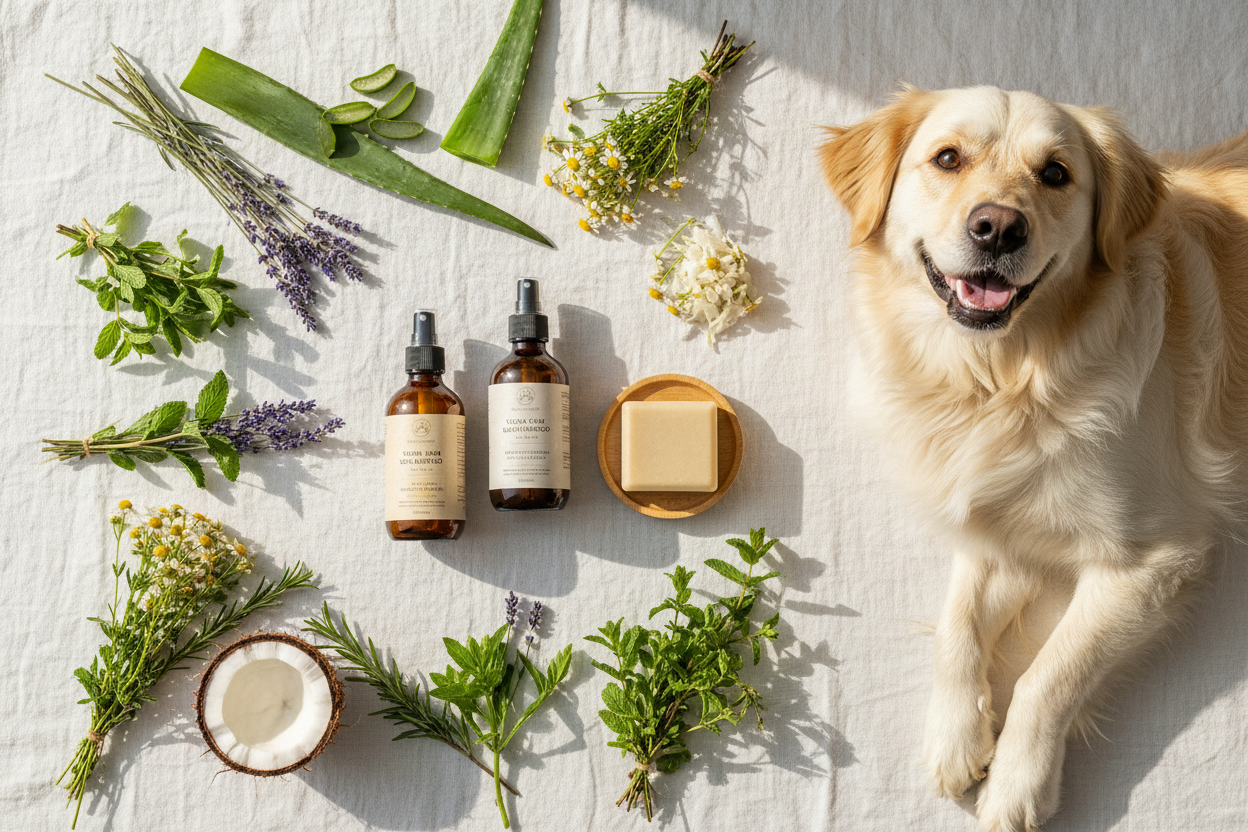
The Botanical Shield
At FurBabies™ Botanicals, we developed the Multipurpose Balm to act as a physical "glove" for the skin.
-
Topical Lipid Therapy: By applying a barrier-rich balm before walks or after bathing, you are pre-filling the gaps in the stratum corneum.
-
Neem & Clary Sage: Clinical evaluations of Neem show it acts as a "bio-pesticide" and anti-inflammatory, soothing the skin before the inflammatory cascade can take hold [6].
Managing the "Wash-Off"
After a walk through potentially treated grass, owners often make the mistake of scrubbing paws with harsh soaps. This further damages the barrier. Using a pH-balanced, SLS-free No-Rinse Shampoo allows you to remove the chemical irritants without "melting" the skin's natural protective oils [7].
Conclusion: Empowered Parenting
Contact Dermatitis isn't a life sentence of steroids. It is a management challenge. By auditing your home for harsh chemicals and proactively fortifying your dog’s skin barrier with botanical lipids, you are giving their "shield" the strength it needs to withstand the modern world.
index-in-node="0">Clinical References (Verifiable)
-
Marsella R. (2021). "Contact Dermatitis." Veterinary Clinics: Small Animal Practice. Vol 51(6). [Comprehensive breakdown of ICD vs ACD].
-
Olivry T, et al. (2010). "Treatment of canine atopic dermatitis: 2010 clinical practice guidelines." Veterinary Dermatology. [Early establishing of avoidance protocols].
-
Kim HJ, et al. (2022). "Evaluation of skin barrier function and environmental factors in dogs." Frontiers in Veterinary Science. [Research on environmental particulates and barrier health].
-
Mueller RS, et al. (2016). "Allergen detection in canine atopic dermatitis." Veterinary Dermatology. [Cites laundry/fragrance as common haptens].
-
Inman AO, et al. (2001). "Comparison of sodium lauryl sulfate-induced skin irritation in dogs." Food and Chemical Toxicology. [The specific impact of surfactants on dog skin].
-
Pchelnikov Y, et al. (2021). "Effectiveness of topical plant-based formulations in the management of canine atopic dermatitis." Journal of Veterinary Medical Science. [Botanical efficacy in barrier defense].
-
Santoro D. (2019). "Canine Atopic Dermatitis: Therapeutic Approaches." Veterinary Clinics: Small Animal Practice. Vol 49(1). [The importance of gentle cleansing in barrier repair].




Share:
Best Dog Shampoos in 2026: A Clinical Pharmacist's Evidence-Based Guide for UK Pet Parents
A-Z Guide Flea Treatment For Dogs & Cats