
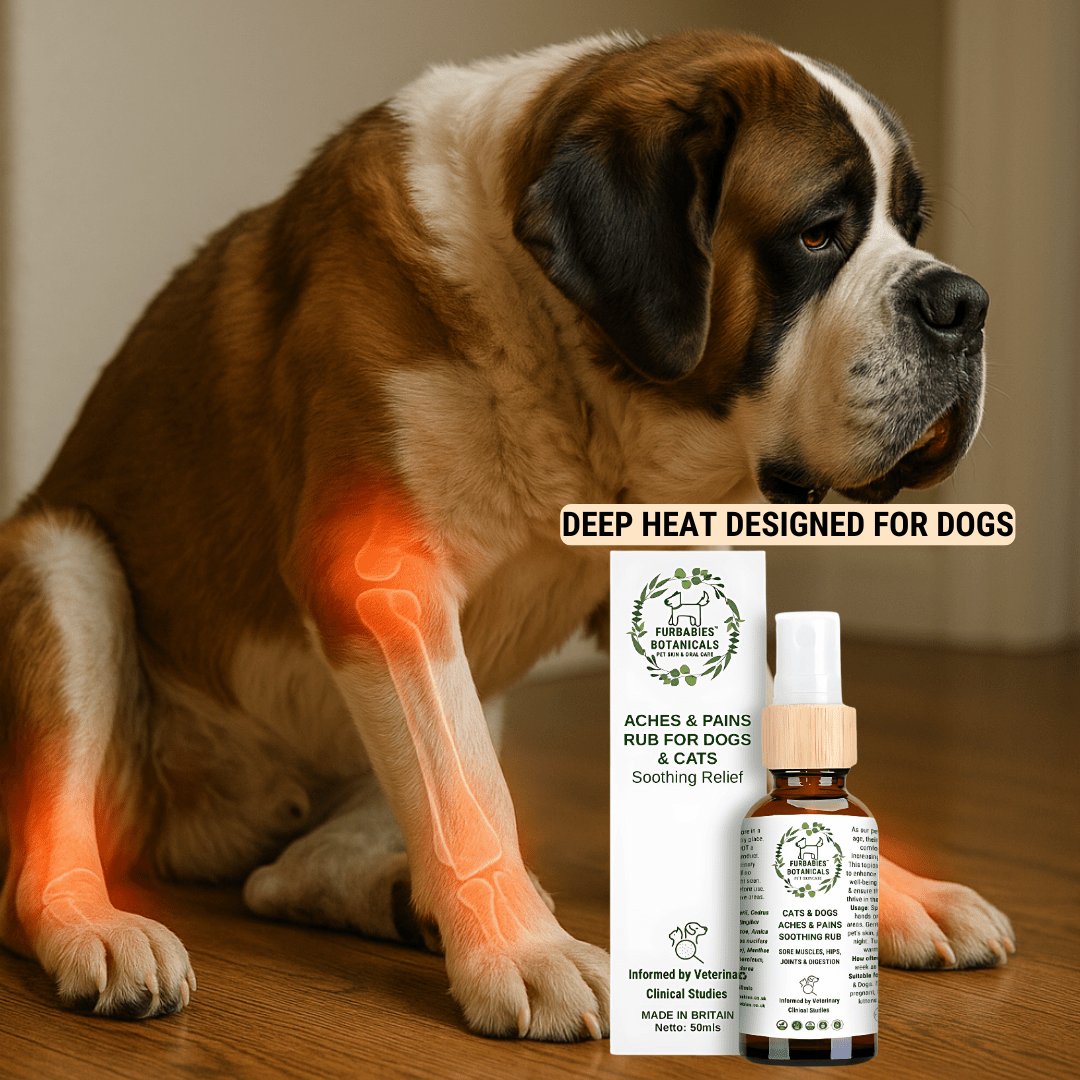
Can you use Deep Heat on dogs? No and using it even once could send your dog to an emergency vet. Deep Heat contains methyl salicylate, a salicylate compound related to aspirin. Dogs cannot metabolise salicylates safely, and because canine skin is significantly thinner than human skin, topical absorption is rapid. A small amount applied to a dog's joints can cause vomiting, internal haemorrhage, seizures, and acute organ failure. The FDA has issued formal warnings on this, and UK veterinary emergency departments treat salicylate toxicity cases regularly.
This is one of the most-searched questions by UK dog owners usually because their dog is limping, stiff after a walk, or struggling to get up, and Deep Heat is the only pain product in the cupboard. The answer is simple: human topical pain rubs are never safe for dogs, regardless of how diluted or briefly applied.
What does work is a topical rub built specifically around canine physiology using botanical anti-inflammatories like arnica, boswellia, and gingerol that provide genuine localised relief without salicylate toxicity, camphor risk, or the danger that comes from your dog licking a human product off their coat. Our Aches & Pains Rub was developed with exactly this gap in mind.
This guide covers everything you need to know:
- Why Deep Heat and all human topical rubs are dangerous for dogs
- Which ingredients are safe and which to avoid
- How canine topical pain relief actually works
- When to use it, how to apply it, and what to expect
How to Tell If Your Dog Needs Pain Relief
Dogs instinctively mask pain a survival behaviour inherited from their wild ancestors. By the time a dog is visibly limping, the discomfort has often been present for weeks or months. These are the earlier, subtler signs to watch for:
- Stiffness after rest, struggling to get up after lying down, particularly in the morning or after a long sleep
- Reluctance to use stairs, jump into the car, or get onto furniture they previously used without hesitation
- Licking, chewing, or nuzzling a specific joint, the dog's equivalent of rubbing a sore knee
- Uneven weight-bearing, shifting weight off one limb when standing, or a subtle head-bob when walking
- Reduced enthusiasm for walks, slowing down, stopping earlier, or lagging behind where they previously pulled ahead
- Whimpering or crying during sleep, this is a frequently missed sign; dogs in chronic pain often vocalise during REM sleep when their conscious pain-masking is relaxed. See our guide on why dogs whine in sleep for more detail.
- Irritability or snapping when touched in a specific area, pain-related aggression is commonly misread as a behaviour problem
If your dog is showing two or more of these signs, pain is the most likely explanation. A veterinary assessment is always the right first step — but while you're managing day-to-day comfort, topical pain relief applied to the affected joint or muscle can make a meaningful difference to their quality of life.
Table of Contents
- Understanding Topical Pain Relief for Dogs
- Why Deep Heat and Human Products Are Dangerous for Dogs
- Safe Topical Pain Relief Options for Dogs
- How Topical Pain Relief Works in Dogs
- Topical vs Oral Pain Medications: What's Best for Your Dog
- Key Ingredients to Look For (and Avoid)
- Application Techniques and Best Practices
- When to Use Topical Pain Relief vs Other Treatments
- Veterinarian-Recommended Topical Solutions
- Frequently Asked Questions
Understanding Topical Pain Relief for Dogs
When your beloved dog is struggling with joint discomfort, muscle stiffness, or arthritis pain, finding safe and effective relief becomes a top priority. Topical pain relief for dogs offers a targeted approach that can provide comfort without the systemic risks associated with oral medications.
Unlike oral pain medications that must be processed through your dog's liver and kidneys, topical applications work directly at the site of discomfort. This localised approach makes topical pain relief an increasingly popular choice among pet owners and veterinarians seeking safer add-ons or alternatives for managing canine discomfort.
What Makes Topical Pain Relief Different?
Topical pain relief products for dogs are specifically formulated to:
- Target specific areas of discomfort without systemic absorption
- Reduce the risk of organ stress common with oral medications
- Provide faster onset of relief at the application site
- Complement existing treatment plans without drug interactions
- Offer a non-invasive alternative to injections or surgery
The growing awareness of pet pain management has led to significant advances in topical formulations designed specifically for canine physiology, making them safer and more effective than ever before.
Why Deep Heat and Human Products Are Dangerous for Dogs
Toxic Ingredients in Human Deep Heat Products
Many popular human deep heat rubs contain ingredients that are toxic to dogs:
Methyl Salicylate (Wintergreen Oil)
- Highly toxic to dogs even in small amounts
- Can cause severe poisoning, organ failure, and death
- Absorbs rapidly through canine skin
Menthol and Camphor
- Can cause skin irritation and chemical burns
- May lead to respiratory distress in dogs
- Toxic if licked off during grooming
Capsaicin (from Hot Peppers)
- Causes severe burning and irritation
- Can damage sensitive canine skin
- Extremely painful if dogs lick the area
Why Dogs Are More Vulnerable
Dogs process medications differently than humans due to:
- Thinner skin that absorbs topical products more readily
- Different metabolism that cannot safely process many human medications
- Grooming behavior that leads to ingestion of topical products
- Smaller body size making toxic doses easier to reach
Real Consequences of Using Human Products
Veterinary emergency rooms regularly treat dogs poisoned by human topical pain relievers. Symptoms include:
- Vomiting and diarrhea
- Difficulty breathing
- Seizures
- Organ failure
- In severe cases, death
✅ No toxic ingredients found in human products
✅ Targets multiple layers of discomfort simultaneously
✅ Works in 10-30 minutes for fast-acting relief
Safe Topical Pain Relief Options for Dogs
Fortunately, there are several safe and effective topical pain relief options specifically designed for dogs. These products are formulated with canine physiology in mind and undergo rigorous safety testing.
Integrative Research Informed Topical Rubs
The gold standard in canine topical pain relief comes from products supported by reserach & those used by integrative vets using species-specific research. These formulations typically include:
Botanical-Based Ingredients
- Arnica montana for inflammation reduction
- Boswellia for joint support
What Makes a Topical Product Safe for Dogs?
• pH balanced for canine skin
• Concentration levels appropriate for dogs
• No toxic ingredients commonly found in human products
Veterinary Testing and Approval
- Clinical trials conducted on dogs
- Safety data specific to canine use
- Veterinarian oversight in development
How Topical Pain Relief Works in Dogs
Understanding how topical pain relief works helps explain why it's often more effective and safer than oral alternatives for many dogs.
The Science Behind Topical Application
Localised Delivery
When applied to the skin, topical pain relief products work through several mechanisms:
- Direct penetration to underlying tissues
- Activation of skin receptors that block pain signals
- Improved blood circulation in the treated area
- Reduction of local inflammation
Topical applications often work through the "gate control theory" of pain: Topical ingredients stimulate large nerve fibers in the skin, which "close the gate" to pain signals from smaller fibers, resulting in reduced discomfort.
Targeting Multiple Layers of Discomfort
Quality topical pain relief products address different sources of discomfort:
Muscle Tension
- Warming ingredients relax tight muscles
- Improved circulation reduces muscle spasms
- Enhanced flexibility and range of motion
Nerve Sensitivity
- Cooling agents calm overactive nerves
- Natural compounds reduce nerve inflammation
- Decreased hypersensitivity to touch and movement
Poor Circulation
- Vasodilating ingredients increase blood flow
- Better oxygen and nutrient delivery to tissues
- Faster removal of inflammatory waste products
Guarded Posture
- Pain relief allows natural movement patterns
- Reduced compensation behaviors
- Improved overall mobility and comfort
Advantages Over Systemic Medications
| Benefit | Topical Relief | Oral Medications |
|---|---|---|
| Targeted Action | ✓ Direct application | ✗ Whole body exposure |
| Organ Safety | ✓ Minimal systemic absorption | ⚠ Liver/kidney processing |
| Speed of Relief | ✓ 10-30 minutes | ⚠ 30-60 minutes |
| Side Effects | ✓ Minimal risk | ⚠ Potential organ stress |
The Complementary Approach
Key Ingredients to Look For (and Avoid)
Understanding the ingredients in topical pain relief products helps you choose the safest and most effective options for your dog.
Safe and Effective Ingredients
Arnica Montana
- Natural anti-inflammatory properties
- Reduces swelling and bruising
- Promotes healing of soft tissues
- Well-tolerated by most dogs
Boswellia Serrata
- Traditional anti-inflammatory herb
- Supports joint mobility
- Reduces pain and stiffness
- Clinically studied for arthritis
Cedarwood
- Natural calming and soothing properties
- Helps reduce muscle tension and stress
- Anti-inflammatory benefits for joint discomfort
- Safe for topical canine application when properly diluted
Clary Sage
- Natural muscle relaxant properties
- Helps reduce inflammation and pain
- Promotes circulation to affected areas
- Gentle and well-tolerated by dogs
Gingerol (from Ginger)
- Powerful anti-inflammatory compound
- Natural pain-relieving properties
- Improves circulation and reduces stiffness
- Clinically proven for joint health support
Peppermint (Veterinary-Safe Concentration)
- Cooling sensation for immediate comfort
- Natural analgesic properties
- Helps improve blood flow to treated areas
- Formulated at safe levels for canine skin
All of these ingredients are combined in our Aches & Pains Rub a topical rub developed specifically for dogs using integrative vet-informed research. It's the formula this entire article is built around: no methyl salicylate, no synthetic preservatives, no ingredients that put your dog at risk.
Ingredients to Avoid
High Concentrations of Camphor
- Can cause skin irritation
- Toxic if ingested
- May cause respiratory issues
- Avoid products with >2% camphor
Essential Oils at Human Concentrations
- Tea tree oil (toxic to dogs at any concentration)
- Eucalyptus (can be irritating in high concentrations)
- Peppermint (unsafe at human product concentrations)
- Always verify veterinary-safe concentration levels
Red Flags:
- "For human and animal use" (not species-specific)
- Vague ingredient descriptions
- No concentration information
- Missing safety warnings
- No veterinary involvement in development
Application Techniques and Best Practices
Proper application of topical pain relief products is crucial for both safety and effectiveness. Follow these veterinarian-recommended techniques for best results.
Step-by-Step Application Process
1. Preparation
- Wash your hands thoroughly
- Ensure the application area is clean and dry
- Have your dog in a comfortable, secure position
- Keep the product away from your dog's face and mouth
2. Application Technique
- Use a small amount initially (pea-sized for most areas)
- Apply to the skin, not just the fur
- Gently massage in circular motions
- Work the product into the skin until absorbed
- Avoid over-application
3. Post-Application Care
- Wash your hands immediately after application
- Prevent your dog from licking the area for 10-15 minutes
- Monitor for any adverse reactions
- Keep the product stored safely away from pets
Application Areas and Techniques
Joint Applications (Hips, Knees, Elbows)
- Part the fur to expose skin
- Apply directly over the joint
- Massage gently in circular motions
- Cover a 2-3 inch area around the joint
Muscle Applications (Back, Shoulders, Thighs)
- Use slightly more product for larger muscle groups
- Apply in long, gentle strokes following muscle direction
- Focus on areas of visible tension or sensitivity
- Avoid bony prominences
• Start with once daily application
• Apply at the same time each day for consistency
• Most products are effective for 8-12 hours
• Adjust frequency based on your dog's response
When to Use Topical Pain Relief vs Other Treatments
Understanding when topical pain relief is most appropriate helps ensure your dog gets the best possible care for their specific situation.
Ideal Situations for Topical Pain Relief
Localised Discomfort
- Single joint arthritis (hip, knee, elbow)
- Muscle strains from exercise or activity
- Post-surgical site discomfort (with veterinary approval)
- Specific areas of stiffness or tension
Chronic Conditions
- Mild to moderate arthritis
- Age-related joint stiffness
- Chronic muscle tension
- Long-term mobility issues
As Complementary Therapy
- Alongside oral medications for enhanced relief
- With physical therapy and exercise programs
- Combined with joint supplements
- Part of a comprehensive pain management plan
When to Consider Other Treatments
Severe Pain
- Acute injuries requiring immediate intervention
- Post-surgical pain management
- Severe arthritis with significant mobility loss
- Pain that doesn't respond to topical treatment
Veterinarian-Recommended Topical Solutions
When choosing a topical pain relief product for your dog, clinical backing make a significant difference in both safety and effectiveness.
Which Conditions Respond Best to Topical Relief?
Not every source of canine pain is equally suited to topical treatment. This table gives an honest guide to where topical rubs are most appropriate — and where they are not.
| Condition | Topical Suitable? | Notes |
|---|---|---|
| Hip dysplasia (mild–moderate) | ✅ Appropriate as adjunct | Apply over the hip joint. Use alongside vet-prescribed NSAIDs or joint supplements, not instead of them. |
| Elbow or knee osteoarthritis | ✅ Primary use case | Well-localised joints respond well to direct topical application. Particularly useful for reducing morning stiffness. |
| Post-exercise muscle soreness | ✅ Excellent fit | Apply within 30–60 minutes of activity to affected muscles. Especially relevant for working dogs, sporting breeds, or dogs returning to activity after a rest period. |
| Age-related general stiffness | ✅ Daily maintenance use | Low-risk, well-tolerated long-term. Useful for senior dogs where owners want to reduce or delay reliance on oral NSAIDs. |
| Acute soft tissue injury (strain, sprain) | ⚠️ Vet assessment first | Rule out fracture or ligament rupture before applying any topical product. Once confirmed as soft tissue only, topical relief is appropriate alongside rest. |
| Post-surgical site discomfort | ⚠️ Veterinary approval required | Never apply to an open wound or surgical site without explicit veterinary instruction. Appropriate for surrounding muscle tension with vet sign-off. |
| Spinal pain / IVDD | ❌ Not appropriate alone | Intervertebral disc disease requires urgent veterinary imaging and treatment. Topical surface application does not reach spinal structures. Seek veterinary care immediately if spinal involvement is suspected. |
| Severe acute pain / inability to bear weight | ❌ Veterinary emergency | Do not apply topical products and wait. Contact your vet or an out-of-hours service immediately. |
How Does Topical Relief Compare to NSAIDs?
Most dogs with diagnosed arthritis will be prescribed an oral NSAID meloxicam (Metacam) and carprofen (Rimadyl, Carprieve) are the most commonly used in the UK. These are effective systemic medications, but long-term use carries a well-documented risk of liver and kidney stress, which is why vets routinely run blood panels on dogs receiving them for more than a few weeks.
Topical botanical rubs work locally the active compounds reach the joint and surrounding tissue without entering systemic circulation at meaningful levels. This means no liver processing, no kidney burden, and no interaction risk with other medications. The clinical role is complementary: topical relief addresses the localised surface-level discomfort and muscle tension that oral NSAIDs, which work systemically, are less targeted at. Many integrative vets now recommend both together prescription NSAID for systemic inflammation management, and a topical rub for targeted daily comfort support.
Topical products are not a replacement for veterinary NSAIDs in moderate-to-severe arthritis. They are a meaningful addition to the treatment plan — and for dogs with mild symptoms, or those whose owners are trying to delay or reduce NSAID use under veterinary guidance, they can be a safe first-line option.
What Veterinarians Look For
Clinical Evidence
- Studies conducted specifically on dogs
- Peer-reviewed research supporting efficacy
- Safety data from veterinary trials
- Long-term use studies
Formulation Quality
- Species-appropriate ingredient concentrations
- pH balanced for canine skin
- Stable, consistent formulations
- Appropriate preservative systems
Integration with Veterinary Care
Professional Guidance
- Proper diagnosis of your dog's condition
- Appropriate treatment recommendations
- Monitoring for effectiveness and safety
- Adjustments based on response
Frequently Asked Questions
1. Can I use human deep heat products on my dog?
2. Is topical pain relief safe for senior dogs?
3. Can I use topical pain relief with my dog's current medications?
4. How often can I apply topical pain relief to my dog?
5. What should I do if my dog licks the topical product?
6. Can topical pain relief help with my dog's arthritis?
7. How do I know if the topical pain relief is working?
- Increased willingness to move or exercise
- Less stiffness when getting up
- Improved gait or walking pattern
- More relaxed posture
- Increased interest in activities
- Better sleep quality
- Reduced signs of discomfort when touched
Conclusion
Topical pain relief for dogs represents a safe, effective alternative to oral medications for many canine comfort issues. By choosing veterinarian-formulated products specifically designed for dogs, you can provide targeted relief without the systemic risks associated with oral pain medications.
Help Your Dog Feel Better Today
Our veterinarian-formulated topical rub provides safe, effective relief for your dog's discomfort. Targeting muscle tension, nerve sensitivity, and poor circulation - the layers of discomfort that oral medications often miss.
Try Risk-Free - 30-Day GuaranteeRemember: While topical pain relief can significantly improve your dog's comfort and quality of life, it's always best to work with your veterinarian to develop a comprehensive pain management plan tailored to your dog's specific needs.
Your dog's comfort and safety should always be the top priority. When in doubt, consult with your veterinarian to ensure you're making the best choices for your beloved companion's health and well-being.
This article is for educational purposes only and does not replace professional veterinary advice. Always consult with your veterinarian before starting any new treatment for your dog.






Share:
My Dog or Cat Still Has Fleas After Treatment
Can Fleas Live in a House Without Pets?