
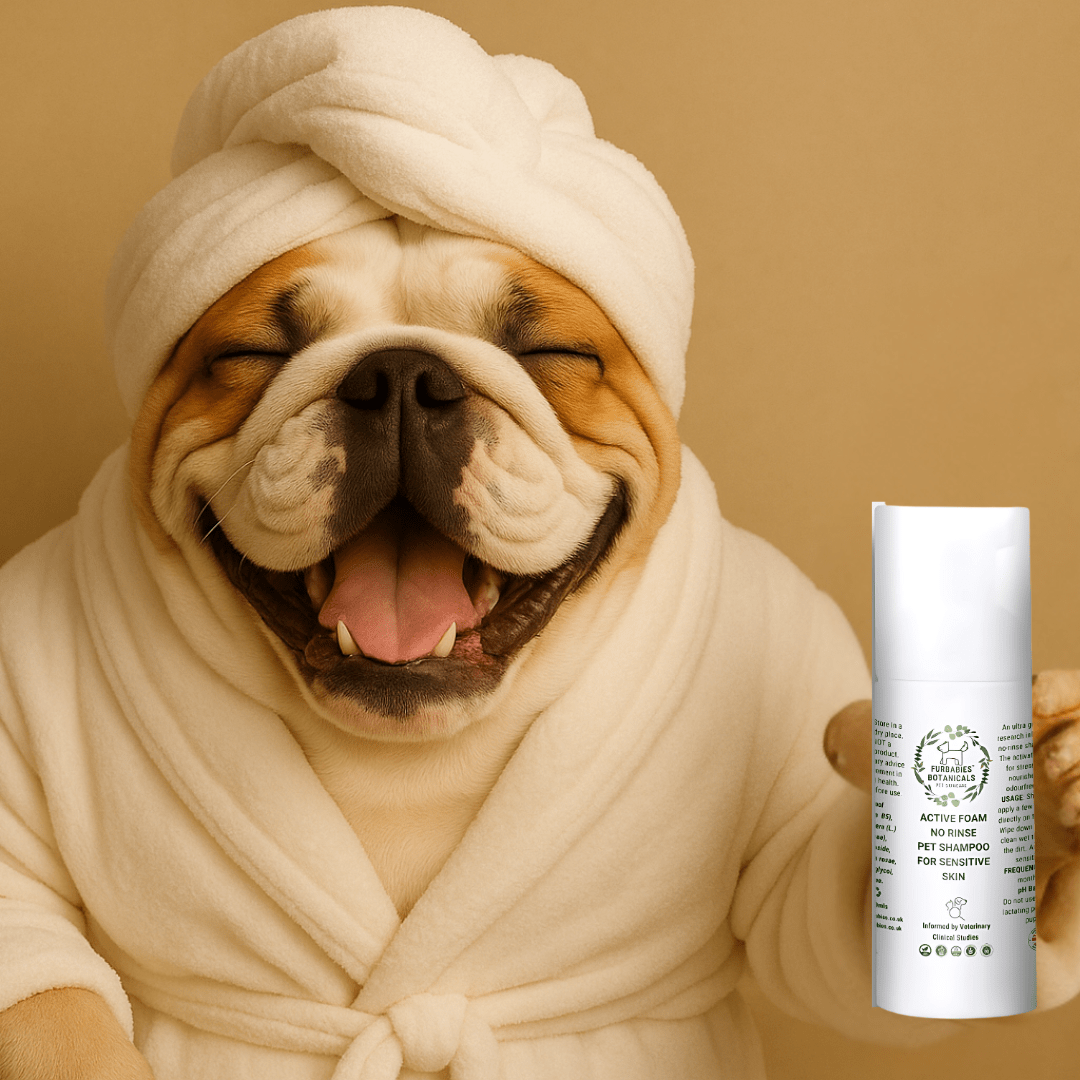
Can You Use Baby Shampoo on Dogs?
A Clinical Pharmacist's Evidence-Based Safety Guide
Clinically reviewed Every statement in this article is based on established dermatological and pharmacological principles. pH ranges, skin layer counts, and absorption characteristics are sourced from peer-reviewed veterinary and pharmaceutical literature. Where exact figures are cited (e.g. stratum corneum thickness), these reflect published ranges but individual variation exists.
Quick Answer
Yes, but only in emergencies and never for regular use. Baby shampoo can be used on dogs when heavily diluted (1:10 ratio) in true emergencies where no dog-specific product is available. It is not suitable for routine bathing.
The core problem: Baby shampoo is formulated for human skin pH (approximately 5.5–6.0). A dog's skin sits closer to neutral — typically pH 6.2–7.4. Repeated use of an acidic product disrupts the canine skin's protective acid mantle, increasing vulnerability to bacterial and fungal overgrowth, dryness, and itch.
What to use instead: A dog-specific shampoo formulated at the correct pH range, free from SLS/SLES and artificial fragrance — such as FurBabies™ Botanicals Rinse-Off Shampoo ↗.
Baby Shampoo vs. Dog Shampoo Safety Comparison
| Factor | Baby Shampoo | FurBabies™ Botanicals | Impact on Dogs |
|---|---|---|---|
| pH Level | ~5.5–6.0 (too acidic) | 6.2–7.4 (canine-optimal) | Wrong pH disrupts skin barrier over time |
| Surfactant system | Formulated for human sebum | Canine skin-optimised | Over-cleansing strips natural oils from thinner canine skin |
| SLS / SLES content | Often present at lower concentration | SLS/SLES-free | Even low concentrations can cause transepidermal water loss |
| Therapeutic benefit | None | Anti-inflammatory botanicals, barrier support | Missed opportunity to actively support skin health |
| Stress factor | Full bath required | No-rinse option available | Bathing stress can exacerbate skin conditions |
| Regular use | Not recommended | Designed for regular use | Cumulative pH disruption worsens with frequency |
The Science: Why Baby Shampoo Isn't Ideal for Dogs
Fundamental Skin Differences
Understanding why baby shampoo isn't optimal for dogs requires examining the fundamental differences between human and canine skin physiology.
Stratum corneum thickness: The stratum corneum the outermost protective layer of skin is significantly thinner in dogs than in humans. Published veterinary dermatology literature consistently describes canine stratum corneum as substantially thinner than human skin, which means topically applied chemicals penetrate more easily and more deeply into canine skin. This is not a minor difference: it has meaningful implications for how quickly products absorb and how easily the skin barrier can be disrupted.
pH of the acid mantle: Human skin, including a baby's, has an acid mantle sitting at approximately pH 5.5. Baby shampoos are formulated to match this. Canine skin has a higher, more neutral pH typically cited in veterinary literature in the range of pH 6.2 to 7.4, though values vary by breed, body region, and individual. When an acidic product designed for human pH is used repeatedly on neutral-pH canine skin, it disrupts the acid mantle, altering the skin's microbial environment and reducing its natural defence against pathogens.
Sebaceous gland activity: Dogs produce sebum differently from humans, and in different quantities depending on breed. Baby shampoos are formulated to gently but thoroughly remove the oil production typical of human (and particularly infant) skin. On dogs, this may result in over-cleansing stripping the limited natural oils that maintain skin suppleness and barrier integrity.
Hair follicle density: Dogs have a much higher hair follicle density than humans. Each follicle is a potential pathway for topically applied substances to penetrate the skin. This increases the total surface area through which shampoo ingredients can be absorbed.
Chemical Absorption Differences
Dogs metabolise certain chemical compounds differently from humans a well-established pharmacological principle. This is why substances safe for humans (or human babies) cannot be assumed safe for dogs. The thinner stratum corneum, different lipid composition, and higher follicle density all contribute to different absorption kinetics for topically applied substances.
Sensitivity to fragrance: Dogs possess a vastly more sensitive olfactory system than humans. Even fragrances present in "mild" or "natural" baby shampoos at concentrations that pose no problem for human use may be overwhelming or irritating for dogs. This applies not just to synthetic fragrance, but to essential oils and plant extracts added for scent.
Specific Baby Shampoo Ingredient Analysis
The following analysis uses Johnson's Baby Shampoo (fragrance-free formulation) as a representative example. Formulations vary by brand and region; always check the specific product's ingredient list.
| Ingredient | Role in formula | Relevance for dogs |
|---|---|---|
| Water | Solvent / base | Safe and neutral. |
| Cocamidopropyl Betaine | Gentle coconut-derived surfactant | Milder than SLS but designed for human skin pH and sebum production. Contact sensitisation possible with repeated use in sensitive animals. |
| Sodium Trideceth Sulphate | Mild sulphate surfactant | Less harsh than SLS/SLES but still a detergent calibrated for human skin. May strip natural oils from dogs more aggressively than intended due to lower canine sebum levels. |
| Citric Acid | pH adjuster | Used to set the formula to human-optimal ~pH 5.5. This is precisely the source of the pH mismatch problem for canine skin. |
| Sodium Chloride | Viscosity agent | Generally safe; can contribute to dryness at higher concentrations. |
| Fragrance (where present) | Scent | Even "gentle" fragrances can be overwhelming for dogs' sensitive olfactory systems and may trigger contact allergy in predisposed individuals. |
| Preservatives (e.g. phenoxyethanol) | Antimicrobial preservation | Necessary for formula stability, but may cause contact reactions in sensitised dogs — particularly with repeated exposure. |
Note: This analysis reflects pharmacological principles applied to published ingredient lists. It does not represent a clinical trial of this specific product in dogs. If your dog has a known skin sensitivity, consult your vet before using any new product.
A Note on "Natural" and "Organic" Baby Shampoos
Natural or organic formulations are often assumed to be safer choices for dogs. This assumption deserves scrutiny.
Many natural baby shampoos contain essential oils that are known to be toxic or irritating for dogs including tea tree oil, eucalyptus, and certain citrus-derived compounds. Even at concentrations safe for human infants, these can cause problems in dogs. "Natural" does not equal "safe for dogs." Additionally, natural baby shampoos are still pH-adjusted for human skin. The fundamental pH mismatch remains regardless of whether the formula uses plant-derived or synthetic ingredients.
For more on which shampoo ingredients are worth avoiding, see our guide on why SLS and SLES are worth avoiding in pet shampoos.
When Baby Shampoo Might Be Acceptable
There are limited circumstances where the benefit of immediate cleaning outweighs the risk of using a non-optimal product:
- Toxic substance exposure — motor oil, antifreeze, paint, or other chemicals that could be absorbed through the skin or ingested during grooming. Speed of removal matters more than product choice.
- Caustic chemical contact — household cleaners, pool chemicals, or industrial substances where delay risks chemical burns.
- Severe contamination — sewage, decomposing matter, or other material posing infection risk, where immediate bathing is medically warranted.
- Remote emergency — camping or travel situations where dog-specific products are genuinely unavailable.
The determining factor is immediate health risk that cannot wait. In these cases, a single use of diluted baby shampoo is unlikely to cause lasting harm. It is not a justification for regular use.
Emergency Application Protocol
If you must use baby shampoo in an emergency:
- Choose the mildest formulation available — fragrance-free Johnson's Baby Shampoo is a reasonable choice due to minimal additives.
- Dilute heavily — mix 1 part shampoo with 10 parts lukewarm water before applying.
- Work quickly — minimise contact time with your dog's skin.
- Rinse thoroughly — continue until the water runs completely clear, then rinse for a further minute.
- Monitor — watch for signs of irritation (redness, excessive scratching, licking, coat dullness, behavioural changes).
- Switch immediately — obtain a proper dog-specific shampoo for all future bathing.
The alternative your dog's skin actually needs
Formulated at the correct canine pH, SLS-free, paraben-free, with active botanicals that soothe while they clean.
Why a Properly Formulated Dog Shampoo Matters
Pharmaceutical vs. Cosmetic Formulation Approach
Baby shampoos are cosmetically formulated — they're designed to clean gently without causing immediate irritation, and to achieve good sensory properties (lather, scent, texture). That's the design brief. The formulation is optimised for human skin.
A well-formulated dog shampoo takes a different approach: every ingredient is chosen for compatibility with canine skin physiology. The pH is set to the canine range. Surfactant levels are calibrated for lower canine sebum production. Therapeutic actives are selected based on evidence of benefit in dogs specifically.
What to Look for in a Dog Shampoo
- pH balanced for canine skin (approximately pH 6.5–7.5)
- Free from SLS and SLES see our article on SLS-free shampoos for pets for the full chemistry
- Free from parabens see our article on parabens in pet products
- Free from artificial fragrance
- Made with gentle, plant-derived surfactants (e.g. coco glucoside, decyl glucoside)
- Contains skin-supportive actives such as chamomile, calendula, or panthenol where appropriate
The FurBabies™ Botanicals Rinse-Off Shampoo ↗ meets all of the above criteria — SLS-free, paraben-free, pH-balanced for canine skin, with botanical actives that actively soothe sensitive or irritated skin.
For dogs with reactive or compromised skin, pairing the shampoo with the DermaRenew Repair Serum ↗ applied after bathing helps restore barrier function and reduce post-wash dryness and itch. Both are available together as the Complete Skin & Coat Bundle ↗.
For a broader look at why shampoo choice matters more than most people realise, see our article: Does the choice of shampoo actually matter?
Frequently Asked Questions
Yes, but only in emergencies and when heavily diluted (1:10). Baby shampoo is formulated for human skin pH (~5.5) and lacks the therapeutic properties appropriate for canine skin. For regular grooming, a dog-specific product is always preferable.
Johnson's fragrance-free formulation is among the milder options if an emergency arises, due to its minimal additive content. It is still formulated for human skin pH, however, and should not be used routinely. See the ingredient analysis section above for a full breakdown.
It should not be used regularly at all. Reserve it for genuine emergencies where dog-specific products are unavailable. The cumulative effect of pH disruption on canine skin worsens with frequency of use.
Yes, it can. Fragrances, preservatives, and surfactants in baby shampoos can cause contact sensitisation in predisposed dogs. The risk increases with repeated use. Dogs with pre-existing skin conditions or known allergies are at higher risk. If your dog shows signs of irritation after any wash, consult your vet.
It is generally milder, but the pH mismatch remains the same. Adult shampoos often contain higher concentrations of surfactants and stronger fragrances, making them less suitable still. Neither adult nor baby human shampoo should be used on dogs regularly. See our article on using human shampoo on dogs for a full comparison.
Stop use immediately. Rinse with plain lukewarm water until the coat is fully clear of product. Monitor for worsening redness, swelling, or prolonged scratching. Contact your vet if symptoms persist or escalate. For dogs that itch after bathing regularly, our grooming guide for sensitive skin has practical advice on minimising irritation at wash time.
Puppies have particularly delicate skin, but the pH requirement is the same as adult dogs canine-neutral, not human-acidic. What a puppy needs is a dog-specific shampoo free from harsh surfactants and fragrance, formulated for the canine pH range. "Designed for human babies" is not a substitute for "designed for dogs."
Make the switch to a shampoo built for your dog
Every FurBabies™ Botanicals formula is pH-balanced for canine skin, SLS-free, paraben-free, and made with active botanicals that do more than just clean.
This article reflects the professional opinion of the author, a UK-registered clinical pharmacist, applying established pharmacological and dermatological principles to canine care. It does not constitute veterinary advice. If your dog has a skin condition, allergy, or chronic itch, consult a veterinary professional for a diagnosis and treatment plan. pH ranges and skin physiology characteristics cited are based on published veterinary dermatology literature; individual variation exists and figures represent typical published ranges.
Share:
Dog Contact Dermatitis vs. Seborrheic Dermatitis: Identifying and Treating Skin Issues in Dogs
Piriton vs Apoquel vs Cytopoint for Dogs: Which Is Right for Yours? UK Guide