
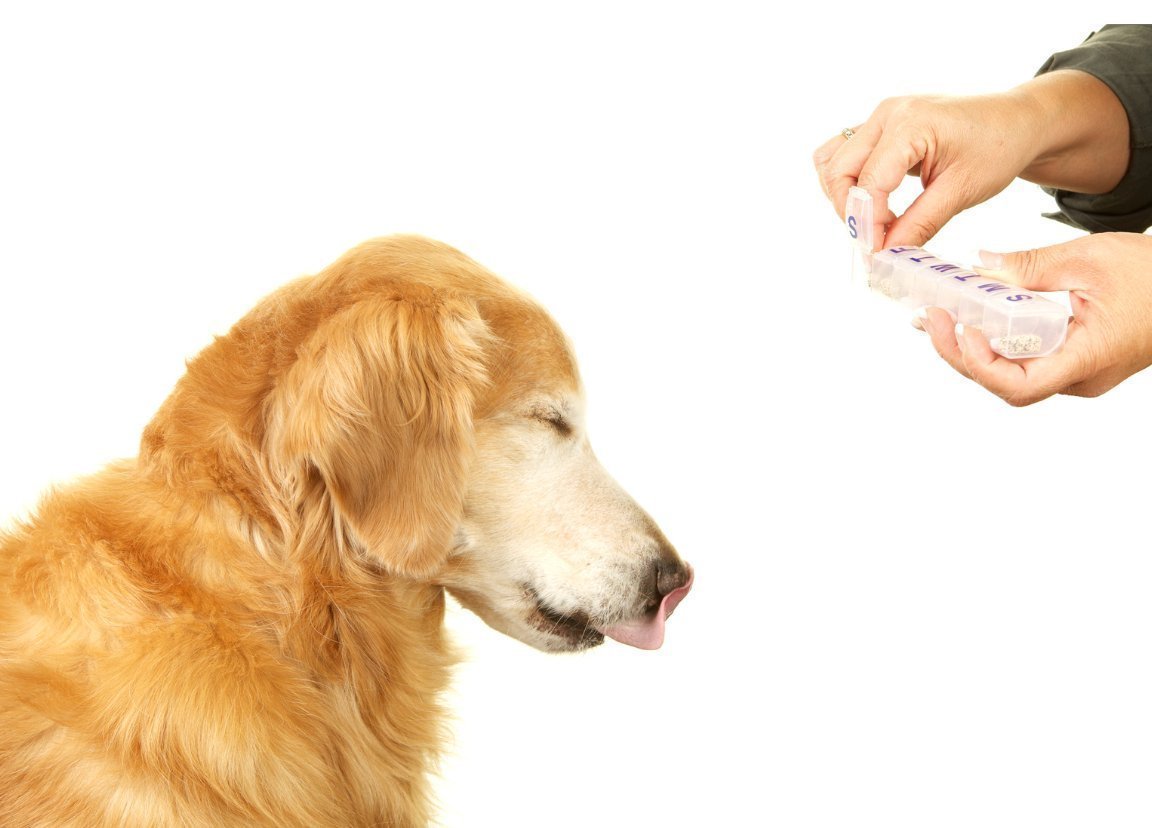
Before You Give Your Dog Piriton Read This First
Piriton (chlorphenamine maleate) is a human antihistamine. It is not licensed for veterinary use in dogs in the UK, and a vet can only recommend it under a specific legal framework called the Veterinary Cascade. Even then, the clinical evidence for most types of dog itch is limited with response rates as low as 0–30% in dogs with chronic skin conditions.
As a UK-registered clinical pharmacist, I want to be direct: this article does not advocate giving your dog Piriton. Most dogs Googled for in this search are itching persistently and for persistent itch, Piriton is almost certainly not the right answer, and may give owners false reassurance while an underlying condition goes untreated.
What this article does is give you the clinical facts:
- The Veterinary Cascade, the UK legal framework that governs when a vet can prescribe a human medicine for a dog, and why this matters before any dosing question arises
- The narrow circumstances where a vet might consider chlorphenamine appropriate acute allergic reactions, insect stings, mild vaccine responses
- Why Piriton fails for chronic itch, the IL-31 and Th2 immune pathways that drive most dog itching are not addressed by antihistamines
- The clinical evidence , what peer-reviewed studies actually say about antihistamine effectiveness in dogs
- Safety risks and contraindications including breed-specific risks for brachycephalic dogs and MDR1-affected herding breeds that most pet websites never mention
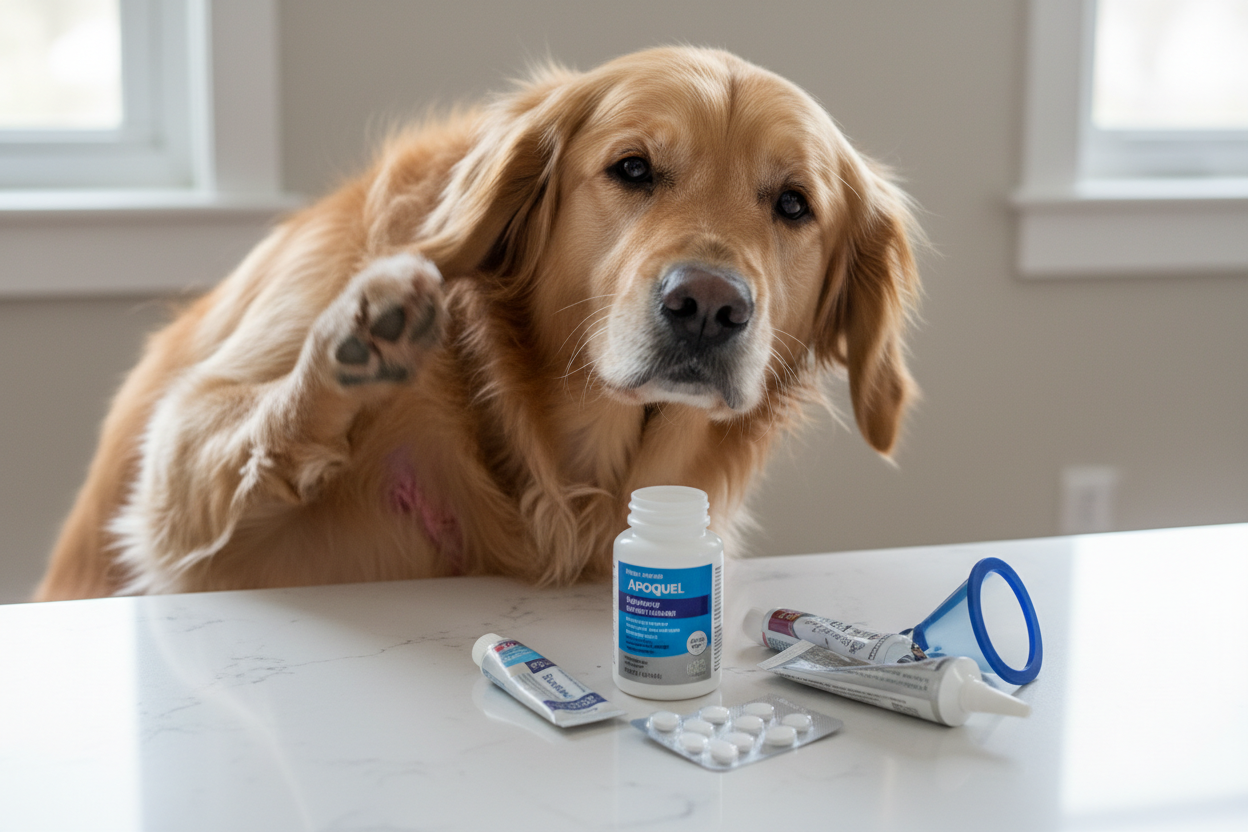
📖 If your dog has persistent, recurring, or seasonal itch: This is not a Piriton situation. Read our clinical comparison Piriton vs Apoquel vs Cytopoint: Which Actually Works? →
⚠️ Medical disclaimer: This article is written for educational purposes by a UK-registered clinical pharmacist. It does not constitute veterinary advice and does not replace a consultation with your vet. Never administer any human medicine to your dog without veterinary guidance.
What Is the Veterinary Cascade? Start Here.
This is the legal and clinical context that every dog owner should understand before the question of dosing even arises.
Piriton (chlorphenamine maleate) has no UK veterinary marketing authorisation it is licensed for humans only. Under the Veterinary Medicines Regulations 2013, a vet may only prescribe a human medicine for an animal known as "off-label" or "cascade" prescribing when all three of these conditions are met:
- No licensed veterinary medicine is suitable for the condition being treated
- The prescribing vet takes full clinical responsibility for that individual decision
- The benefit outweighs the risk for that specific animal
This means the decision to use Piriton for your dog is a clinical judgement made by a vet not a dosing calculation you can make at home based on body weight. It is not the same as buying a box of Piriton at Boots and halving the human dose. A vet must assess your dog, confirm the diagnosis is appropriate for antihistamine treatment, and rule out contraindications before recommending it.
What Is Piriton? (And What It Definitely Is Not)
Piriton contains chlorphenamine maleate, a first-generation H1-antihistamine. It works by blocking histamine receptors, reducing the acute inflammatory response that causes swelling, itching, and hives.
One of the most common — and potentially dangerous — mistakes UK dog owners make is confusing Piriton with other antihistamines that look similar on a pharmacy shelf. They are not interchangeable:
| Product | Active Ingredient | Generation | Notes for Dogs |
|---|---|---|---|
| Piriton | Chlorphenamine | 1st | Not licensed for dogs; vet cascade only |
| Piriteze | Cetirizine | 2nd | Not licensed for dogs; vet cascade only |
| Clarityn (plain tablets only) | Loratadine | 2nd | Not licensed for dogs; vet cascade only — never use Clarityn-D or melt/dissolve tablets (may contain xylitol which is toxic to dogs) |
| Benadryl Allergy Relief Capsules | Acrivastine 8mg | 2nd | ❌ NEVER acrivastine is toxic to dogs |
| Benadryl One-A-Day | Cetirizine 10mg | 2nd | Not licensed for dogs; vet cascade only |
| Benadryl Allergy + Decongestant | Acrivastine + Pseudoephedrine | 2nd | ❌ NEVER both ingredients toxic to dogs |
| Benadryl (US only) | Diphenhydramine | 1st | Not available in UK. Entirely different product |
⚠️ Critical warning. UK Benadryl products differ and some are toxic to dogs:
- Benadryl Allergy Relief Capsules (acrivastine 8mg) is toxic to dogs, never use
- Benadryl Allergy Relief Plus Decongestant (acrivastine + pseudoephedrine) is extremely dangerous, never use as both ingredients are toxic to dogs
- Benadryl Allergy One-A-Day (cetirizine 10mg) is not licensed for dogs; only use under explicit vet guidance
- Never assume any UK Benadryl product is safe for dogs. Always check the active ingredient on the box. This is one of the most dangerous areas of confusion in pet healthcare.
Why Piriton Behaves Very Differently in Dogs Than in Humans
Understanding this pharmacology matters — because it explains why even when a vet does recommend chlorphenamine, outcomes in dogs can be unpredictable.
Elimination Half-Life: 1.7 Hours in Dogs vs 12–30 Hours in Humans
A peer-reviewed pharmacokinetics study published in the Journal of Pharmacokinetics and Biopharmaceutics (Athanikar & Chiou, 1979) established that chlorphenamine's elimination half-life in dogs is only 1.7 hours compared to 12–30 hours in humans. In practical terms: the same tablet that provides all-day relief in a human is largely eliminated from a dog's system within a few hours. This is why, when vets do recommend it, they typically specify dosing every 8 hours not every 12–24 hours as in human use.
Variable Bioavailability: Only 9–39% Reaches the Bloodstream
The same research found that oral bioavailability in dogs is highly variable. Due to saturable first-pass metabolism in the liver and gut, only 9–39% of an oral dose actually reaches systemic circulation.The practical implications of this are significant:
-
Results vary considerably between individual dogs
-
Some dogs may show no measurable response even at a correct dose
-
Vets sometimes use injectable chlorphenamine for acute severe reactions precisely because oral administration is unreliable
-
Smaller dogs at lower doses can have particularly poor absorption
This variability is one reason why Piriton is considered a limited and somewhat unpredictable tool in veterinary practice — and why newer, targeted medications were developed.
The Limited Situations Where a Vet Might Consider Piriton
Piriton has the strongest rationale for acute, short-term allergic reactionswhere histamine is the primary driver and rapid temporary relief is the goal:
-
Insect stings (bee or wasp) with mild local reaction
-
Sudden hives or urticaria
-
Mild facial swelling from a known allergen
-
Mild vaccine reactions
-
Brief contact reactions to an identifiable substance
In these specific situations, the rapid oral onset (30–60 minutes) and short duration of action can be appropriate — you need fast, temporary relief, not sustained long-term medication. Even so, any suspected allergic reaction in a dog warrants a call to the vet before home treatment.
⚠️ If your dog shows facial swelling, difficulty breathing, collapse, or vomiting after a sting or allergen exposure.. this is a veterinary emergency. Do not wait for Piriton to work. Go to an emergency vet immediately.
Why Piriton Is Unlikely to Help With Most Dog Itching
This is the most important clinical point and the one most dog owners do not know before spending money on Piriton.
Piriton is not effective for chronic itching or canine atopic dermatitis.
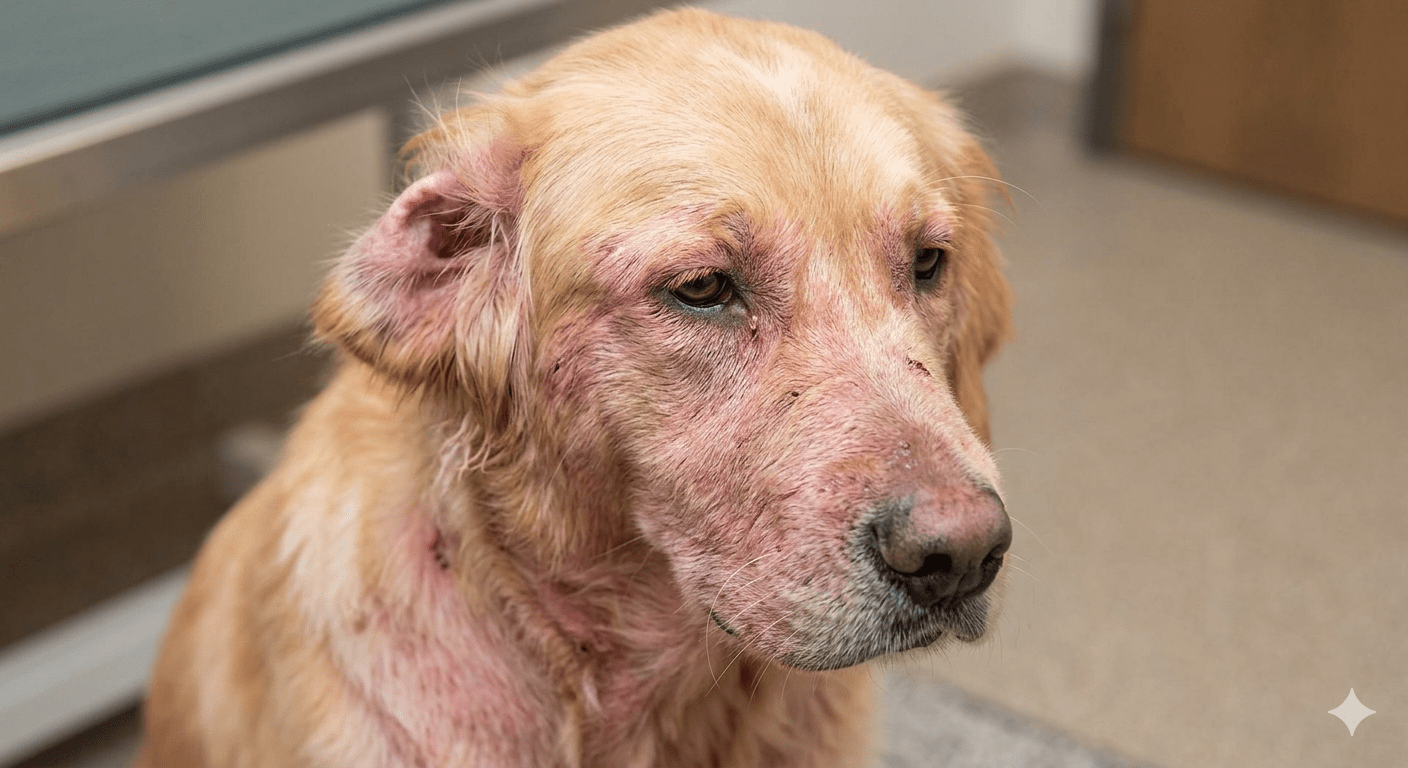
In dogs with atopic dermatitis, the persistent itch is primarily driven by IL-31 cytokine signalling and Th2 immune dysregulation pathways in which histamine plays only a secondary role. Clinical reviews of first-generation antihistamines for canine atopic dermatitis consistently report response rates of only 0–30%. The majority of dogs with ongoing, recurring, or seasonal itch will see little to no benefit from Piriton.
This is precisely why Apoquel (oclacitinib) and Cytopoint (lokivetmab) were developed — they target the specific itch signalling pathways active in dogs, rather than blocking histamine which is not the primary driver of chronic skin disease.
📖 If your dog has persistent, recurring, or seasonal itch: A vet assessment is essential. Read our clinical comparison: Piriton vs Apoquel vs Cytopoint — Which Actually Works? A Clinical Pharmacist's UK Comparison →
Dose Reference If Your Vet Has Already Recommended Piriton
The following information is provided for reference only, for dog owners whose vet has already recommended chlorphenamine maleate. Do not use this as a basis for self-prescribing. If you are unsure whether Piriton is appropriate for your dog, contact your vet.
The following doses align with the MSD Veterinary Manual — the global clinical reference used by practising vets:
Practical notes:
-
Standard Piriton tablet = 4mg
-
Piriton Allergy syrup = 2mg per 5ml — useful for very small dogs or precise dosing
-
Maximum recommended duration without vet review: 5–7 days
-
Give with a small amount of food to reduce nausea
⚠️ Do NOT use Piriton 12mg Long Acting (slow-release) tablets in dogs. Modified-release formulations have unpredictable absorption kinetics in dogs, have not been studied, and must be avoided.
Side Effects of Piriton in Dogs
As a first-generation antihistamine, chlorphenamine crosses the blood-brain barrier — making sedation the most consistently reported side effect in dogs.
Common:
-
Sedation and drowsiness — can be pronounced, especially in small breeds and brachycephalic dogs
-
Dry mouth — anticholinergic effect
-
Mild nausea — reduced by giving with food
Less common but clinically important:
-
Urinary retention — particularly relevant in older male dogs
-
Paradoxical excitability — opposite of sedation; more common in puppies
-
Reduced tear production — relevant in breeds prone to dry eye (keratoconjunctivitis sicca)
-
Mild heart rate increase — anticholinergic effect at higher doses
Monitor your dog for the first hour after any first dose, particularly for excessive sedation or paradoxical agitation.
Dogs Who Must NOT Have Piriton. The Contraindications
These are not minor cautions and several represent serious or potentially dangerous interactions. Discuss alternatives with your vet if any of the following apply:
Breed-Specific Considerations
Brachycephalic breeds have heightened sedation risk
French Bulldogs, Pugs, English Bulldogs, Shih Tzus and other flat-faced breeds face a specific risk from chlorphenamine's sedative effect. These breeds already have compromised upper airways, and sedation relaxes pharyngeal muscles further — potentially worsening breathing. Vets approach all sedating medications with additional caution in brachycephalic dogs.
Herding breeds have possible MDR1 sensitivity
Collies, Shetland Sheepdogs, Australian Shepherds, Border Collies and related herding breeds have a high prevalence of the MDR1 (ABCB1) gene mutation — up to 75% in some breed populations. This mutation causes drugs to accumulate in the brain at higher concentrations than expected. While chlorphenamine is not on the formally confirmed high-risk list for MDR1 dogs, its CNS-active sedative mechanism means veterinary geneticists advise caution with any CNS-active drug in these breeds. If your dog is a herding breed, tell your vet before any antihistamine is prescribed — genetic testing is available through the UC Davis Veterinary Genetics Laboratory and CAGT UK.
Frequently Asked Questions
Can you give a dog Piriton?
Only under veterinary guidance, and only in specific circumstances as described above. Piriton is not licensed for dogs in the UK and must be prescribed under the Veterinary Cascade.
How much Piriton can I give my dog?
If your vet has recommended it: 0.2–0.4mg/kg every 8 hours. For reference — 4mg (one tablet) for dogs 10–20kg, 8mg (two tablets) for dogs over 20kg. Never dose without vet confirmation.
Can I give my dog Piriton every day?
Only under veterinary supervision. Long-term daily use for chronic itch is clinically ineffective in most dogs (0–30% response rate in atopic dogs) and a vet should assess persistent itch rather than it being managed with repeated antihistamine use at home.
How quickly does Piriton work in dogs?
Onset is typically 30–60 minutes orally. Due to variable oral bioavailability (9–39%), some dogs may show limited or no response even at a correct dose.
Can puppies have Piriton?
Not without explicit vet guidance. Puppies are more prone to paradoxical excitability reactions and their lower body weight makes precise dosing critical.
My dog was stung by a bee — should I give Piriton?
Contact your vet immediately. For mild local reactions, they may advise a dose — but if your dog shows facial swelling, vomiting, collapse, or breathing difficulty, go to an emergency vet now. Do not wait.
Can I give Piriton and Apoquel together?
This is a question for your vet. Do not combine medications without veterinary oversight.
Is Piriteze the same as Piriton?
No. Piriteze contains cetirizine — a completely different drug with a different safety profile and dose in dogs. They are not interchangeable.
Sources & Clinical References
-
Athanikar NK & Chiou WL (1979). Chlorpheniramine: effect of first-pass metabolism on oral bioavailability in dogs. Journal of Pharmacokinetics and Biopharmaceutics. PubMed 512844
-
Purdue University (1982). Pharmacokinetic evaluation of chlorpheniramine maleate in domestic animal species. docs.lib.purdue.edu
-
MSD Veterinary Manual. Antihistamine Dosages for Integumentary Disease in Animals. msdvetmanual.com
-
VetHelpDirect (2022). What is the Piriton dose for dogs? vethelpdirect.com
-
Avet Health (July 2025). Chlorphenamine Maleate Injection — Technical Note. avet.health
-
MHRA / NHS Medicines Resources. Revised SPC: Piriton (chlorphenamine) preparations. medicinesresources.nhs.uk
-
Frontiers in Pharmacology (2025). Relevant Pharmacokinetics, Bioavailability and Clinical Use of Chlorpheniramine Maleate. frontiersin.org
This article was written by a UK-registered clinical pharmacist. It is for educational purposes only and does not constitute veterinary advice. Always consult a qualified vet before administering any medication to your pet.


Share:
What Human Shampoo Can I Use on My Dog? Clinical Pharmacist's Complete Safety Guide
Dog Shampoo for Sensitive Skin: A Clinical Pharmacist's Complete Guide to Gentle Grooming